Locations:





Increasing uptake remains a challenge
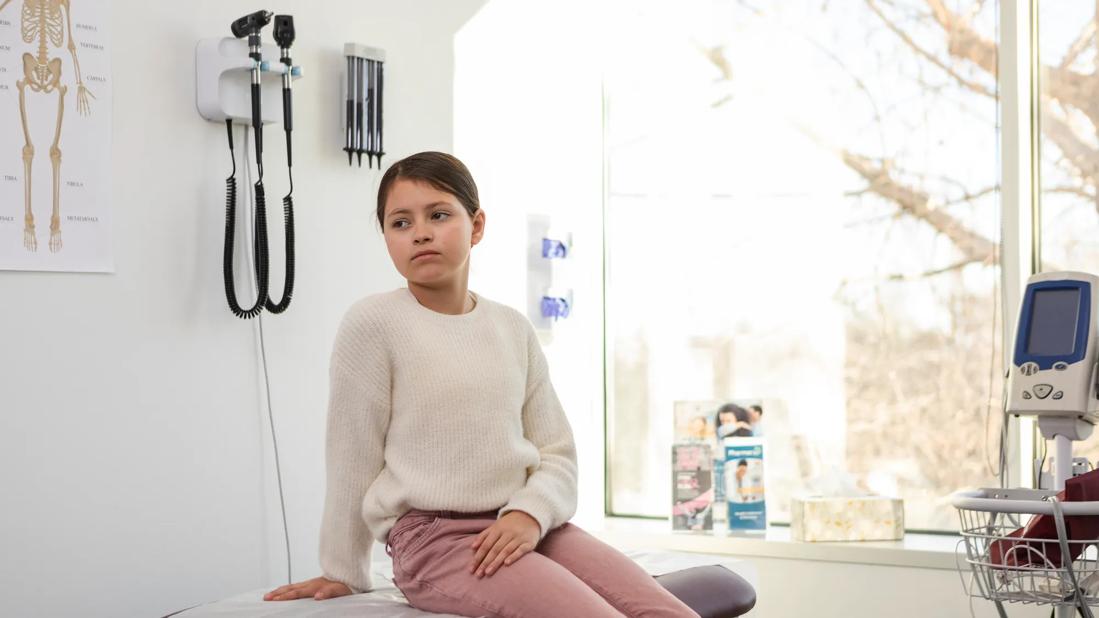
Image content: This image is available to view online.
View image online (https://assets.clevelandclinic.org/transform/6f74446b-eb91-465b-8eaa-f0fb85e3bfe8/one-shot-hpv-vaccine-2123094195)
Young girl on a medical exam bench
Results of a recent trial indicate that a single dose of intended multidose vaccines for the human papillomavirus (HPV), the leading of cause cervical cancer, may provide a measure of comfort for individuals with only partial vaccine coverage.
Advertisement
Cleveland Clinic is a non-profit academic medical center. Advertising on our site helps support our mission. We do not endorse non-Cleveland Clinic products or services. Policy
In the United States, the Centers for Disease Control and Prevention (CDC) currently recommends people receive all recommended doses — two or three, depending on the age that one is first vaccinated. But results of a study of more than 20,000 girls in Costa Rica may inform nuanced conversations between healthcare providers and patients, says Miriam Cremer, MD, MPH, staff at Cleveland Clinic’s Obstetrics & Gynecology Institute.
“As physicians, we are going to follow CDC recommendations until they change,” says Dr. Cremer. “But I think the results may provide reassurance that if somebody doesn't tolerate the vaccine well, or doesn't come back for one reason or another, a single does will still confer a lot of protection.”
HPV is a common virus and is primarily contracted through intimate contact, which is why the CDC recommends vaccinating both girls and boys beginning at age 11 or 12.
The ESCUDDO HPV Vaccine Efficacy Trial followed 20,330 girls between 12 and 16 for five years to compare a single dose of either of two HPV vaccines (a bivalent or nonavalent formulation) to the recommended two-dose regimens.
The results, published in the New England Journal of Medicine, found the vaccines were at least 97% protective against new HPV16 or HPV18 infection regardless of which vaccine was taken or whether one or two doses were administered. Single-dose regimens were non-inferior to the standard two doses.
Every year, cervical cancer kills more than 340,000 women around the world. The first HPV vaccine (Gardisil 4) became available in the United States in 2006, and the vaccines have proven to prevent more than 90% of HPV-related cervical, anal and oropharyngeal cancers.
Advertisement
As part of its goal to eliminate cervical cancer, the World Health Organization has set a goal for 90% of girls in every country to be fully vaccinated by age 15 by 2030.
With four years to go, however, only 15 countries have reached that target1, and the United States is not among them. Seventy-eight percent of U.S. adolescents ages 13 to 17 have received at least one dose of the HPV vaccine and about 63% have received all recommended doses, according to the CDC and the United Health Foundation, respectively.
“Australia has had very robust vaccine acceptance and seen their cervical cancer mortality rates decrease,”says Dr. Cremer. “We have not enjoyed that in the U.S. because of our relatively lower universal vaccine rates.
While Dr. Cremer does not foresee CDC recommendations changing soon, reports of strong efficacy from a single dose suggests that providers are helping their patients whenever they can make the case for getting that first shot.
“If we can increase the denominator of people who get even a single dose prior to sexual initiation, it would be a huge win,” she says.
Timing is of the essence.
“With the HPV vaccine, the key is to vaccinate girls before sexual initiation,” says Dr. Cremer. “Guidelines include recommendations for vaccinating up to age 45, but clearly the best time to provide vaccination is prior to sexual activity. And we know that one dose does a phenomenal job of that.”
That said, reports of strong single-dose efficacy alone are unlikely to make much of a difference to patients and/or parents who feel generally hesitant about the injection.
Advertisement
Erin Isaacson, MD, a specialist in pediatric and adolescent gynecology in Cleveland Clinic’s Obstetrics & Gynecology Institute, says the challenge has little to do with the number of injections and more to do with wariness.
“Despite decades of evidence around the safety profile of the HPV vaccine, myths and misconceptions persist,” says Dr. Isaacson.
Myths that have been disproven include that the HPV vaccine causes infertility, that it is unsafe, and that it encourages promiscuity. One of the most common questions among parents: “Why does my child have to have the HPV vaccine when she's not sexually active?”
That question, however, creates an opportunity to build trust and confidence.
“These are always important conversations to have in counseling,” says Dr. Isaacson. “We can educate parents and patients about the importance of being vaccinated before somebody even considers becoming sexually active.”
1. Han, Jingjing et al. Global HPV vaccination programs and coverage rates: a systematic review, eClinicalMedicine, Volume 84, 103290.
Advertisement
Advertisement
History of laparoscopy with morcellation should inform differential

Akron General project highlights the benefits of doula partnerships

Change eliminates waste associated with dual-field approach
Researchers compare two image modes in detecting left ventricular remodeling

Nutrition and cooking program supports maternal-infant health
New moniker brings clarity to this complex condition

A device implanted at the ankle joins the lineup of third-line treatments
Aiming for earlier detection of endometrial cancer in an era of increasing incidence
 Search