Locations:





Initial data indicate tolerability and promising cardiac remodeling effects
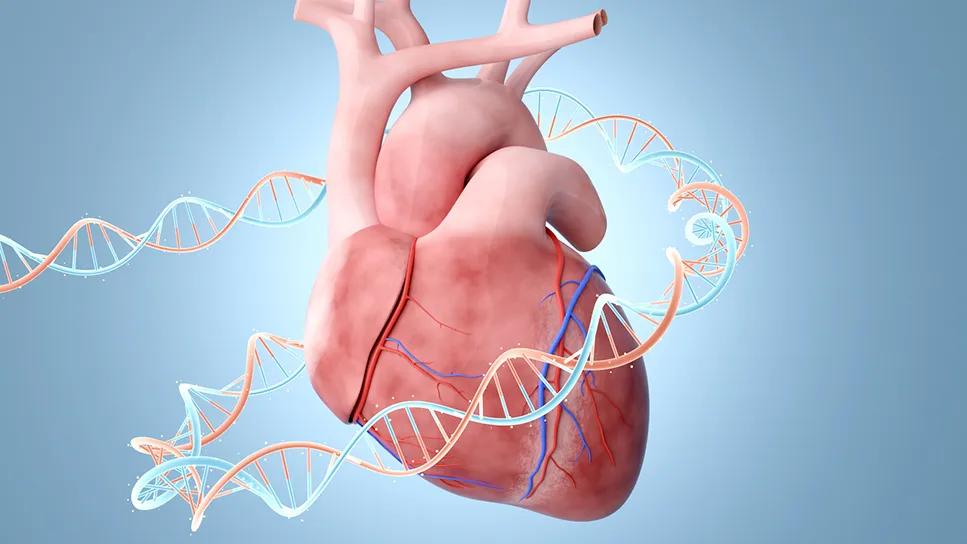
Image content: This image is available to view online.
View image online (https://assets.clevelandclinic.org/transform/37ae457e-a95d-4239-a00c-b3adb1d9bc22/heart-gene-therapy-2253693763)
Heart with DNA helix
An experimental gene therapy for hypertrophic cardiomyopathy (HCM), TN-201, has been well-tolerated by patients in a first-in-human study. It also has increased cardiac myosin-binding protein C (MyBP-C), leading to signs of cardiac remodeling.
Advertisement
Cleveland Clinic is a non-profit academic medical center. Advertising on our site helps support our mission. We do not endorse non-Cleveland Clinic products or services. Policy
These initial results were presented at the 2025 American Heart Association Scientific Sessions by the study’s lead author, Milind Desai, MD, MBA, Director of the Hypertrophic Cardiomyopathy Center at Cleveland Clinic. Results were simultaneously published in Cardiovascular Research.
Cleveland Clinic was the first to infuse the gene replacement therapy in a patient in 2023. The investigational therapy targets a mutation in the myosin-binding protein C3 gene (MYBPC3), which is associated with approximately 20% of HCM cases.
“For patients with HCM caused by MYBPC3 mutation, the most common genetic subtype of HCM, treatment options have been quite limited,” Dr. Desai says. “What makes TN-201 so exciting is that it’s the first therapy developed to target the genetic cause of the disease. Potentially, we can replace the faulty gene, restore patients’ heart muscle function and avoid septal reduction surgery with just one infusion.”
TN-201, an adenovirus-based therapy, delivers a working copy of the MYBPC3 gene to the heart muscle in hopes of halting disease progression. In preclinical studies, a one-time intravenous infusion of the therapy restored normal levels of the protein MyBP-C, which regulates contraction of heart muscle, reversing HCM.
In the phase 1b/2 multicenter trial, six patients (ages 18-75) with symptomatic HCM were enrolled between 2023 and 2025. All had left ventricular hypertrophy and a MYBPC3 genetic variant known to be pathogenic or likely pathogenic.
Advertisement
Three patients received one infusion of a lower dose of TN-201 (3 x 10¹³ vg/kg), and three received a higher dose (6 x 10¹³ vg/kg). All six patients began a regimen of oral prednisone and sirolimus before the infusion to reduce potential immune response.
Regardless of dosage, the therapy was tolerated well by all patients, with nausea being the most common adverse event (n = 5). Most side effects were mild or moderate, and all were reversible — with just one serious case of elevated transaminase and another of elevated complement sC5b-9, both of which resolved quickly.
Thanks to learning from the patients receiving the lower dose of TN-201, patients receiving the higher dose were tapered off immune-suppressing steroids faster. No patient experienced heart problems, discontinued the study or died.
In patients receiving the lower dose, MyBP-C protein levels (detected by endomyocardial biopsy of the right ventricle) rose by a mean of 4% over 52 weeks. One patient receiving the higher dose had a 14% increase in protein levels by week 12. TN-201 DNA and mRNA were found in all post-dose biopsies, indicating successful gene delivery and protein production.
Other findings included:
Advertisement
“The most important finding in this study is that TN-201 is well-tolerated by patients, even at the higher dosage, and that immune reactions can be moderated with less immunosuppression than we originally expected,” Dr. Desai says. “In addition, we saw encouraging trends in serum and heart imaging measures, which is important because higher cTnI and thickened heart walls are strong predictors of serious events in patients with HCM.”
While patients receiving smaller doses had 52-78 weeks of follow-up, patients receiving higher doses had follow-up of only 12-26 weeks.
“We will continue to assess these patients over a longer period to more thoroughly evaluate the efficacy and durability of TN-201,” Dr. Desai says.
The initial findings are promising and suggest the need for expanded clinical research on the utility of TN-201 in treating HCM, he notes. In addition, potential side effects and long-term outcomes need to be carefully followed and assessed.
“These are early but very promising results,” adds Krishna Aragam, MD, Director of the Center for Cardiovascular Genomics and Data Science at Cleveland Clinic. “HCM has always been the prototypical genetic heart disease, and to now see it treated at the molecular level is extraordinary. We’re entering an era where genomics can both identify those at risk and be harnessed to change the course of disease itself.”
Disclosure: Dr. Desai is a paid consultant for Tenaya Therapeutics, which is sponsoring the study reported here.
Advertisement
Advertisement

AHA statement details nuanced, evidence-based strategies

The benefits of multiarterial grafting are possible without opening the chest

Collaborative citywide initiative reshapes protocols to boost cardiac arrest survival
For severe cases, complete unroofing of the bridge is imperative
Lower threshold expanded revascularization candidacy without raising early complication rates

Elevated levels of the gut microbial metabolite predict prevalence and adverse outcomes in community-based study

They generally depend on the mutated gene, clone size and clinical setting
Large analysis adds to evidence that absolute diameter alone may miss vulnerable patients
 Search