Locations:





Post hoc analysis of CLEAR Outcomes trial bolsters its case as a statin alternative
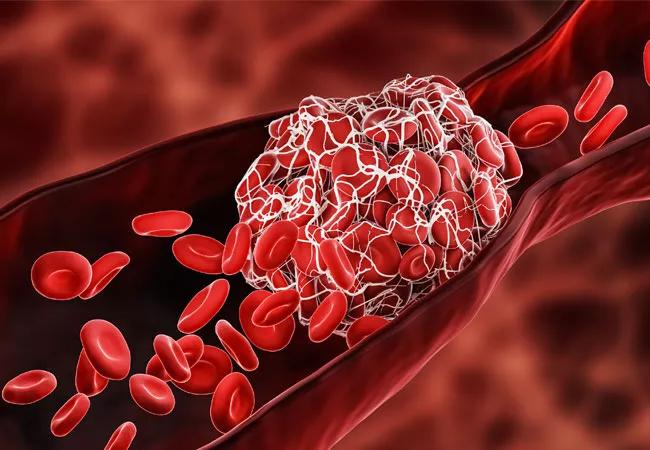
Image content: This image is available to view online.
View image online (https://assets.clevelandclinic.org/transform/ebc430e4-8f91-4976-80a4-450190833402/23-CNR-4162210-CQD-Hero-650x450-Dr-Khorana-jpg)
illustrated platelets forming a clot in a blood vessel
Bempedoic acid is associated with reduced risk of venous thromboembolism (VTE) among statin-intolerant patients who have, or are at high risk of, atherosclerotic cardiovascular disease (ASCVD), according to a new post hoc analysis of the large randomized CLEAR Outcomes trial.
Advertisement
Cleveland Clinic is a non-profit academic medical center. Advertising on our site helps support our mission. We do not endorse non-Cleveland Clinic products or services. Policy
“Bempedoic acid now has a prominent place in treatment guidelines for patients who need LDL cholesterol reduction but have statin intolerance,” says Cleveland Clinic cardiologist Luke Laffin, MD, corresponding author of the analysis, which was published in JAMA Cardiology. “These new data indicate that its benefits go beyond lipid lowering and reduction of ASCVD events to include apparent reduction of VTE risk as well, an effect that is also seen with statins and PCSK9 inhibitors.”
CLEAR Outcomes was a randomized, double-blind trial comparing bempedoic acid (180 mg/day orally) with placebo among 13,970 adults with statin intolerance and either established ASCVD or a high risk for it. The primary analysis, published in the New England Journal of Medicine (2023;388[15]:1353-1364), found that bempedoic acid significantly reduced major adverse cardiovascular events relative to placebo.
While the study also showed bempedoic acid to confer benefits on various secondary end points, VTE was not among the end points initially assessed, and the effect of the drug on VTE risk has not been previously evaluated.
“VTE wasn’t included as an initial end point in the trial because it’s not nearly as common in this patient population as the other events included as end points,” Dr. Laffin explains. “After all, no one prescribes any lipid-lowering therapy specifically for VTE prevention, although VTE risk reduction is seen as a potential additional benefit of these therapies.”
He continues: “Because bempedoic acid is mechanistically similar to statins, which have been shown to lower the risk of VTE, it seemed reasonable to go back and analyze CLEAR Outcomes to determine if there was a similar effect with bempedoic acid.”
Advertisement
The post hoc analysis assessed time to first occurrence of VTE — defined as a composite of deep vein thrombosis (DVT) or pulmonary embolism (PE) — among all 13,970 CLEAR Outcomes participants. At randomization, 275 participants (2.0%) had a history of VTE, and 1,219 (8.7%) were receiving systemic anticoagulation therapy.
The analysis found that 106 VTE events occurred over the trial’s median follow-up of 40.6 months, with a significantly lower rate in the bempedoic acid group (39 events among 6,992 patients; 0.56%) compared with the placebo group (67 events among 6,978 patients; 0.96%). This represented a 42% relative reduction (hazard ratio = 0.58 [95% CI, 0.39-0.86; P = .006]). The effect was consistent across various patient subgroups.
The reduction of events with bempedoic acid applied to each component of the composite individually, with a hazard ratio of 0.56 for DVT (95% CI, 0.31-0.996; P = .045) and of 0.61 for PE (95% CI, 0.37-0.996; P = .046).
“These data complement growing evidence demonstrating that lipid-lowering therapies may reduce occurrence of VTE,” write Dr. Laffin and his co-authors in their study report.
“The potential mechanisms by which bempedoic acid may reduce the risk of VTE are not fully understood, but they are probably very similar to the ways that statins confer this benefit, since they act on essentially the same pathway,” Dr. Laffin says.
“Dr. Laffin’s study is intriguing and consistent with results of the JUPITER trial, which showed a similar reduction in VTE with the use of rosuvastatin in patients with elevated high-sensitivity C-reactive protein [hs-CRP],” adds Steven Nissen, MD, Chief Academic Officer of Cleveland Clinic’s Heart, Vascular & Thoracic Institute and a co-author of the new analysis. “Both bempedoic acid and rosuvastatin have prominent anti-inflammatory effects, a potential mechanism for the reduction in VTE. Importantly, reduction in lipids and hs-CRP with bempedoic acid does not result in an increase in bleeding, so this benefit comes with little or no downside risk.”
Advertisement
Because of the post hoc nature of this analysis, the small number of VTE events overall and the absence of central adjudication of events, these results remain hypothesis-generating, the authors point out. Although a prospective investigation of bempedoic acid’s effect on VTE risk is highly unlikely, Dr. Laffin notes that it’s not really necessary.
“This analysis provides reassurance that if a patient with statin intolerance is taking bempedoic acid, there’s good potential they are going to get some protection against VTE beyond the arterial and atherosclerosis-based benefits for which they’re taking the drug,” he says. “This additional benefit is further reason why bempedoic acid is probably the next best option for most patients who cannot take a statin, as it broadens the constellation of benefits beyond LDL cholesterol reduction and decreased inflammation.”
The CLEAR Outcomes trial and this post hoc analysis were funded by Esperion Therapeutics, which markets bempedoic acid. The studies were coordinated by the Cleveland Clinic Coordinating Center for Clinical Research (C5Research).
Advertisement
Advertisement
An updated review of risk factors, management and treatment considerations

Oral anticoagulants may be beneficial but need to be balanced against bleeding risks

Redesigned protocols enhance infection-prevention measures

Patients with a prior history of VTA are at an increased risk of subsequent incidents, despite treatment with therapeutic anticoagulation

How a site visit helped Parkview Heart Institute expand its vascular services and improve operations

Phase 1 trial shows up to 97% decrease through 48 weeks with good tolerability

Post hoc ALPACA analysis boosts biological rationale for ongoing outcomes trial of lepodisiran

Durability findings propel potential one-time treatment approach to phase 1b testing
 Search