Locations:





Life-changing gene therapy is currently under FDA review
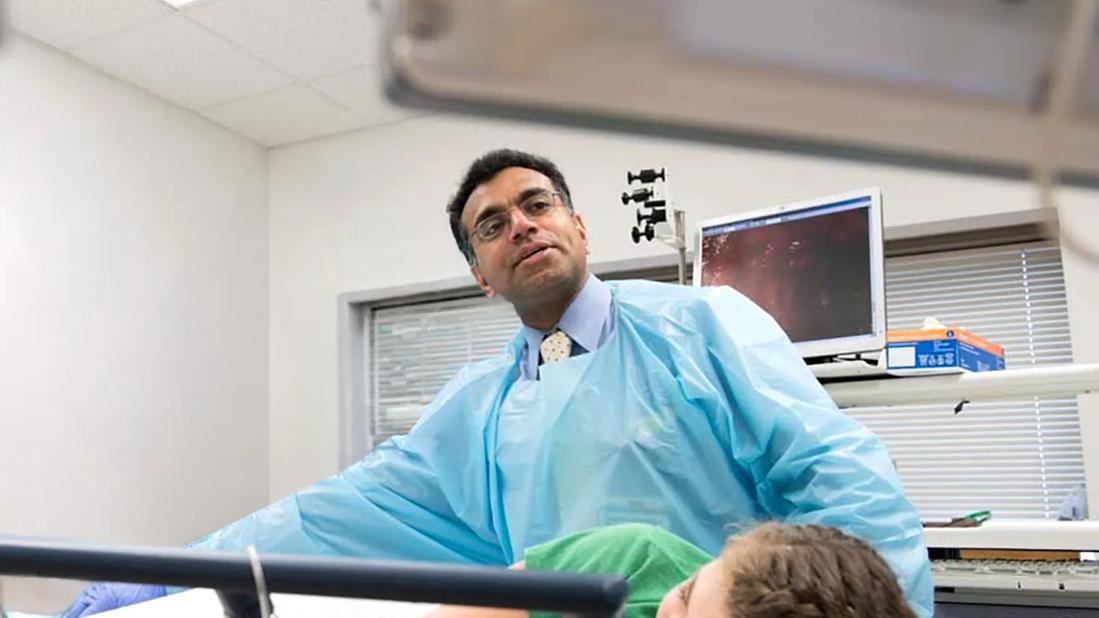
Image content: This image is available to view online.
View image online (https://assets.clevelandclinic.org/transform/6984a4c2-e4da-48ed-84aa-96a6d231bd29/Radhakrishnan-exam)
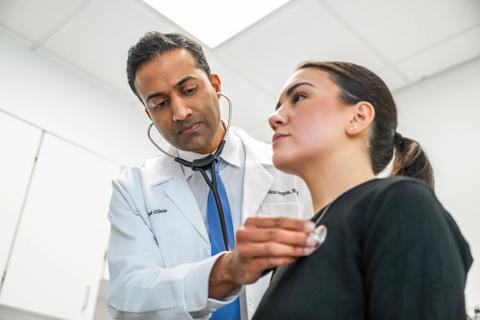
Dr. Radhakrishnan with patient giving clinical exam
Glycogen storage disease (GSD) represents a rare and complex group of metabolic disorders that have evolved significantly in both understanding and treatment options. Currently, there are 15 recognized types of GSD, a notable increase from the eight types identified in the mid-1980s, according to Kadakkal Radhakrishnan, MD, a pediatric gastroenterologist and hepatologist at Cleveland Clinic. These disorders fundamentally affect the body's ability to mobilize stored glycogen from the liver, muscles and kidneys to maintain glucose levels between meals.
Advertisement
Cleveland Clinic is a non-profit academic medical center. Advertising on our site helps support our mission. We do not endorse non-Cleveland Clinic products or services. Policy
The most severe form, GSD 1, affects approximately 1 in 100,000 births and exemplifies the challenges these patients face. Because glycogen enters the liver as a one-way process but cannot be broken down effectively, patients develop hepatomegaly and severe hypoglycemia during fasting states, potentially leading to seizures if glucose levels are not corrected.
These children present with features including enlarged livers, excess body fat, and a cherubic appearance. When metabolically uncontrolled, patients exhibit elevated blood fat levels, increased uric acid, and constant hunger due to falling glucose levels. "These kids often scream and cry because they're hungry all the time due to their sugars dropping," says Dr. Radhakrishnan.
Diagnosis typically occurs through clinical presentation rather than newborn screening, as GSD is not detectable through standard newborn screening programs, Dr. Radhakrishnan says. Common diagnostic scenarios include detection of hepatomegaly during physical examination, hypoglycemic episodes with seizures during illness when patients cannot maintain adequate oral intake, or screening of siblings when a family member has already been diagnosed.
There’s one other path to diagnosis, according to Dr. Radhakrishnan. “In certain communities, for example the Amish community, GSD 1 is relatively common,” he says. “In those populations, if a pediatrician finds a slightly enlarged liver, they have a low threshold to order testing for GSD 1.”
Traditional management of GSD has relied heavily on nutritional interventions. Since the 1970s, treatment has evolved from ensuring regular feeds and continuous glucose infusions via nasogastric tubes overnight to the introduction of raw cornstarch as a slow-release glucose source. The standard approach involves administering cornstarch every three to four hours, with most patients requiring middle-of-the-night feeding to prevent hypoglycemic episodes. Some families opt for gastrostomy tubes to facilitate overnight feeding, while others wake children for oral cornstarch administration.
Advertisement
“We also minimize simple sugars to prevent driving more glycogen to the liver,” says Dr. Radhakrishnan. “We limit complex carbohydrates other than cornstarch, and we make sure patients get adequate protein in their diet.”
With proper metabolic control, patients can achieve improvements. Enlarged livers shrink over time, and patients can maintain a relatively normal appearance. “With all the comprehensive management, these patients have improved quality of life, but I wouldn’t say it’s a good quality of life. They eat cornstarch, cornstarch, and more cornstarch, and their diet is limited because they can only eat so much,” Dr. Radhakrishnan says.
Long-term complications remain concerning, including development of hepatic adenomas that may become malignant, elevated triglycerides potentially leading to pancreatitis, and, in patients with GSD 1, progressive kidney disease. Patients are monitored for these complications and treated with appropriate medications, such as ACE inhibitors for patients who spill too much protein through the kidneys.
A subset of patients require transplantation due to multiple adenomas, adenoma turning malignant or kidney failure. “Sometimes the metabolic control is really bad and with poor growth, a risk of elevated fat and pancreatitis, we sometimes consider transplant in that setting too,” says Dr. Radhakrishnan. A combined liver-kidney transplant is usually recommended in the setting of kidney failure. Otherwise, liver transplant alone is indicated.
Several important improvements have emerged in recent years, according to Dr. Radhakrishnan. Glycosade, a longer-acting cornstarch formulation developed in the UK, represents a significant improvement in quality of life. Unlike traditional cornstarch requiring dosing every three to four hours, glycosade can provide glucose stability for seven to eight hours or longer, potentially eliminating the need for middle-of-the-night feeding.
Advertisement
For the rare glycogen storage disease Type 1b, which affects approximately 1 in 1 million individuals and causes neutropenia and bowel inflammation, Dr. Radhakrishnan says empagliflozin, a glucose transport inhibitor used to treat diabetes, has shown promise in improving white blood cell counts.
The most promising advancement is gene therapy for GSD 1a, which has completed clinical trials and is currently under FDA review. Early results demonstrate remarkable potential, with patients showing approximately 50% reduction in cornstarch requirements, and many patients potentially eliminating overnight cornstarch needs entirely. Dr. Radhakrishnan notes this represents a dramatic improvement from the traditional six daily doses to potentially three or four doses daily, as well as the ability to increase dietary variety.
Cleveland Clinic Children’s operates one of the largest GSD programs in the country, offering comprehensive team-based care, including specialized nursing, metabolic dietitians, and inpatient metabolic titration for pediatric patients. “We’ve been doing this for many years and as part of the gene therapy trial, we are hoping that we’ll be one of the first centers to offer this to patients,” Dr. Radhakrishnan says.
The landscape of GSD management continues to evolve rapidly, and Dr. Radhakrishnan anticipates gene editing trials on the horizon. These advances offer hope for transforming what has historically been a lifelong burden of dietary restriction into a more manageable condition with significantly improved quality of life.
Advertisement
Advertisement
Advertisement
Rare genetic variant protected siblings against seizures and severe hypoglycemia

Cleveland Clinic and Cleveland Clinic Abu Dhabi expand access to potentially curative care
Study finds exome sequencing can uncover additional diagnoses after nondiagnostic panel testing
Durability findings propel potential one-time treatment approach to phase 1b testing
GenT framework aims to improve drug development with focus on entire genes, not individual mutations
Introducing Krishna Aragam, MD, head of new integrated clinical and research programs in cardiovascular genomics
Genetic variants exist irrespective of family history or other contributing factors
CD36 loss-of-function variant accounts for large portion of risk in this population
 Search