Locations:





New approach minimizes procedural risks through rigorous safeguards
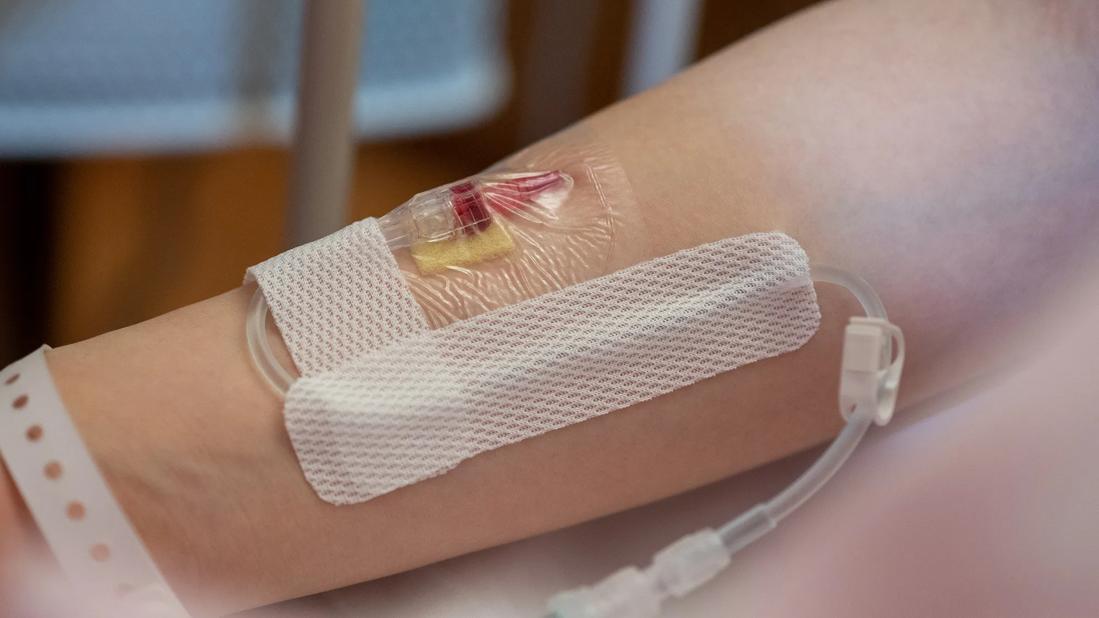
Image content: This image is available to view online.
View image online (https://assets.clevelandclinic.org/transform/c5bdce84-4f20-4f4e-9af3-16127cb0a03c/canula-patients-arm-1241269333)
Canula in patient's arm
A growing body of research shows that low-dose vasopressors can be safely administered through a peripheral IV when supported by a carefully designed protocol. By rethinking traditional practice and building a meticulous safety framework, Cleveland Clinic nurses are helping transform critical care with the Intentional Administration of Peripheral Vasopressors (PIV-VP) – a new approach designed to minimize the risks commonly associated with vasoconstrictive drugs.
Advertisement
Cleveland Clinic is a non-profit academic medical center. Advertising on our site helps support our mission. We do not endorse non-Cleveland Clinic products or services. Policy
“The PIV-VP protocol has significantly reduced the number of our patients who require central-line insertion in the ICU and other acute care settings — decreasing their exposure to serious procedural risks,” says Lynne Kokoczka, MSN, APRN-CNS, Clinical Nurse Specialist at Cleveland Clinic. “It’s a huge win.”
To avoid the risk of extravasation and subsequent tissue damage, vasopressors traditionally have been administered through a central line – a process that carries well-documented risks, including infection, thrombosis and pneumothorax. In recent years, clinicians have questioned whether this approach is always necessary — particularly in patients who require only low-dose vasopressors for a short duration.
The PIV-VP protocol addresses that clinical gap by introducing rigorous safeguards, Kokoczka says, beginning with what she describes as “perfect” IV placement. Peripheral IVs must be placed in the forearm, avoiding higher-risk sites like the hand, wrist and antecubital fossa. With the new process, ultrasound guidance is used to confirm appropriate placement. Once initiated, the IV site is assessed every two hours, and if therapy extends beyond 24 hours, the catheter is relocated to a new site.
Developed through close collaboration with nurses, pharmacists and physicians, PIV-VP was first implemented in the medical ICU at Cleveland Clinic’s Main Campus and refined over several years before broader adoption.
To evaluate the protocol’s safety and outcomes, researchers conducted a prospective study of more than 600 patients. The results were significant: When PIV-VP was used, average central-line duration decreased by one day, and more than 51% of patients were able to avoid central-line insertion altogether. Extravasation events were rare, could be managed locally without surgical referral and were not associated with adverse safety outcomes.
Advertisement
Published in CHEST in 2024, the large, prospective study adds to the growing body of evidence supporting closely monitored peripheral vasopressor administration.
“There are certain clinical circumstances in which vasoactive agents must be given immediately; in those cases, peripheral access becomes paramount, although it has remained controversial,” says Kokoczka, who coauthored the study. “We’re contributing to the evidence base by showing that, when guided by the right protocol, the process is safe for patients.”
She notes that the PIV-VP protocol also aligns with updated guidance from the Infusion Nurses Society, further supporting its evidence-based foundation.
Kokoczka emphasizes an additional safety measure of PIV-VP: proactive antidote-ordering.
“The reversal agent can be pre-ordered within the protocol and embedded in the electronic order set, where it is immediately available in the event of extravasation,” she says. “This eliminates time-consuming steps such as contacting the pharmacy or prescribing provider, saving critical minutes.”
Because PIV-VP is designed for patients who require low-dose vasopressor support for a limited time, Kokoczka says it has proven particularly effective for patients with sepsis. She adds that the protocol may also be appropriate for patients who require temporary vasopressor support during recovery from anesthesia.
Kokoczka also emphasizes the protocol’s clear escalation criteria. If a patient’s vasopressor requirement rises above defined thresholds or therapy is expected to continue beyond the recommended duration, clinicians are guided to transition to central-venous access.
Advertisement
Following the success of the pilot program, PIV-VP was expanded to adult ICUs, post-anesthesia care units and emergency departments across the Cleveland Clinic enterprise. Kokoczka says the protocol’s widespread adoption reflects strong clinical outcomes and highlights the role of nursing leadership in driving practice change.
In the near future, researchers hope to expand the protocol to incorporate additional medications, continue to refine safety parameters and conduct further studies to evaluate long-term outcomes.
For Kokoczka, the initiative underscores the impact nurses can have in advancing evidence-based practice.
“By challenging longstanding assumptions and implementing structured safeguards, our work has demonstrated that peripheral vasopressor administration can reduce invasive procedures while prioritizing patient safety — a meaningful advancement in critical care delivery,” she says.
Advertisement
Advertisement
Using meticulous preparation and teamwork to manage critically ill patients in constantly changing environments

Translating clinical questions into meaningful, sustainable change
Guidance for creating a relevant framework that reflects organizational values, supports professional practice

Helping patients recognize respiratory changes, navigate treatment barriers and stay connected to their clinical team
Initiative provides hands-on opportunities to promote early, progressive activity

Continuing to grow by following the right path at the right time

Teaching caregivers to recognize warning signs, de-escalate difficult situations and maintain professional boundaries

Veteran caregivers offer practical wisdom for building confidence and practicing with purpose
 Search