Locations:





Ultrasound-guided debridement for selected patients with persistent symptoms
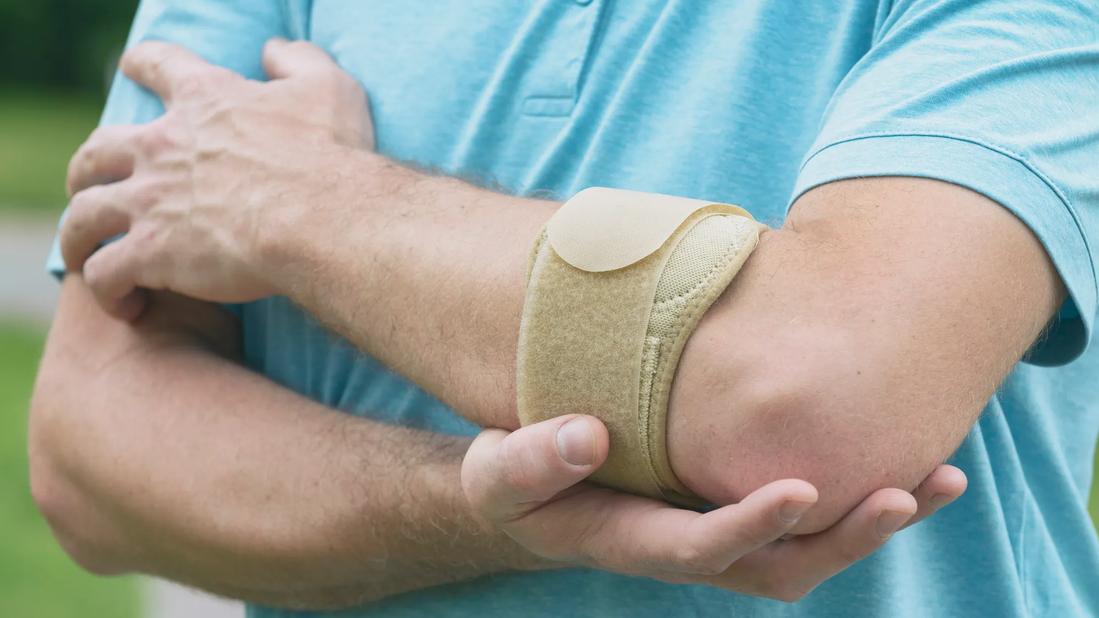
Image content: This image is available to view online.
View image online (https://assets.clevelandclinic.org/transform/3dc8fced-5afd-4cba-a636-657366aa754a/tennis-elbow-band-1252340187)
Person holding their elbow that has a brace on it
For patients with chronic tendinopathy, treatment has often come down to two choices: continue conservative care after progress stalls or proceed to surgery. However, percutaneous tenotomy now offers an option between those extremes, providing relief for some patients with persistent symptoms.
Advertisement
Cleveland Clinic is a non-profit academic medical center. Advertising on our site helps support our mission. We do not endorse non-Cleveland Clinic products or services. Policy
The minimally invasive procedure uses ultrasound guidance to debride degenerative tendon tissue through a small incision, typically with local anesthesia in an ambulatory setting. By removing pathologic tissue and creating a controlled micro-injury, the procedure is intended to stimulate healing.
“When rest, ice, medication, physical therapy and other conservative treatments have stopped working, this procedure offers another option before considering open tenotomy,” says Cleveland Clinic primary care sports medicine physician Wesley Baker, DO. “It’s a middle ground that is less invasive and requires less downtime than full surgery. That’s why so many patients are drawn to it.”
First-line treatment for chronic tendinopathy remains activity modification, NSAIDs when appropriate and physical therapy. Depending on the anatomic site and clinical scenario, selected patients also may benefit from corticosteroid injection or biologic treatments such as platelet-rich plasma (PRP).
Percutaneous tenotomy becomes a consideration when symptoms persist despite this nonoperative care. According to Dr. Baker, ideal candidates typically have:
Common indications include:
Advertisement
“If a patient had moderate success with physical therapy or injection, but the progress didn’t last for long, they might be a perfect candidate for percutaneous tenotomy,” Dr. Baker says. “For those who had no response to those conservative treatments, I would recommend further workup, probably with an MRI, to better understand their pathology.”
As with many tendon procedures, success depends heavily on patient selection. Percutaneous tenotomy is generally not appropriate for acute inflammatory tendon pain, such as overuse symptoms in younger athletes.
It is also not the best option for patients with high-grade tearing (generally greater than 50%), tendon rupture or impending rupture.
“For acute conditions, I’d consider other nonoperative options first, including steroid injection or PRP,” Dr. Baker says. “Open surgery is more appropriate for patients with more substantial tearing because of the risk of progression or rupture.”
Imaging plays an important role in determining whether percutaneous tenotomy is likely to help. Ultrasound or MRI can confirm tendinosis, identify partial tearing and rule out higher-grade structural pathology that may warrant surgery.
That distinction is especially important in patients who have not responded at all to conservative treatment, since persistent symptoms may indicate a diagnosis other than isolated chronic tendinopathy.
Percutaneous tenotomy should not be viewed as a stand-alone intervention. Dr. Baker emphasizes that post-procedure rehabilitation is essential to optimize tendon healing and functional recovery.
Advertisement
“Tendons heal according to the stresses we put on them,” he says. “Physical therapy can help load a healing tendon properly. Performing percutaneous tenotomy by itself without therapy would not be as effective.”
A structured rehabilitation plan should be part of the treatment strategy from the outset, with progression tailored to the tendon treated, symptom severity and baseline function.
The procedure may also be paired with PRP in selected patients.
“I often compare it to maintaining a golf course,” Dr. Baker says. “Percutaneous tenotomy is like aerating the grass, while PRP is the fertilizer. Each improves the health of the tissue, but the combination may produce a stronger effect.”
Although the procedure itself takes only minutes, patients should be counseled that the overall visit will be longer and that short-term restrictions are common. Depending on the tendon treated, patients may go home with a sling, walking boot or crutches and may need temporary activity or weightbearing restrictions.
Recovery timelines vary by anatomic site, but most patients should expect gradual improvement over weeks to months rather than immediate relief. Early follow-up is important to assess pain, wound healing, and readiness to begin or advance therapy.
Dr. Baker sees patients for follow-up at one week, one month and three months.
“By three months, patients usually know whether the procedure has been successful,” he says. “Percutaneous tenotomy is not appropriate for every patient with tendon pain. But for frustrated patients who have tried and failed conservative treatment and still want to avoid surgery, it’s a good intermediate option.”
Advertisement
Advertisement
CT imaging using radiopaque markers can help assess healing after surgery
From Pavlik harness to periacetabular osteotomy, treatment approach varies by age and stage
Cleveland Clinic’s new program uses a cross-institute model to provide complete care for women of all ages and athletic levels
A practical look at patient selection, implant choice and the unanswered questions around long-term value

PTs’ roles as educators and translators make them a natural fit for informatics
Innovative procedure offers less-invasive alternative to Latarjet procedure

Even patients with reported penicillin allergies can receive it without increased complications

Study challenges assumptions about risk evaluation in total hip revision
 Search