Locations:





Research could lead to bionic devices that work more like the human body
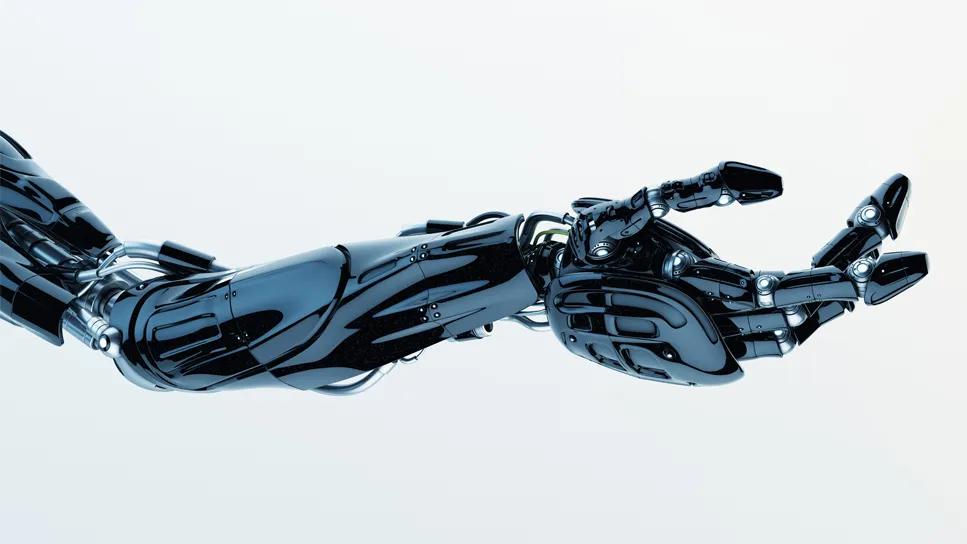
Image content: This image is available to view online.
View image online (https://assets.clevelandclinic.org/transform/8fb780bf-c080-4a86-8e8b-a7154d91f545/bionic-looking-arm-149868893)
stock image of bionic-looking arm
One challenge of improving quality of life for individuals with upper limb amputations is that prosthetics historically have not been able to replicate the kinesthetic sensations of moving a limb. A person’s sense of movement and limb location, critical to natural motor control, is lost after amputation.
Advertisement
Cleveland Clinic is a non-profit academic medical center. Advertising on our site helps support our mission. We do not endorse non-Cleveland Clinic products or services. Policy
But a recent single-participant study at Sant’Anna School of Advanced Studies in Pisa, Italy, together with earlier Cleveland Clinic research, offers new insight into how the brain processes signals related to grasping movement sensations. The two studies — done at different times, using structurally different technology — suggest the brain encodes coordinated synergies rather than isolated sensations.
Researchers in both studies were able to artificially vibrate relevant muscles to induce kinesthesia appropriate to specific hand movements, a development that could be a step toward building more naturally operating prosthetics.
Paul Marasco, PhD, who has led Cleveland Clinic’s research in this realm and is a co-senior author on the Sant’Anna and Cleveland Clinic studies, says replicating natural proprioception and kinesthesia has been a key stumbling block on the path to developing prosthetic limbs that operate naturally.
“Anybody with prosthesis faces the problem of controlling movements, but the bigger problem is knowing how the limb is moving without physically watching it,” says Dr. Marasco. “When you see people use prosthetics, their eyes are locked on their hands. And that's not how we naturally control our hands.”
Kinesthesia is a sense that the brain and body use all the time, but it typically operates at a nonconscious level, and its mechanisms are not well understood.
The new findings provide some insights. The latest study, published by an international team in Science Advances (first author Federico Masiero, PhD), arose from a six-week exploration of a novel device used in a 34-year-old Italian man with traumatic forearm amputation. The device, a myokinetic kinesthetic interface (MKkI), uses magnets implanted into native forearm muscles to receive targeted vibrations, remotely delivered from magnetic coils, that evoke kinesthetic sensations associated with grasp.
Advertisement
The researchers hypothesized that the vibrations would cause the participant to feel individual finger joint movements; instead, he felt more complex movements, such as the opening and closing of his hand.
Additionally, like participants in the Cleveland Clinic study, he did not experience sensations of unnatural/impossible movements, which have been reported in cases where mechanical vibrations were delivered to muscles through the skin, possibly confounding sensory feedback.
The Sant’Anna results were virtually identical to what a Cleveland Clinic-led research team found during tests with a structurally different but functionally identical interface. Cleveland Clinic’s targeted muscle reinnervation for kinesthesia (TMRk) incorporates a robotic hand with individually powered fingers. A prosthetic socket used muscle signals (EMG) for control and robotic vibration to provide a sense of limb and hand movements.
Researchers in Italy and Cleveland collaborated to compare results. Using video recordings of the Italian participant’s hand movement demonstrations, they applied a graphics engine to capture joint movement data. Those data then were compared with hand movement representations previously recorded from the TMRk participants using a data glove. In both studies, researchers discovered that vibrating muscles could prompt coordinated movement percepts (synergies) rather than isolated joint sensations.
Although the Sant’Anna work was a six-week proof-of-concept study in a single participant, its parallels with the Cleveland Clinic TMRk study suggest broader implications and warrant further investigation.
Advertisement
The Italian researchers expected that vibrations would create individual finger sensations, but the participant instead felt movement patterns.
“When your brain wants to do a simple thing, like opening your hand, it has an infinite number of possibilities and combinations that it can choose from to do that,” says Dr. Marasco. “This is an infinite dimensionality problem. Your brain can't physically store and process information for all possible trajectories. So we think that the brain manages this problem by building motor movements into synergies. If I'm going to grab a cup, I'm going to activate this synergy and it’s all going to be really simple. Well, those fundamental building blocks apparently are the same fundamental building blocks that the brain senses when it's feeling movement.”
In addition, because kinesthesia operates at a nonconscious level, describing the sensations is notoriously difficult. The Sant’Anna study participant struggled to explain what he was experiencing when the team activated the implanted system.
When the Italian researchers shared their data with Dr. Marasco, they assumed the MKkI experiment had failed because the participant experienced coordinated movement patterns rather than individual finger sensations.
“When we went through the data, I said, ‘This is actually synergies. This is awesome that it's a neural-machine interface and it's a prosthetic study, but this is actually about how the brain processes information about sensation," he says.
In addition to helping build better prostheses, Dr. Marasco expects the insights yielded from both studies will be useful in other, ongoing research. His laboratory’s work also includes efforts to advance health and quality of life for people with stroke, epilepsy and ACL reconstruction.
Advertisement
Advertisement
Relieves discomfort, reduces opioid dependency and improves quality of life
Trauma patients present with infected pilon and distal femur fractures
Leading investigators outline a new roadmap for clinical trials and observational research

The selective D1/D5 dopamine agonist provides symptom relief and improves daily function.
5-year funding award supports cohort expansion and deep phenotyping of AD and related dementias

Highest response rates seen with stress-lowering techniques like yoga, meditation and mindfulness
Digital subtraction myelography unveils often-overlooked but highly treatable underlying defect
Housing multidisciplinary clinicians in one leading-edge facility can transform GME along with patient care
 Search