Locations:





Height-indexed aortic measurements may better identify risk than diameter alone
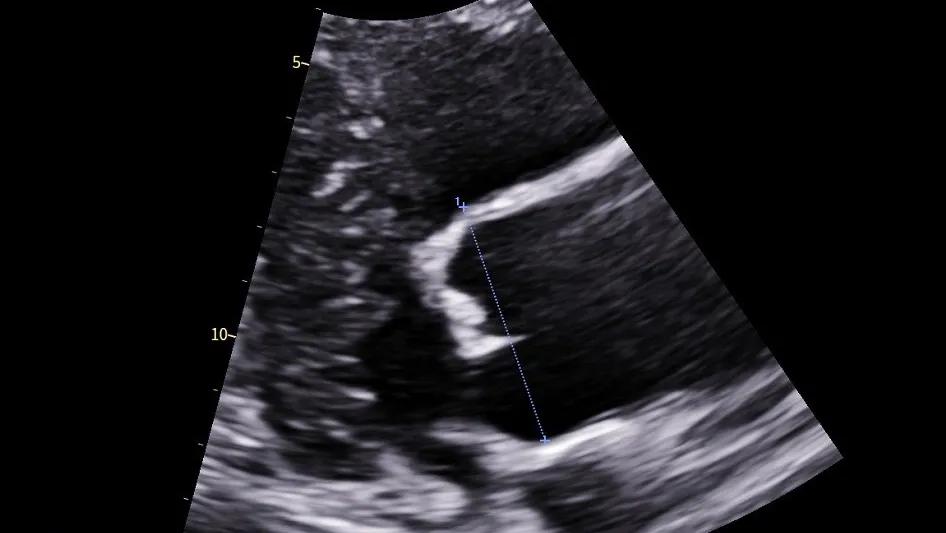
Image content: This image is available to view online.
View image online (https://assets.clevelandclinic.org/transform/ec55e17d-5a00-44b2-9b4c-a901be2def26/dilated-aorta18)
Dilated aorta
Ascending aortic dilation is often clinically silent until it presents as dissection or rupture, events associated with high mortality.
Advertisement
Cleveland Clinic is a non-profit academic medical center. Advertising on our site helps support our mission. We do not endorse non-Cleveland Clinic products or services. Policy
Current guidelines generally recommend surgery once the ascending aorta reaches 5.5 cm, or 4.5 cm in selected patients undergoing valve surgery. Yet many acute dissections occur below those thresholds, raising concern that diameter alone may not adequately capture risk.
That has fueled interest in indexed measures such as aortic height index (AHI) and cross-sectional area-to-height ratio (CSAH), which assess aortic size according to patient height. Although these metrics have shown promise in prior studies, they have not been widely incorporated into routine practice.
A new Cleveland Clinic analysis of more than 11,000 patients suggests that height-indexed aortic measurements may provide a more precise way to identify risk.
“These height ratios could particularly benefit women and other patients who do not meet traditional surgical criteria,” says the study’s lead author, Milind Desai, MD, MBA, Medical Director of Cleveland Clinic’s Aorta Center.
In the observational cohort study, recently published in JACC: Advances (2026 Jul 15;5(8):102859), Cleveland Clinic investigators analyzed 11,083 consecutive adults (mean age 68; 79% men) with ascending aortic dilation of 4-5 cm identified on echocardiography between 2010 and 2023.
The study excluded patients with syndromic aortopathies, such as Marfan and Loeys-Dietz syndromes, as well as those who presented with acute dissection or rupture.
During follow-up, 2,196 patients underwent elective aortic repair, almost always in conjunction with surgery for significant aortic valve disease, while 8,887 did not.
Advertisement
Investigators compared absolute aortic diameter with height-indexed measures in relation to long-term outcomes. The goal was to determine whether indexing could improve risk stratification in patients who fell below current primary thresholds for preventive aortic surgery.
At a mean follow-up of six years, 1,058 deaths and 132 aortic dissections or ruptures occurred in patients who did not have surgery. Notably, most of these events occurred in patients with an aortic diameter below 4.5 cm, underscoring the limitations of relying on diameter alone.
Height-indexed thresholds performed better than absolute diameter. In the derivation cohort of 3,887 unoperated patients, risk of death began to rise at:
The validation cohort of 5,000 unoperated patients showed the same. Both thresholds were associated with significantly worse long-term survival.
By contrast, an absolute diameter threshold of 4.5 cm did not distinguish survival in unoperated patients.
“Unfortunately, aortic rupture or dissection occurs mostly without warning,” says Lars Svensson, MD, PhD, Chief of the Heart, Vascular & Thoracic Institute at Cleveland Clinic. “The only current method to identify patients at greater risk is with a larger aorta. This study stressed how important size is and how it can be indexed to a patient’s body size.”
A sex-specific analysis added another important finding: A diameter above 4.5 cm was associated with increased mortality risk in women, but not in men. This finding reinforces concerns that fixed diameter thresholds may under-recognize risk in women and smaller patients.
Advertisement
“One of the key strengths of our study is its scale and depth,” Dr. Desai says. “We analyzed one of the largest contemporary cohorts of patients with ascending aortic dilation, with comprehensive imaging and long-term follow-up. Importantly, the strong representation of women allowed us to take a closer look at sex-specific risk — and we found that height-indexed aortic measurements outperform diameter alone, particularly in identifying high-risk women.”
“Aortic diameter has been an imperfect guide to identifying risk, and this study is an important step in tailoring aortic care to individual patients,” says study coauthor Patrick Vargo, MD, a Cleveland Clinic surgeon who specializes in aortic disease. “It suggests that patients with borderline aortic size may merit earlier referral to an experienced aortic center for closer surveillance and consideration of earlier surgery.”
Further studies are needed to determine if these patients may benefit from earlier intervention, he notes. Operative outcomes were favorable in this study. Among patients who underwent elective repair due to concomitant aortic valve disease, in-hospital mortality was 0.6%.
The findings of this study align with a broader shift in aortic care toward personalized risk assessment rather than fixed cutoffs. This may be particularly relevant to patients with aortas measuring 4-5 cm, where management decisions can be less straightforward.
Advertisement
Advertisement

Elevated levels of the gut microbial metabolite predict prevalence and adverse outcomes in community-based study
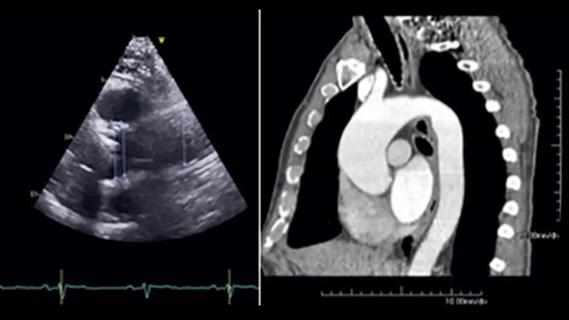
Large analysis adds to evidence that absolute diameter alone may miss vulnerable patients
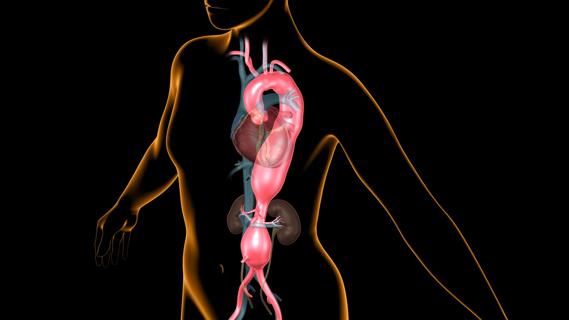
Robust signal from observational study raises prospect of a long-sought medical therapy
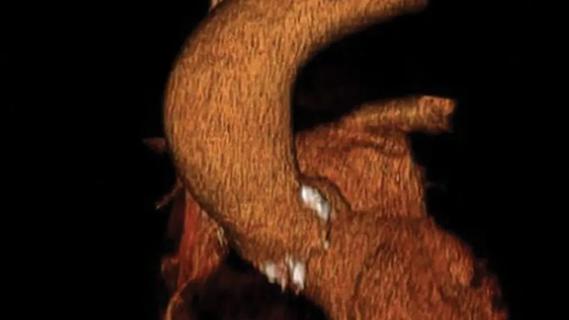
New Cleveland Clinic data challenge traditional size thresholds for surgical intervention
Study finds comparable midterm safety outcomes, suggesting anatomy and surgeon preference should drive choice
New review distills insights and best practices from a high-volume center
Blood test can identify patients who need more frequent monitoring or earlier surgery to prevent dissection or rupture
Recent Cleveland Clinic experience reveals hundreds of cases with anatomic constraints to FEVAR
 Search