Locations:





Increasing precision to conserve bone and protect soft tissue
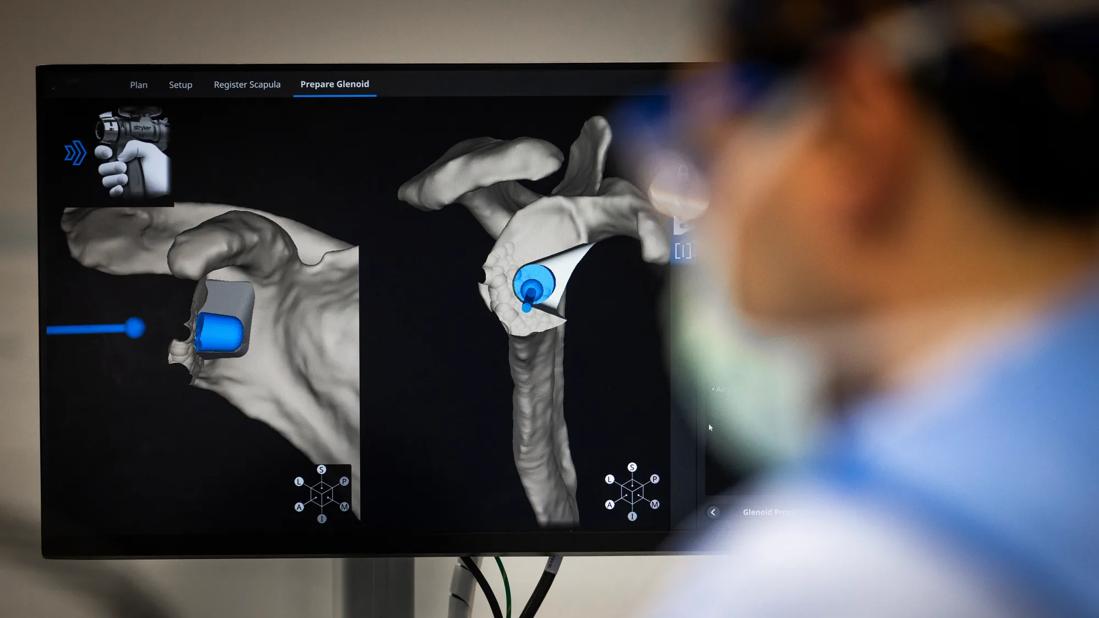
Image content: This image is available to view online.
View image online (https://assets.clevelandclinic.org/transform/3146f9cf-8159-449d-b5ad-1193e090b8a7/ORI_7528508_12_24_25_1223_AMO)
Surgeon at a computer planning robot-assisted surgery
The incidence of shoulder arthroplasty in the U.S. has increased exponentially over the last two decades. By 2030 the number of primary procedures is expected to approach 370,000 annually.
Advertisement
Cleveland Clinic is a non-profit academic medical center. Advertising on our site helps support our mission. We do not endorse non-Cleveland Clinic products or services. Policy
Supporting this growth has been the advent of reverse shoulder replacement as an alternative to anatomic replacement, and the expansion of implant options and navigation systems. The tools available for shoulder arthroplasty now include robotic systems, similar to those prevalent in hip and knee arthroplasty.
“Robotic surgery is uniquely suited for shoulder replacement because of the scarcity of bone and the importance of soft tissue relative to hip or knee arthroplasty,” says Vahid Entezari, MD, MMSc, a shoulder and elbow surgeon at Cleveland Clinic. “Millimeters matter in shoulder surgery, so the precision offered by robotic systems is especially valuable. In addition, the shoulder is the most unstable joint in the body. It relies greatly on muscles like the rotator cuff and other soft tissues for stabilization. Robot assistance can help minimize disruption to those soft tissues.”
In 2025 Cleveland Clinic began offering robot-assisted shoulder arthroplasty. This photo essay illustrates details of our first procedure.
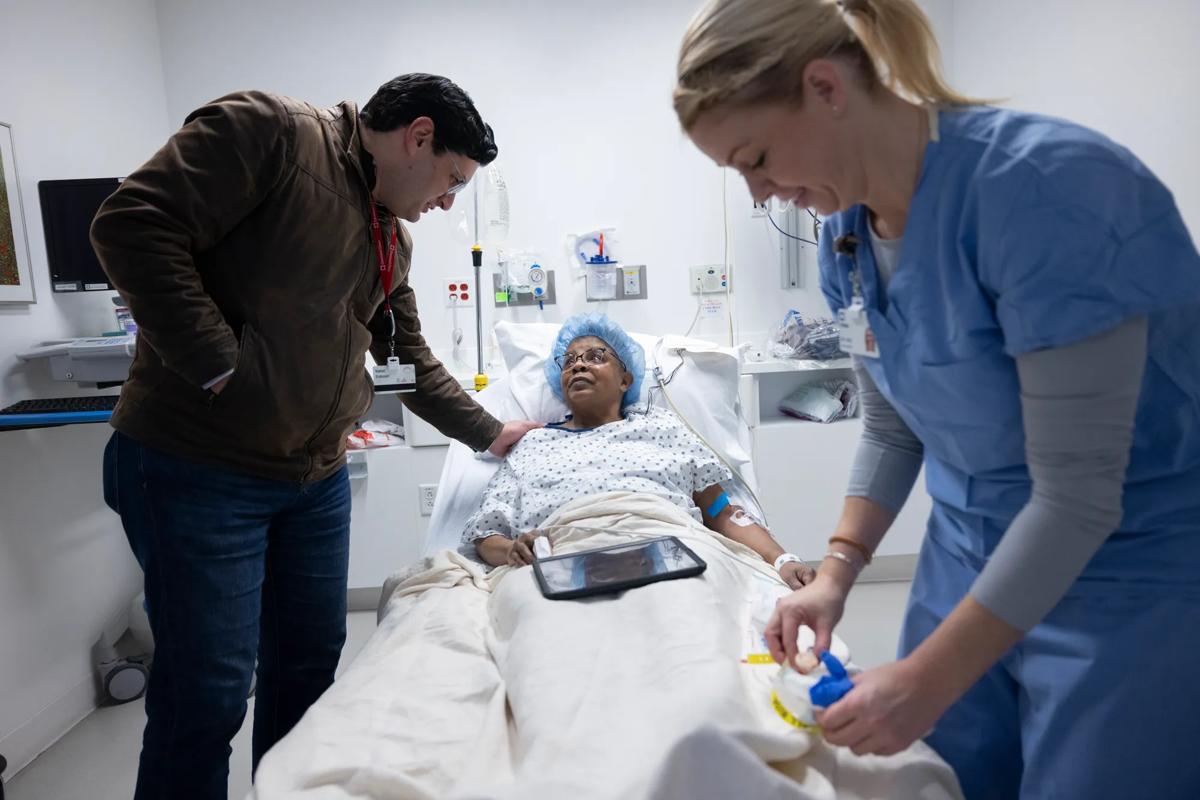
Image content: This image is available to view online.
View image online (https://assets.clevelandclinic.org/transform/b5f612c5-10e7-4c05-ad9b-5f146e13e71f/ORI_7528508_12_24_25_2047_AMO)
Dr. Entezari meets with the patient prior to surgery. The primary reason patients pursue shoulder replacement is arthritic pain combined with a progressive loss of function. The pain and dysfunction can impact every aspect of daily life: driving, personal care, work responsibilities, sleep. For many, it threatens their independence and ability to participate in the activities that define their quality of life.
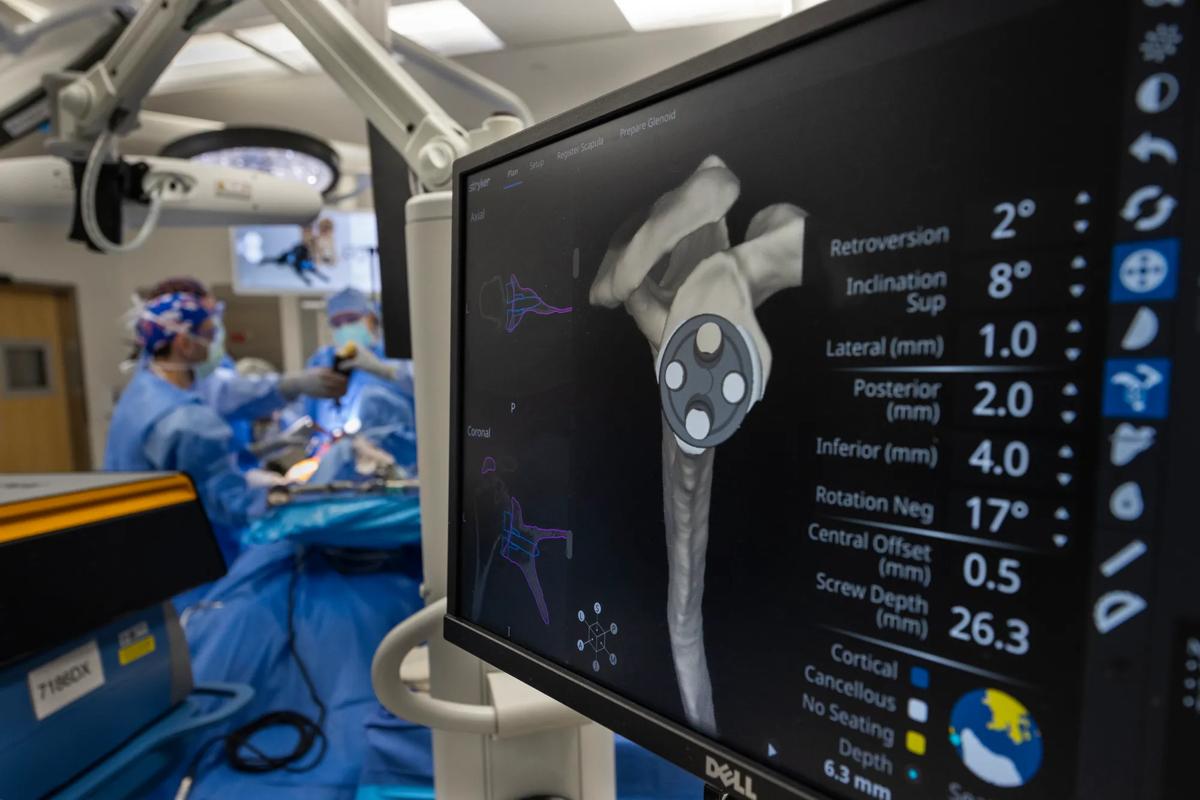
Image content: This image is available to view online.
View image online (https://assets.clevelandclinic.org/transform/906f532b-d19b-4af9-8323-9bf352076197/ORI_7528508_12_24_25_2615_AMO)
Preoperative planning uses the patient’s CT scan to determine optimal implant size and component positioning. The robotic platform helps execute the plan with millimeter accuracy and single-degree precision. Emerging evidence and clinical experience suggest that implant positioning and restoration of native anatomy are closely associated with postoperative range of motion, function and implant longevity.
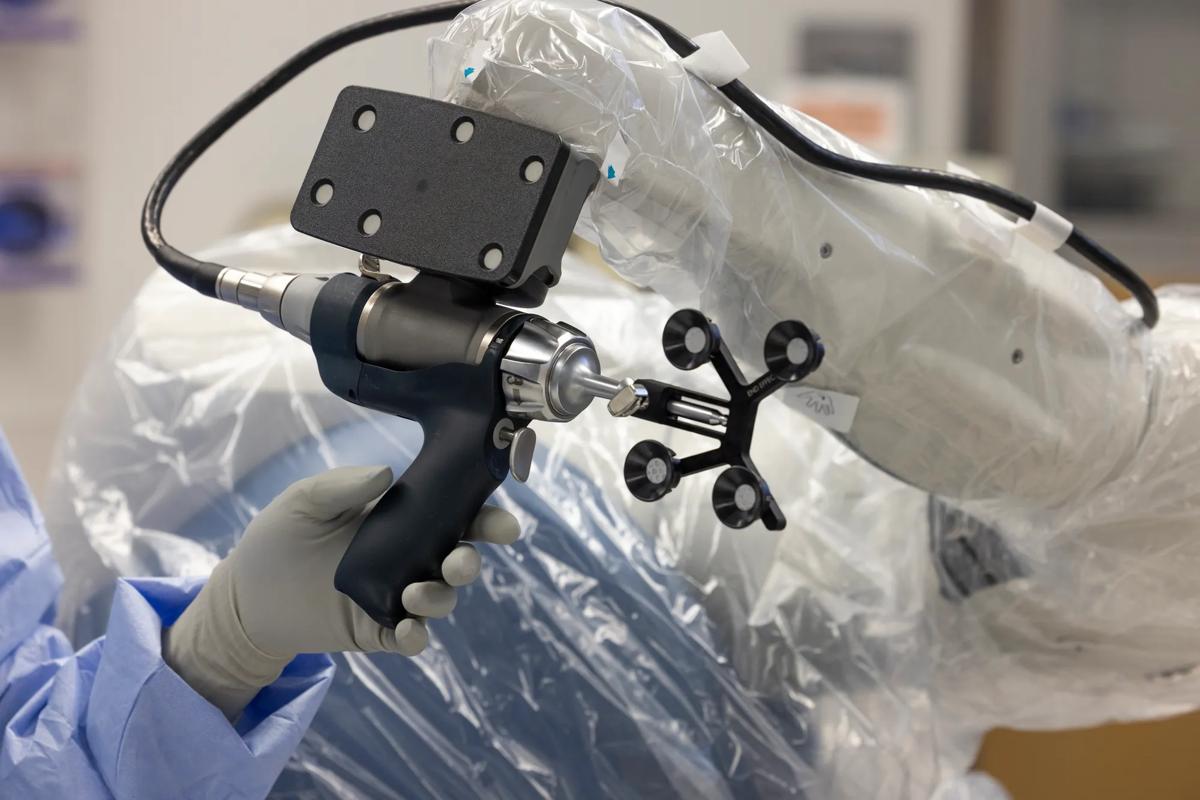
Image content: This image is available to view online.
View image online (https://assets.clevelandclinic.org/transform/1dd948cc-0336-42b9-a02a-0cdb1cc02357/ORI_7528508_12_24_25_1805_AMO)
The array attached to the robotic arm contains reflective markers that interface with an optical camera system, allowing real-time tracking of the robotic arm throughout the procedure. At the beginning of the case, Dr. Entezari moves the robotic arm through a guided path to help calibrate it.
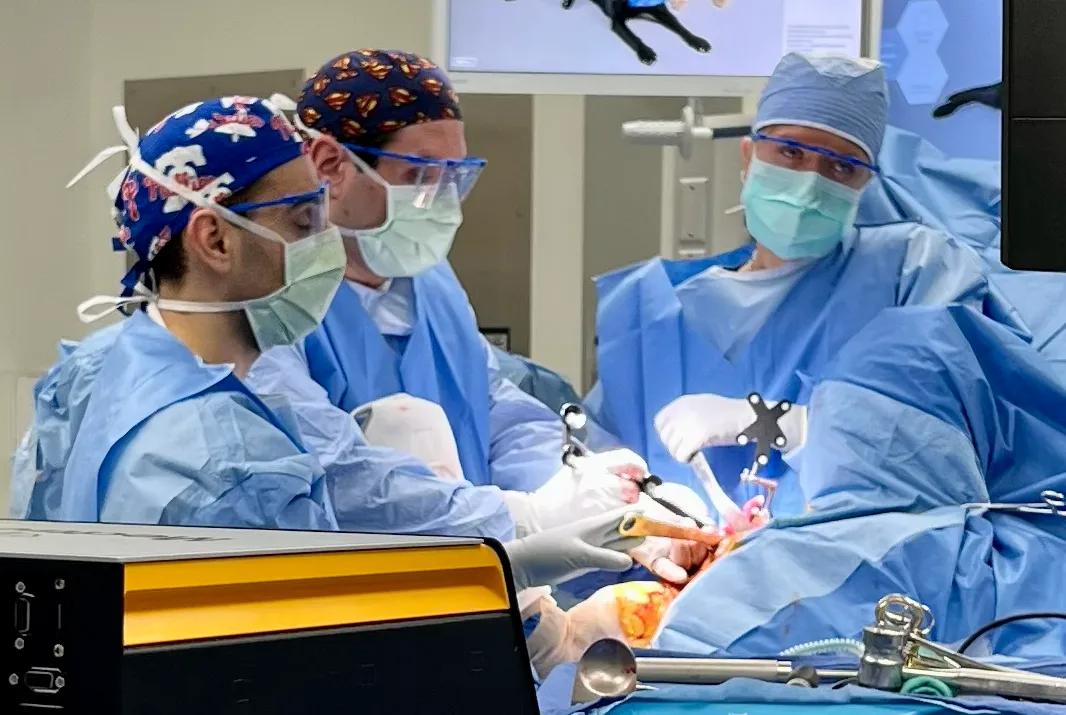
Image content: This image is available to view online.
View image online (https://assets.clevelandclinic.org/transform/30e2a77f-8d12-47f3-88ed-192c99bbd8e0/IMG_7930)
Dr. Entezari (center) registers key bony landmarks using a handheld probe and optical tracking camera. This registration aligns the virtual plan with the patient’s actual anatomy, enabling the robotic arm to execute bone preparation precisely.
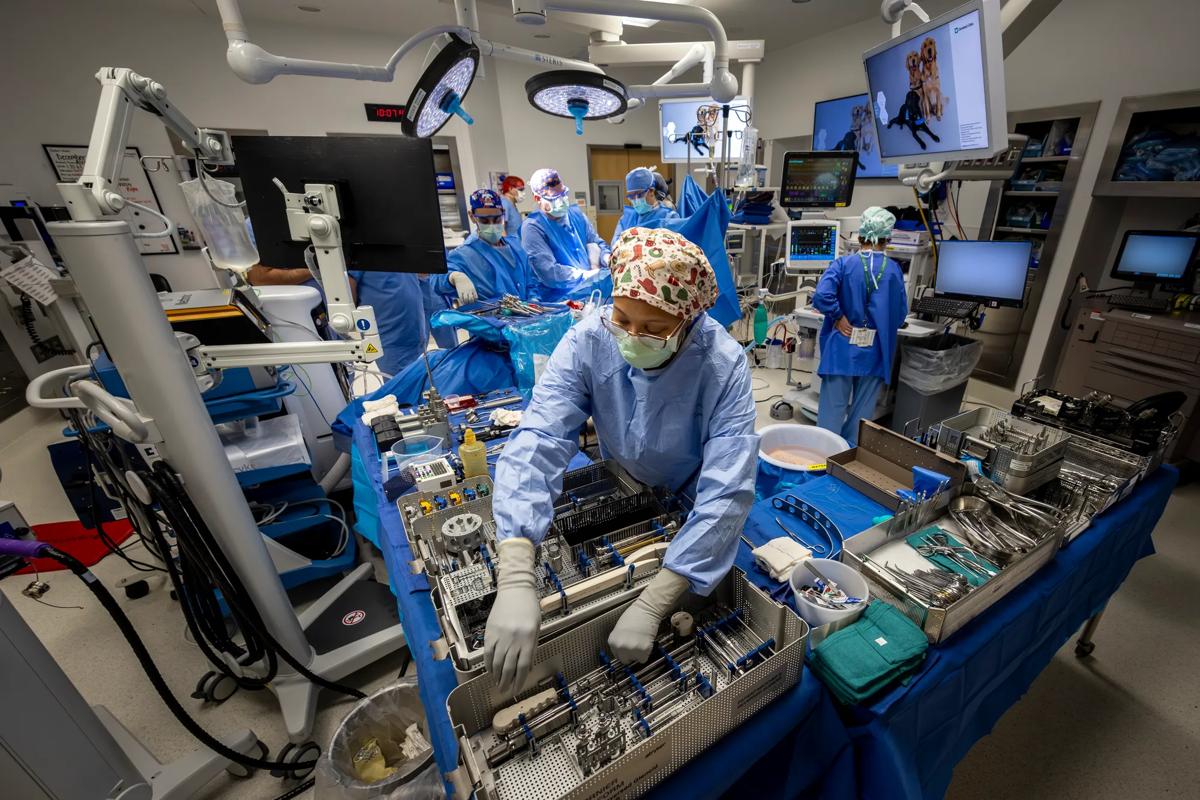
Image content: This image is available to view online.
View image online (https://assets.clevelandclinic.org/transform/eed3c35e-bbc5-423b-a56f-7712adaca50d/ORI_7528508_12_24_25_2623_AMO)
A surgical technologist prepares instruments that will connect to the robotic arm. These cutting tools will prepare the glenoid to receive a reverse shoulder arthroplasty baseplate. Currently robotic platforms are available only for reverse shoulder arthroplasty, although applications for anatomic shoulder arthroplasty are being developed.
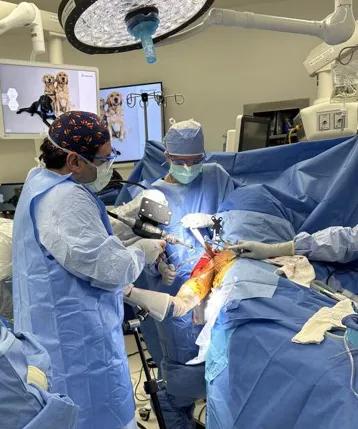
Image content: This image is available to view online.
View image online (https://assets.clevelandclinic.org/transform/55cca2d7-77ab-40ff-9922-9e15d73aba81/7954)
The robot is positioned near the patient so it can reach the surgical field. Dr. Entezari uses a high-speed bur mounted on the robotic arm to prepare the glenoid. Although Dr. Entezari’s hand moves the bur, the robot uses haptic feedback to warn if he strays from the surgical plan, helping conserve bone and protect soft tissue.
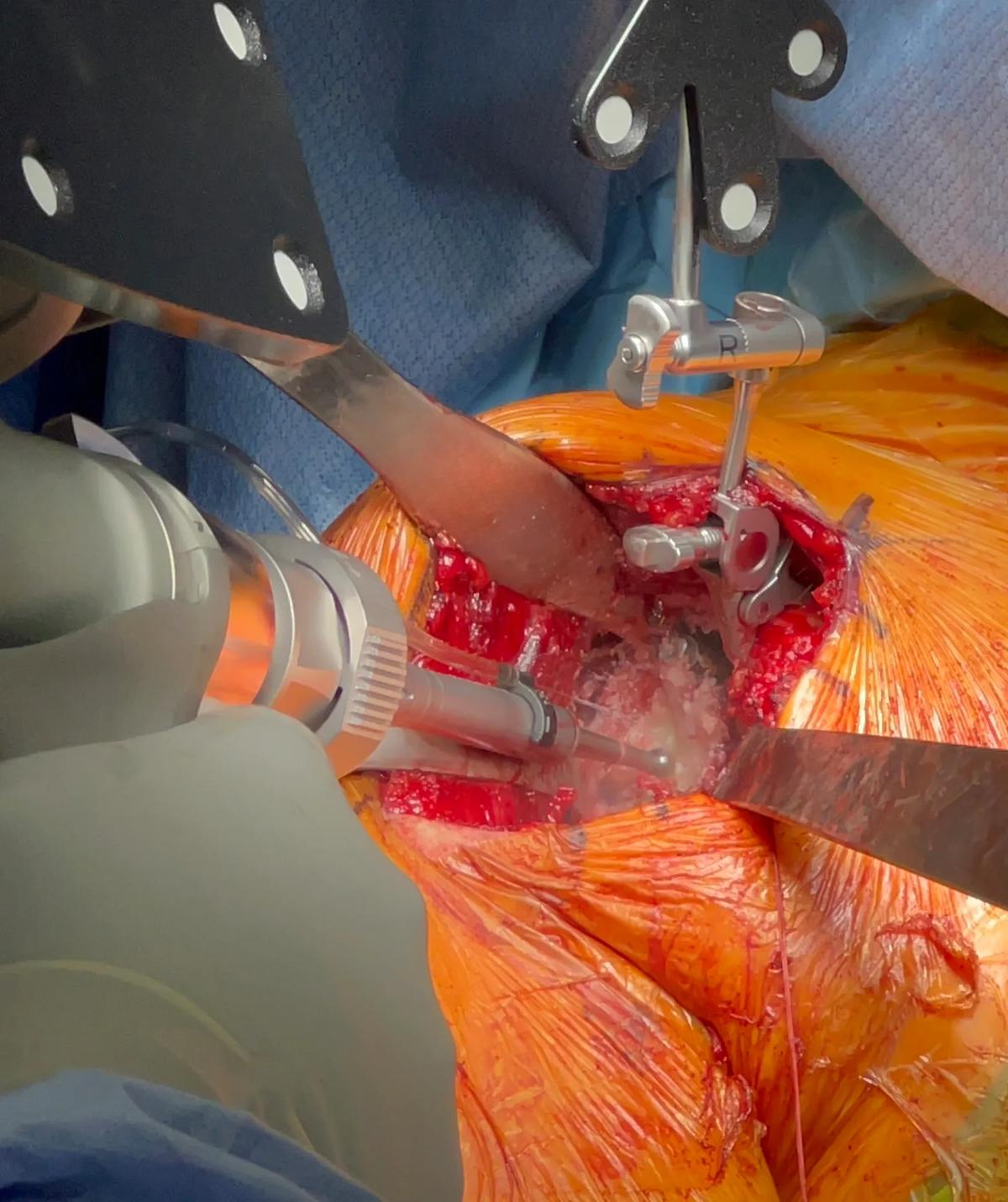
Image content: This image is available to view online.
View image online (https://assets.clevelandclinic.org/transform/8605b8c1-c147-4d89-8274-d1faf3d8164e/IMG_1557)
The high-speed bur (attached to the robotic arm) removes a portion of the glenoid. Tracking arrays sense the movement of the robotic arm relative to the scapula and help maintain highly precise bone preparation.
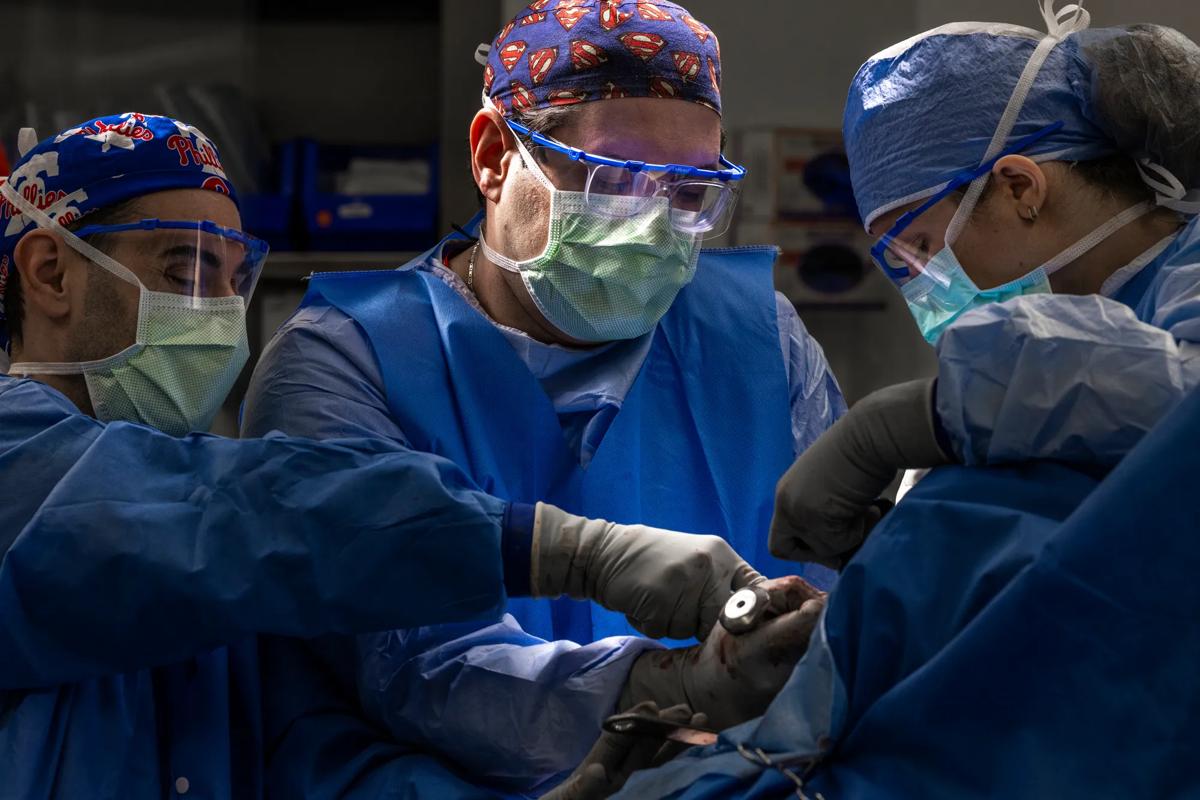
Image content: This image is available to view online.
View image online (https://assets.clevelandclinic.org/transform/a4f3e970-80f2-48b8-bdcd-17a366ea6be6/ORI_7528508_12_24_25_1887_AMO)
Fellow Brett Haislup, MD, (left) and resident Lauren Grobaty, MD, (right) assist Dr. Entezari (center) in inserting the implant and reducing the prosthetic shoulder joint. While robot-assisted shoulder arthroplasty is still in its infancy, longer term data from robot-assisted hip and knee arthroplasty indicate that increased surgical precision results in fewer outliers, shorter hospital stays and less postoperative pain.
Advertisement
Advertisement
Iliac crest structural autograft repairs large, uncontained defect
Procedure places the center among only a handful worldwide to offer the minimally invasive approach
Findings show significant energy savings and no association with increased surgical site infection, mortality or ICU admission
Common misconceptions about perioperative management and strategies to improve care

Dr. Prabhu discusses mentorship, collaboration and her vision for the future of the department
Multidisciplinary collaboration is fueling breakthroughs in endoscopic and surgical technology
Study finds broadly similar outcomes between MIS and open surgical approaches
Join us in Cleveland July 17 for a practical, first-of-kind course
 Search