Locations:





Rapid innovation is shaping the deep brain stimulation landscape
Podcast content: This podcast is available to listen to online.
Listen to podcast online (https://www.buzzsprout.com/2243576/18571420)
Modern deep-brain stimulation (DBS), which dates back to the late 1990s, has become an important factor in the advancement of treatment of movement disorders such as Parkinson’s disease and essential tremor. As technology accelerates, however, DBS seems destined for ever more significant refinements and broader applications.
Advertisement
Cleveland Clinic is a non-profit academic medical center. Advertising on our site helps support our mission. We do not endorse non-Cleveland Clinic products or services. Policy
“DBS is a technology-driven, high science area, so it's rapidly progressing and somewhat unlimited,” says neurologist Benjamin Walter, MD, MBA. “The data that we're getting from the brain is fancy but fairly rudimentary still at this point. That's going to get a lot more complicated, where we can get different signals from different parts that may have different meaning.”
On an episode of the Neuro Pathways Podcast, Dr. Walter, medical director of Cleveland Clinic's Deep Brain Stimulation program, describes how DBS works and how it’s likely to improve.
“DBS is a pacemaker for the brain. It's very much like a cardiac pacemaker except that the wires go into the brain instead of into the heart,” Dr. Walter says. “The pacemaker itself is a battery in a computer that basically goes in the chest, very similar to cardiac pacemakers. DBS is able to adjustably control aberrant pathways and activities in the brain that are some of the underpinnings of movement disorders and tremors like Parkinson's disease, essential tremor and dystonia, and they are evolving to potentially be a treatment for other brain circuit disorders as well.”
The conversation also explores:
Advertisement
Click the podcast player above to listen to the episode now, or read on for a short, edited excerpt. Check out more Neuro Pathways episodes at clevelandclinic.org/neuropodcast or wherever you get your podcasts.
This activity has been approved for AMA PRA Category 1 Credit™ and ANCC contact hours. After listening to the podcast, you can claim your credit here.
Podcast host Glen Stevens, DO, PhD: So my guess is you're pretty good at brain anatomy. The lesioning or the stimulation is based on where you assume something is anatomical, right?
Benjamin Walter, MD, MBA: That's correct. The MRI — which fortunately gives us a fairly fine resolution, the brain and these basal ganglia circuits — is a good first way of estimating where you want to stimulate, and you can find the structure on an MRI, but the MRI then has to be fused to a frame, which is attached to the patient's head in most cases. And usually a CAT scan is taken of that combined situation and those images are fused.
There's error sometimes in fusion, and that can cause [other] errors. And then when surgery takes place, the surgeon makes a bur hole and the CSF can leak out a little bit and there's always a little bit of brain shift. That will change the location of everything as well because it's based off the initial scans. But even if you're hitting the spot that looks right on the MRI, you're not necessarily in the right spot.
And so the real proof is what is there. What does it sound like? Can you pick up the neural activity of that region? And then even more so, test stimulation, either with a test probe or more importantly with the final DBS probe when you place it in there. Does it do what you expect it to do and what you want it to do? So that can be refined to microns in measurement to really get the right location and make sure that you're getting benefits without untoward side effects.
Advertisement
Dr. Stevens: So you're playing name that tune with the neurons?
Dr. Walter: Pretty much. It's like traveling through Europe and listening to different dialects of different languages and making sure that, first, you're in the right country and everybody's speaking Spanish in Spain, but then finding the right dialect for the city that you want to be in.
Advertisement
Advertisement
Therapists and physicians collaborate to get medically stable patients moving

Designed for digitization, distance health, discovery and more
Combining customized care, research capabilities and flexibility for the future
Leading investigators outline a new roadmap for clinical trials and observational research

The selective D1/D5 dopamine agonist provides symptom relief and improves daily function.
5-year funding award supports cohort expansion and deep phenotyping of AD and related dementias

Highest response rates seen with stress-lowering techniques like yoga, meditation and mindfulness
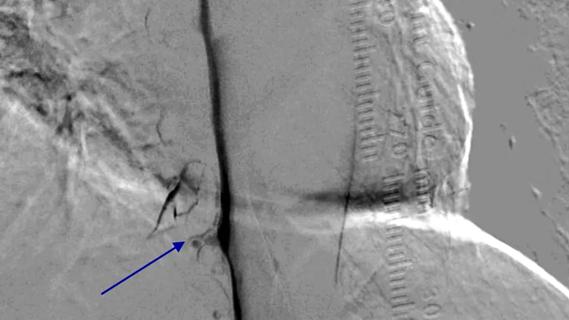
Digital subtraction myelography unveils often-overlooked but highly treatable underlying defect
 Search