Locations:





Cleveland Clinic’s new department chair discusses clinical priorities, prevention, stewardship and the evolving role of technology
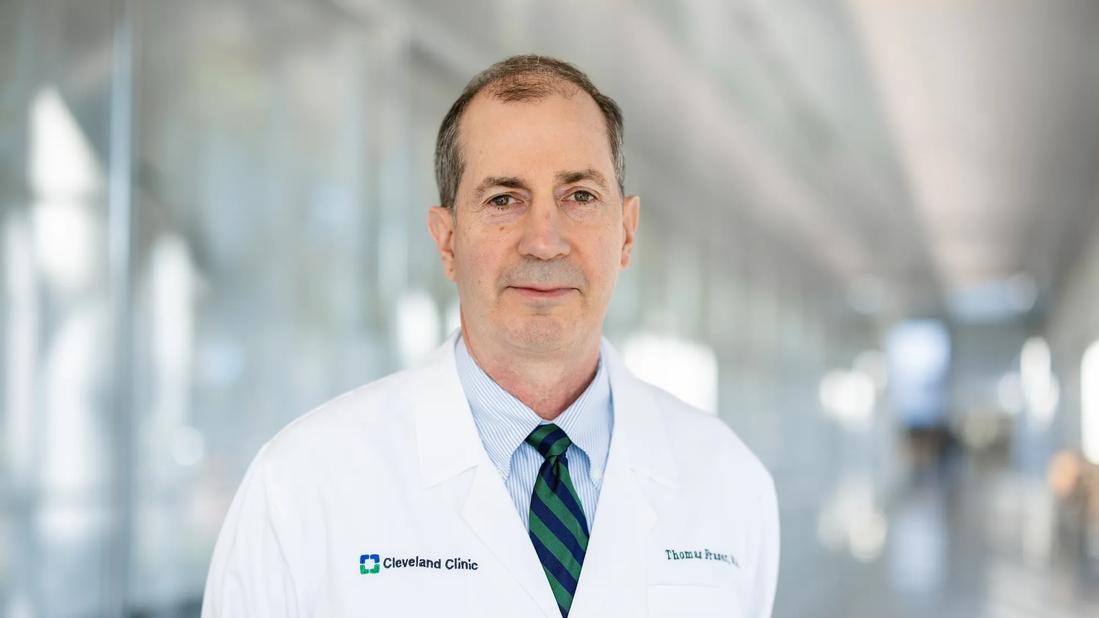
Image content: This image is available to view online.
View image online (https://assets.clevelandclinic.org/transform/abea1876-ae37-4117-a781-d8b8d72143de/Thomas-Fraser-MD-Portrai)
Thomas Fraser, MD
Cleveland Clinic has named Thomas Fraser, MD, as the new Chair of its Department of Infectious Disease. Dr. Fraser has been a member of the infectious disease department at Cleveland Clinic for 23 years. He has also served as Associate Chief Quality Officer for Infection Prevention and Antimicrobial Stewardship.
Advertisement
Cleveland Clinic is a non-profit academic medical center. Advertising on our site helps support our mission. We do not endorse non-Cleveland Clinic products or services. Policy
Dr. Fraser earned his medical degree with distinction at Northwestern University Feinberg School of Medicine, and he completed his internship and residency at Wright-Patterson Air Force Base in Ohio. He later served as a staff internist in the USAF at Andrews Air Force Base and subsequently completed his fellowship training in Infectious Disease at Northwestern University.
In a recent conversation with ConsultQD, Dr. Fraser discussed his goals for the department and what he hopes to build on in his new role.
Dr. Fraser: I completed an internal medicine residency, and I practiced as a general internist in the Air Force for four years, but I had always had an interest in infectious disease I think one of the great things about Infectious Disease is that you are challenged to at least have a working familiarity with many different medical conditions.I was attracted to the fact that this was a specialty where I could see a wide variety of patients. In many cases, infections are episodes in someone's life, so as infectious disease clinicians, we succeed when we can positively contribute to that episode and get patients feeling better and back on the mend.
The other major influencer for me was that when I was coming out of medical school, the AIDS epidemic was really front and center, and there were a lot of rapid developments in the infectious disease field in terms of HIV/AIDS treatment and management. I had the chance to work with a number of fantastic clinicians who introduced me to the field and all that it had to offer. Those physicians played a prominent role in the day-to-day practice of medicine in the hospital, and I was attracted to that aspect of the field.
Advertisement
Dr. Fraser: I look at it as a great responsibility. Cleveland Clinic has had a long line of phenomenal infectious disease physicians, including Dr. Steven Gordon, who is retiring this year. I'm humbled by the opportunity. My job is to steward the department until the next generation takes the helm.
As far as some of my priorities are concerned, we remain focused on providing excellent care for our patients and excellent service for our colleagues. As a consultative service, it is important that we focus on service to the teams asking for our help. We want to be as useful as possible to them.
In infectious disease, you have to be prepared for the unexpected. The field is always evolving, and new challenges will continue to emerge. Our responsibility as a department is to stay resilient and adaptable while focusing on what we can control — delivering excellent care, supporting our colleagues and responding effectively to whatever challenges emerge.
Dr. Fraser: Many times, we're called to help put out a fire, and antibiotics are the tools we use to help with that. Antibiotics are unique, however, in that how they are used impacts not just the individual patient but others in the hospital and the community. Stewardship in infectious disease is an awareness of this and trying on a daily basis to give people what they need. Once the fire is put out, hopefully we have developed a relationship with the patient and have an opportunity to have a conversation about prevention. A natural part of this is vaccine-preventable illness and the importance of immunization.
Advertisement
Multidisciplinary collaboration is how the ID department works across Cleveland Clinic. One of the unique strengths of infectious disease at Cleveland Clinic is that our physicians have the opportunity to develop focused expertise in specific clinical areas. They're able to build great relationships with other members of the organization who work in those specific disciplines. As an example, I spend some of my time in the heart center caring for patients who have cardiac-related infections. To be effective in my role, I need to partner quite closely with my colleagues in the Heart, Vascular, and Thoracic Institute. These daily interactions make me a better physician.
Dr. Fraser: There have been a lot of advances in diagnostics, and that's great for us because it helps us get to a diagnosis faster. I think where technology can be most valuable is in improving the precision and speed of diagnosis of infectious disease syndromes.
But also understanding the best way to apply these tools is important for us. We mentioned stewardship earlier — sometimes it seems like it would be best if every patient could get every test every time, but that's not always helpful. I’m excited about the possibilities these tools create, but they have to be guided by clinical judgment so that a patient will get the right test at the right time.
Dr. Fraser: This is a big part of what we do here at Cleveland Clinic. At our core, we are a teaching organization, and I have benefited immensely from the guidance of others when I first joined the staff.
Advertisement
I think mentorship is just a natural extension of that. When people are early into their career, they're looking to grow their skills and practice their craft. My job as chair is to put them in a position to succeed and encourage them to explore all the different opportunities that come with being part of a large, multidisciplinary team.
Advertisement
Advertisement

Findings hold lessons for future pandemics

Investigating asymptomatic parasitemia will also contribute to knowledge of disease immunity

Collaboration must cross borders and disciplines
How our Advisory Services and Affiliate Program has helped hospitals drive down SSI rates

Anti-viral immunity identified a novel mechanism in necroptosis
How careful measurement, provocative testing and repeat assessment can maximize the diagnostic value of PAC

Cleveland Clinic experts discuss clinical clues, testing considerations and multidisciplinary care for patients with suspected short telomere syndromes

A look at how physician work is valued and why survey participation matters
 Search