Locations:


Guidelines consider multiple risk factors for post-menopausal women

Image content: This image is available to view online.
View image online (https://assets.clevelandclinic.org/transform/f6722a6d-9e88-42e4-b993-54d99e1cf0c2/menopause-consult-2292821256)
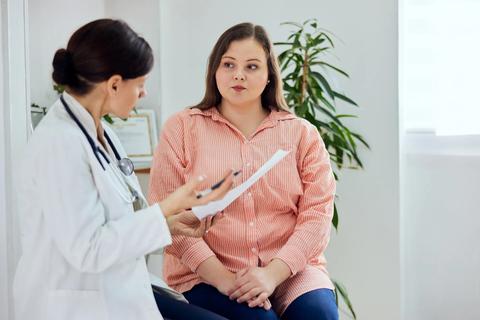
Patient and doctor looking over test results
As a physician with many patients in perimenopause, Cleveland Clinic Ob/Gyn Madeline Cohn, DO, is aware of the years-long gap between when some women experience significant bone loss and when they first get tested for osteoporosis at age 65.
Advertisement
Cleveland Clinic is a non-profit academic medical center. Advertising on our site helps support our mission. We do not endorse non-Cleveland Clinic products or services. Policy
“The average age of menopause in the U.S. is about 52,” says Dr. Cohn. “We know the period of greatest bone loss is in the two to three years leading up to menopause and the two to three years after menopause. If we wait until age 65 to screen for osteoporosis, we’re behind the ball in terms of helping them avoid osteoporotic fracture.”
Some patients avoid osteoporosis screening out of fears about treatment or because frailty is seen as a normal part of aging.
For clinicians treating patients in post-menopause, national guidelines haven’t always been straightforward — although that has been changing.
In January 2025, the U.S. Preventive Services Task Force (USPSTF) updated its guidelines regarding fracture-prevention screening. They now recommend bone-density testing for:
Previous USPSTF language about younger women indicated that a bone-density test could be considered if the patient’s risk was equal to or greater than that of a 65-year-old white woman with no major risk factors or fractures.
“That was a little nebulous. What does it mean to have a risk greater than or equal to a 65-year-old white woman?” Dr. Cohn says. “Now it lines up better with other guidelines, such as those from the American College of Endocrinology and the American College of Obstetricians and Gynecologists.”
Dr. Cohn has been recommending earlier screening based on risk-factor assessment and is happy to see alignment in the recommendations given the significant impact that bone loss can have on people’s lives.
Advertisement
Half of all women 50 and older in the U.S. will have an osteoporosis-related fracture in their lifetime, according to the U.S. Centers for Disease Control and Prevention. Additionally, the USPSTF notes that:
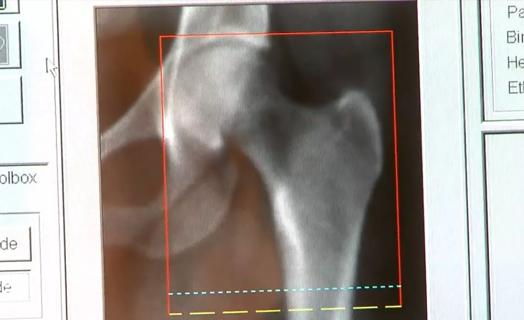
Bone mineral density (BMD) as measured by dual-energy X-ray absorptiometry provides one metric for informing a patient’s risk for fracture, but it isn’t the only factor or necessarily the most important one. Fracture Risk Assessment (FRAX), an algorithmic tool that assigns weighted values to various demographic and clinical factors, calculates the 10-year probability of major osteoporotic fracture.
In addition to personal demographics, FRAX considers previous fracture, parental hip fracture, smoking, glucocorticoid use, confirmed rheumatoid arthritis diagnosis, alcohol use, and secondary osteoporosis. BMD may be incorporated in the calculation or omitted.
“If a patient has used steroids three months or more over the course of a year, they are at really high risk for bone loss,” she says. “Rheumatoid arthritis is another big one.”
Clinicians should also consider whether a bone-density scan is appropriate for a patient who has undergone early menopause (before age 45) or surgical menopause.
“Patients who have had early menopause, and certainly early surgical menopause, are at increased risk for osteoporosis,” Dr. Cohn says. “If my patients have had early menopause or have just had their ovaries removed, I’m getting a bone-density test right then and there.”
Advertisement
If BMD indicates evidence of osteopenia or osteoporosis, the patient should be treated, and scans should be repeated for most of those patients every two years. Those who are on chronic steroids should be scanned more frequently, typically once a year.
Typically, she checks patients with normal results every five years if they have no high risk medical condition.
Patients may need counseling in two areas, Dr. Cohn notes: concerns about bone-health medication side effects and the overall importance of screening to prevent fractures.
Media reports about some of the rare side effects of osteoporosis medications — osteonecrosis of the jaw and atypical fractures — have made some people wary of treatment.
Osteonecrosis of the jaw associated with medication is more common in patients with severe dental disease, cancer or other immunocompromising conditions. In the general population, it’s rare and usually responds to antibiotics, says Dr. Cohn.
Atypical femur fractures associated with the use of bisphosphonates are less common now than they used to be because patients no longer stay on the medications indefinitely. “Now we use them for a couple of years and then stop them. By stopping them, we significantly reduce the risk of atypical fractures,” she says.
When discussing the very rare risks of severe side effects with patients, she places them in the context of the much greater risks that fractures pose to overall health.
“I’m not pro-fearmongering, but osteoporosis is a deadly disease, and it’s really underrecognized because it has no symptoms until you have a fracture,” she says. “I think the data say that 20% to 25% of people will die in the year following a hip fracture. That’s not even considering the significant life changes surrounding a fracture. You may have to go to the hospital, maybe to rehab, and you may not be able to be independent anymore. Osteoporosis and fractures have significant morbidity and mortality. So the goal of treatment is always to reduce fracture risk.”
Advertisement
In addition, Dr. Cohn takes the opportunity to reframe old narratives that normalize bone breaks as a natural part of aging.
“Patients sometimes say things like, ‘My grandmother broke a hip, but she was 70.’ But 70 is not that old! We shouldn’t be breaking our hips at all,” she says. “I also hear, ‘she was 80 and she fell.’ And my response is, ‘We want to prevent that from happening to you.’”
Advertisement
Advertisement
Proactive bone-health management may reduce morbidity and mortality

Falling from standing height should not break bones
Finally, a solution after multiple revision surgeries for delayed bone healing, loose hardware and unrelenting infection

Focus remains on risk-factor modification and antenatal surveillance
Low-dose aspirin, more frequent checkups may lower risks
History of laparoscopy with morcellation should inform differential

Akron General project highlights the benefits of doula partnerships

Change eliminates waste associated with dual-field approach
 Search