Locations:





Phase 3 STELLAR trial underscores role of molecular stratification in glioma care
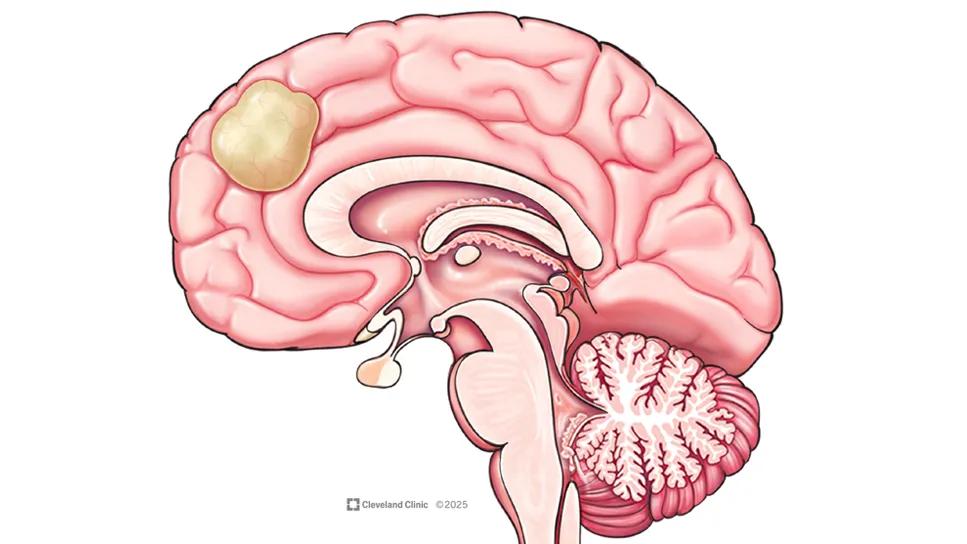
Image content: This image is available to view online.
View image online (https://assets.clevelandclinic.org/transform/b35284be-1037-47b3-bc47-4233cf7956fa/cc-illustration-of-brain-glioblastoma)
illustration of human brain with rumor at top right
The therapeutic landscape for recurrent high-grade gliomas has been characterized by limited options and poor outcomes, but results from the phase 3 STELLAR trial suggest a significant advancement for a specific patient population: individuals with recurrent IDH-mutant grade ODC3 astrocytoma. The study (J Clin Oncol. 2025;44[8]:JCO2501204) found that adding eflornithine, an oral ornithine decarboxylase (ODC) inhibitor, to standard lomustine therapy substantially extended survival for this subpopulation.
Advertisement
Cleveland Clinic is a non-profit academic medical center. Advertising on our site helps support our mission. We do not endorse non-Cleveland Clinic products or services. Policy
While the trial did not meet its primary survival endpoint in the broad intention-to-treat population, a predefined subset analysis showed that eflornithine more than doubled progression-free survival (PFS) and increased median overall survival (OS) by nearly a year in patients with IDH-mutant grade 3 disease.
“These findings highlight the importance of molecular stratification in glioma management and offer a potential new standard for a challenging clinical scenario,” says STELLAR co-investigator David Peereboom, MD, a medical oncologist with Cleveland Clinic’s Rose Ella Burkhardt Brain Tumor and Neuro-Oncology Center.
The biological basis for using eflornithine lies in the polyamine pathway. Rapidly proliferating tumor cells require high levels of polyamines for DNA, RNA and protein production. ODC serves as the rate-limiting enzyme in this process, and its activity levels are known to rise as glial malignancies increase in grade.
Unlike traditional chemotherapy, eflornithine’s mechanism is primarily cytostatic rather than cytotoxic. By blocking ODC, it slows cancer cell division. Previous research suggested that this cytostatic effect is most potent in slower-growing, lower-grade tumors that do not immediately overwhelm the drug’s activity. This background informed the STELLAR trial’s focus on grade 3 astrocytomas, which were historically categorized as anaplastic.
STELLAR was a randomized, open-label, international study involving 343 patients across 74 sites, including Cleveland Clinic. Eligible participants were adults with grade 3 astrocytoma (per 2016 WHO criteria) experiencing their first recurrence at least six months after completing radiotherapy and temozolomide therapy.
Advertisement
Patients were randomized 1:1 to receive either:
A critical aspect of the trial was the timing of the 2021 WHO CNS5 classification update, which occurred when enrollment was nearly complete. This update introduced CDKN2A/B homozygous deletion as a molecular marker that reclassifies some IDH-mutant tumors as grade 4 even if they appear histologically to be of a lower grade. To account for this, investigators updated the study’s statistical plan before unblinding to specifically analyze patients based on these refined molecular criteria.
In the intention-to-treat population, which included a heterogeneous mix of tumor types under the new criteria, the difference in median OS was not statistically significant (23.4 months for combination therapy vs. 20.3 months for monotherapy). However, the results were starkly different when focusing on the intended target population under the new criteria: patients with IDH-mutant grade 3 astrocytomas without the CDKN2A/B deletion.
For this specific subset of patients (n = 196):
Advertisement
Conversely, eflornithine provided no benefit to patients with grade 4 disease (either IDH-wild type glioblastoma or IDH-mutant with CDKN2A/B deletion). This aligns with the drug's cytostatic profile, as more aggressive tumors likely proliferate too quickly for ODC inhibition to be effective.
The safety profile was consistent with the known effects of both agents. The most common grade 3 or 4 adverse events in the combination arm were myelosuppression (bone marrow suppression occurred in 42% of the combination therapy arm vs. 29% of the monotherapy arm) and hearing impairment (auditory deficits occurred in 24% and 0% of the respective arms).
The investigators note that eflornithine-induced hearing loss is typically reversible upon treatment cessation, although they caution that long-term follow-up is needed to confirm this for all STELLAR participants. Gastrointestinal issues such as diarrhea (80% incidence at any grade) were also common but generally manageable.
“The STELLAR results signal a shift toward increasingly personalized neuro-oncology,” says Dr. Peereboom. “The trial shows that the addition of eflornithine offers an important survival advantage, but only when the tumor’s molecular identity is clearly defined as IDH-mutant and grade 3.”
He continues: “Molecular grading is no longer optional at the time of recurrence. Identifying the absence of CDKN2A/B deletion is essential to determine who will truly benefit from this regimen. As we continue to seek alternatives to traditional salvage therapies, the combination of eflornithine and lomustine represents a clinically meaningful step forward for a population that has long lacked effective options.”
Advertisement
Advertisement

Designed for digitization, distance health, discovery and more

Combining customized care, research capabilities and flexibility for the future

Expanded bevy of dedicated ORs will feature customized designs, leading-edge technology, optimized workflows

Routine capture of standardized neuroperformance data may expand and refine investigations

Reimagining the outpatient neurological visit with routine capture of neuroperformance data

Advanced surgical suite in our soon-to-open facility promises to redefine care standards

A passionate specialist surveys the field’s past, present and future
Today’s research helps illuminate tomorrow’s needs
 Search