Locations:





Podcast content: This podcast is available to listen to online.
Listen to podcast online (https://www.buzzsprout.com/2256206/19735669)
For many nurses, continuing their education can be an important step in professional growth — but deciding when and how to return to school can feel overwhelming.
Advertisement
Cleveland Clinic is a non-profit academic medical center. Advertising on our site helps support our mission. We do not endorse non-Cleveland Clinic products or services. Policy
Lisa Baszynski, DNP, RN, NE-BC, Associate Chief Nursing Officer for nursing education and professional development at Cleveland Clinic, encourages nurses to begin with one fundamental question: Why?
“I believe caregivers have a responsibility to keep expanding their knowledge, but that journey can only be navigated by understanding what interests and excites you,” she explains. “Where are you in your career, and where do you want to go? Talk with mentors and colleagues, explore different career paths and take advantage of shadowing opportunities. Although there’s no perfect time to return to school, an informed, realistic roadmap can help make it manageable.”
In this episode of Nurse Essentials, Baszynski emphasizes the importance of planning ahead; shares strategies for juggling school while managing work and personal responsibilities; and outlines key considerations when selecting an educational program.
Click the podcast player above to listen to the episode now, or read on for a short, edited excerpt. Check out more Nurse Essentials episodes at https://my.clevelandclinic.org/podcasts/nurse-essentials or wherever you get your podcasts.
Podcast host Carol Pehotsky, DNP, RN, NEA-BC: Here we are in 2026. Why is it more important than ever for nurses to continue their education?
Baszynski: I love this question – and the answer is always the same, no matter the year or decade. We live in a world that is constantly changing, and we hold one of the most important positions in healthcare. I believe we’re doing our due diligence. Ongoing education is our responsibility as [caregivers] who work for such a wonderful organization. We have to be confident…we can't be passive observers. We need to be strategic operationalists.
Advertisement
But how do we do that? We're educated, we lead, and we have the competence to make those decisions. Nursing is one of the most trusted professions in the world, and [our expertise] provides us with a responsibility. No matter where you are in your nursing career, you must continue to learn and grow.
Pehotsky: How does a practicing nurse prepare to pursue further education?
Baszynski: Think back to why you became a nurse in the first place – the drive and passion that got you there. Education is about taking the first step. Do your homework to find the right program, the right school. What type of curriculum am I looking for? What are the requirements? How are the semesters timed? What's the coursework like? What’s the tuition? How much clinical time may be required versus practicum time? How much time will be spent on projects? Is it feasible to do one course at a time? (That’s still progress!) Those kinds of questions you need to consider.
Advertisement
Advertisement

Translating clinical questions into meaningful, sustainable change
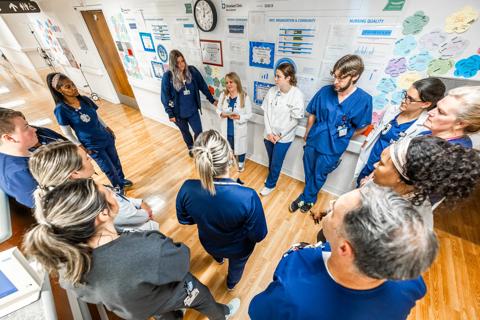
Guidance for creating a relevant framework that reflects organizational values, supports professional practice

Helping patients recognize respiratory changes, navigate treatment barriers and stay connected to their clinical team
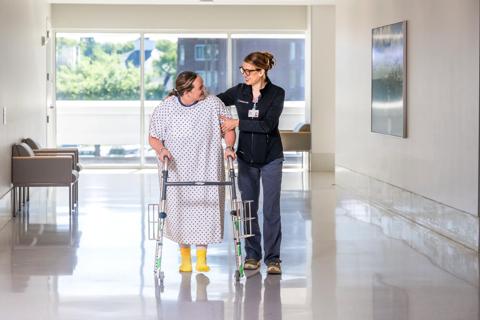
Initiative provides hands-on opportunities to promote early, progressive activity

Teaching caregivers to recognize warning signs, de-escalate difficult situations and maintain professional boundaries

Veteran caregivers offer practical wisdom for building confidence and practicing with purpose
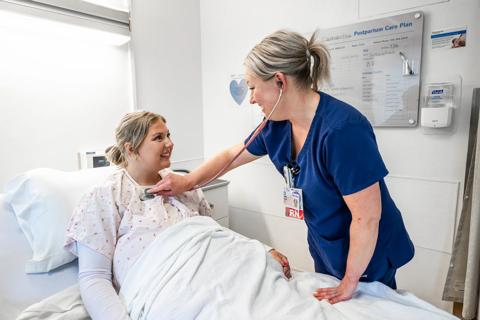
Skill, dedication and a passion for women and children inspire this joy-filled specialty

Nurses use flexibility, strong clinical judgment and teamwork to manage increasingly complex patients
 Search