Locations:
September 25, 2026/Nursing/Nursing Operations

Building a Meaningful Professional Practice Model

Guidance for creating a relevant framework that reflects organizational values, supports professional practice
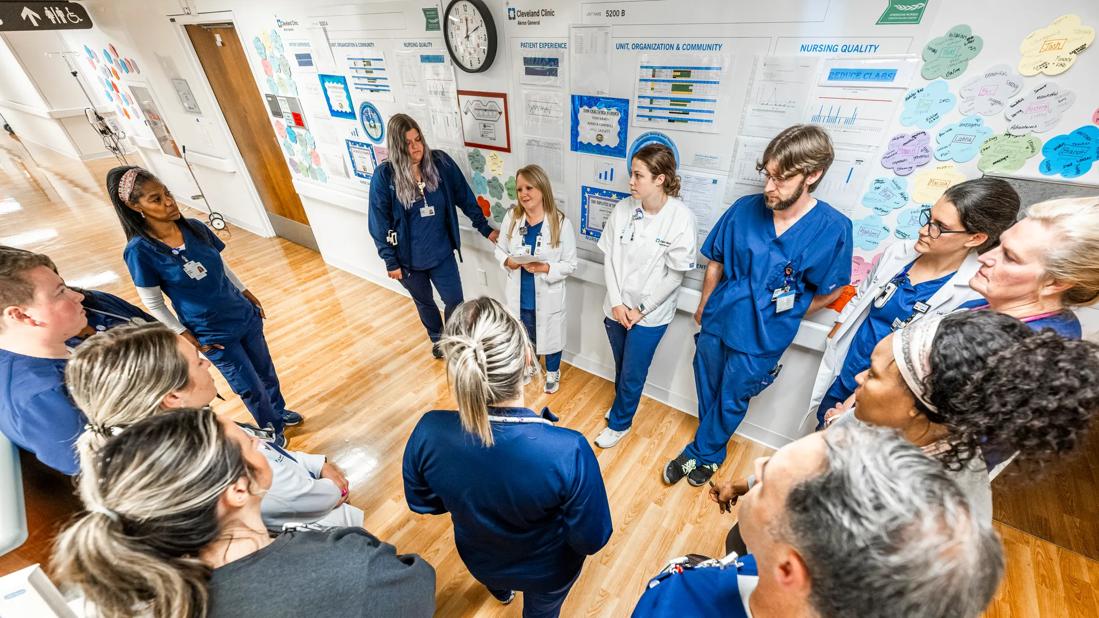
Nurses meet in hallway

A professional practice model (PPM) can do more than define how nurses practice. When thoughtfully developed and integrated into an organization’s structures and culture, it can provide a common foundation for decision-making, reinforce shared values and help translate ethical principles into everyday care.

Advertisement

Cleveland Clinic is a non-profit academic medical center. Advertising on our site helps support our mission. We do not endorse non-Cleveland Clinic products or services. Policy

Highlighting the importance of its own PPM, Cleveland Clinic centers its Nursing Institute’s shared governance meetings on the four care priorities that comprise the framework – patients, caregivers, community, organization – and the four domains of nursing practice:

  • Quality and safety
  • Relationship-based culture
  • Professional practice and development
  • Research, evidence-based practice and innovation

“Our PPM has helped us establish a common foundation for how nurses practice, make decisions and deliver care,” says Monica Weber, MSN, RN, CNS-BC, Senior Director of Nursing Professional Practice. “It connects what we value as an institution with what happens at the bedside. Structuring our shared governance meeting agendas around the principles of the PPM helps ensure that it remains a meaningful, living document.”

Created in 2009, Cleveland Clinic’s PPM was updated in 2020 to reflect current practices and values. The revision effort was led by Weber and her colleague Laura Pease, DNP, RN, RN-BC, NEA-BC, Senior Director of Enterprise Nursing Quality.

“A PPM is a framework that outlines the systems, processes and values that underpin how nursing is practiced throughout an organization, regardless of the care setting or type of unit,” Pease explains. “It helps ensure consistent care delivery by supporting a culture of excellence.”

Building a strong framework

Weber and Pease share several key steps for implementing a PPM, which is a tenet of the American Nurses Credentialing Center’s Magnet Recognition Program® requirements.

  • Establish a committee of key stakeholders. Members should include nursing leaders, administrators and frontline nurses from across the health system who can discuss what’s important to the organization, bring ideas back to local shared governance councils and evaluate the input. “You can’t expect to come together for two hours and walk away with a PPM,” Weber notes. “You need a broad perspective because the generated ideas have to resonate with nurses in a wide variety of settings – from the post-anesthesia care unit to the emergency department and medical-surgical units.”
  • Consult the experts. Weber encourages hospitals to seek the guidance of academic partners – experts in nursing theory – when establishing any conceptual framework. Before revamping Cleveland Clinic’s PPM, nurse leaders spent several weeks considering which nursing theory could provide them with the most reliable foundation. The team ultimately landed on Virginia Henderson’s Nursing Need Theory, which promotes the independence of patients and stresses the importance of meeting their 14 fundamental needs, including breathing, movement and safety.
  • Turn to the literature and your nursing peers. Weber and Pease recommend conducting a literature review on PPM development and examining other health system models for insight and inspiration.
  • Structure the PPM around institutional values. “Make sure your framework reaches beyond nursing to reflect the mission, vision and values of your entire organization,” Pease says. “We were very deliberate in embedding Cleveland Clinic’s four care priorities in our PPM.”
  • Incorporate key elements of professional nursing practice. A PPM should include core pillars of nursing: recognizing that all nurses are leaders, measuring quality indicators and providing patient-centered care, among others. However, Weber emphasizes that the PPM – a theoretical framework – should remain separate from a hospital’s care delivery model.
  • Embed the PPM in nursing structures. “A PPM can only be meaningful if it is accessible and easy to apply,” Weber says. For instance, in addition to building shared governance agendas around the nursing model, Cleveland Clinic’s Nursing Institute also presents annual Professional Practice Model Awards to caregivers who embody its four domains.
  • Keep evolving. “Nurse leaders must realize that developing a PPM isn’t a one-and-done endeavor.” Weber says. “You have to periodically reassess your priorities – and that entails asking if the document still reflects today’s nursing practice and your organization’s values.”

Advertisement

Advertisement

Related Articles

Debbie Matejka-Orlosky, LPN
September 16, 2026/Nursing/Podcast

Caring for Patients with Chronic Lung Disease (Podcast)

Helping patients recognize respiratory changes, navigate treatment barriers and stay connected to their clinical team
Racheal Jividen helping patient mobilize
September 4, 2026/Nursing/Clinical Nursing

One Step at a Time: Nurses Champion Mobility in the ICU

Initiative provides hands-on opportunities to promote early, progressive activity
Lisa Baszynski
September 2, 2026/Nursing/Podcast

Back to School: Is it Time to Pursue Another Nursing Degree? (Podcast)

Continuing to grow by following the right path at the right time
Erica Shields and Ashley Withrow
August 19, 2026/Nursing/Podcast

De-escalation Strategies to Prevent Workplace Violence (Podcast)

Teaching caregivers to recognize warning signs, de-escalate difficult situations and maintain professional boundaries

Graduation cap and stethoscope
August 5, 2026/Nursing/Podcast

Experienced Nurses Share Advice for New Grads (Podcast)

Veteran caregivers offer practical wisdom for building confidence and practicing with purpose
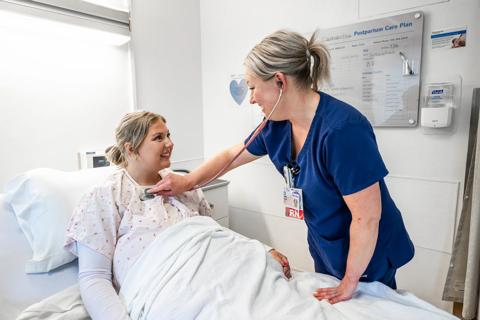
Nurse with pregnant patient

Obstetrics Nursing: Where Every Day is a Birthday

Skill, dedication and a passion for women and children inspire this joy-filled specialty

Nurse Wendy Simmons
July 22, 2026/Nursing/Podcast

Transitioning Surgical Care to Ambulatory Surgery Centers (Podcast)

Nurses use flexibility, strong clinical judgment and teamwork to manage increasingly complex patients

Portrait of Guillermo Ortiz Blanco, CST
July 20, 2026/Nursing/Innovations

Nurse Inventor Spotlight Series: Guillermo Ortiz Blanco, CST

Creativity and perseverance help scrub tech transform a simple surgical cup into a patented medical device

Ad