Locations:





Optimal management requires an experienced center
Interest in mitral annular calcification (MAC) is mounting, as it is increasingly diagnosed among aging patients and increasingly recognized as a contributor to mitral valve dysfunction and associated morbidity and mortality. Leaving MAC alone during mitral valve replacement can result in poor prosthesis fit and a leaky valve; on the other hand, debridement involves attendant risks, especially atrioventricular groove disruption, left circumflex artery injury and release of calcium fragments into the circulation.
Advertisement
Cleveland Clinic is a non-profit academic medical center. Advertising on our site helps support our mission. We do not endorse non-Cleveland Clinic products or services. Policy
A variety of practices are used to address MAC during mitral valve replacement in patients with severe symptoms refractory to medical therapy and who may have advanced mitral stenosis (MS) or mitral regurgitation (MR). Interventions range from limited to complete debridement and include open, endovascular and hybrid techniques for valve replacement. However, the general periprocedural mortality rates of 10% to 20% for MAC removal contribute to the reluctance of many centers to tackle the problem at all.
Recent data from 99 patients with severe MAC and MS or MR who underwent surgical mitral valve replacement at Cleveland Clinic found operative mortality risk to be 3% and permanent stroke risk 1%.1
“We’ve developed safe and effective approaches to treating MAC, tailoring debridement to save native tissue while accomplishing a good fit for the prosthesis,” says Shinya Unai, MD, a cardiac surgeon in Cleveland Clinic’s Department of Thoracic and Cardiovascular Surgery. “Addressing MAC is always a technical challenge, and patients being considered for intervention should be referred to an experienced center.”
“Although surgeries are difficult, we generally recommend having patients evaluated by a knowledgeable surgeon first,” says interventional cardiologist Samir Kapadia, MD, Chair of Cardiovascular Medicine at Cleveland Clinic. “For those who are deemed not to be good surgical candidates, we have successfully used transcatheter approaches for addressing mitral valves with MAC.”
Advertisement
Dr. Kapadia notes that vitamin K2 supplementation is an important low-risk preventive strategy that should be recommended to patients with calcium deposition in the cardiovascular system. The vitamin has demonstrated delayed progression of vascular and valvular calcification, and multiple studies indicate that regular supplementation can improve survival among cardiac patients. Dr. Kapadia has published extensively on this subject, including a recent review in Interventional Cardiology.2
Once MAC is identified, Cleveland Clinic physicians emphasize the need for comprehensive multimodality imaging — including transthoracic and transesophageal echocardiography, right and left heart catheterization and, critically, multidetector CT with 3D reconstructions — to thoroughly evaluate MAC distribution and density, its relationship to neighboring structures (such as the left circumflex artery) and any potential challenges to surgical or transcatheter interventions.
“MAC is highly variable, with different textures and distributions in relation to the annulus [Figure 1],” says Serge Harb, MD, a cardiologist in Cleveland Clinic’s Section of Cardiovascular Imaging who is at the forefront of advancing imaging techniques related to MAC. “Key CT considerations for surgical planning include delineating the distribution and extent of calcification, assessing regional calcium density (i.e., MAC mapping) and defining the proximity of the left circumflex artery to the MAC. For transcatheter therapies, CT further informs annular sizing to ensure appropriate device fit and helps evaluate the risks of left ventricular outflow tract [LVOT] obstruction and paravalvular leak.”
Advertisement
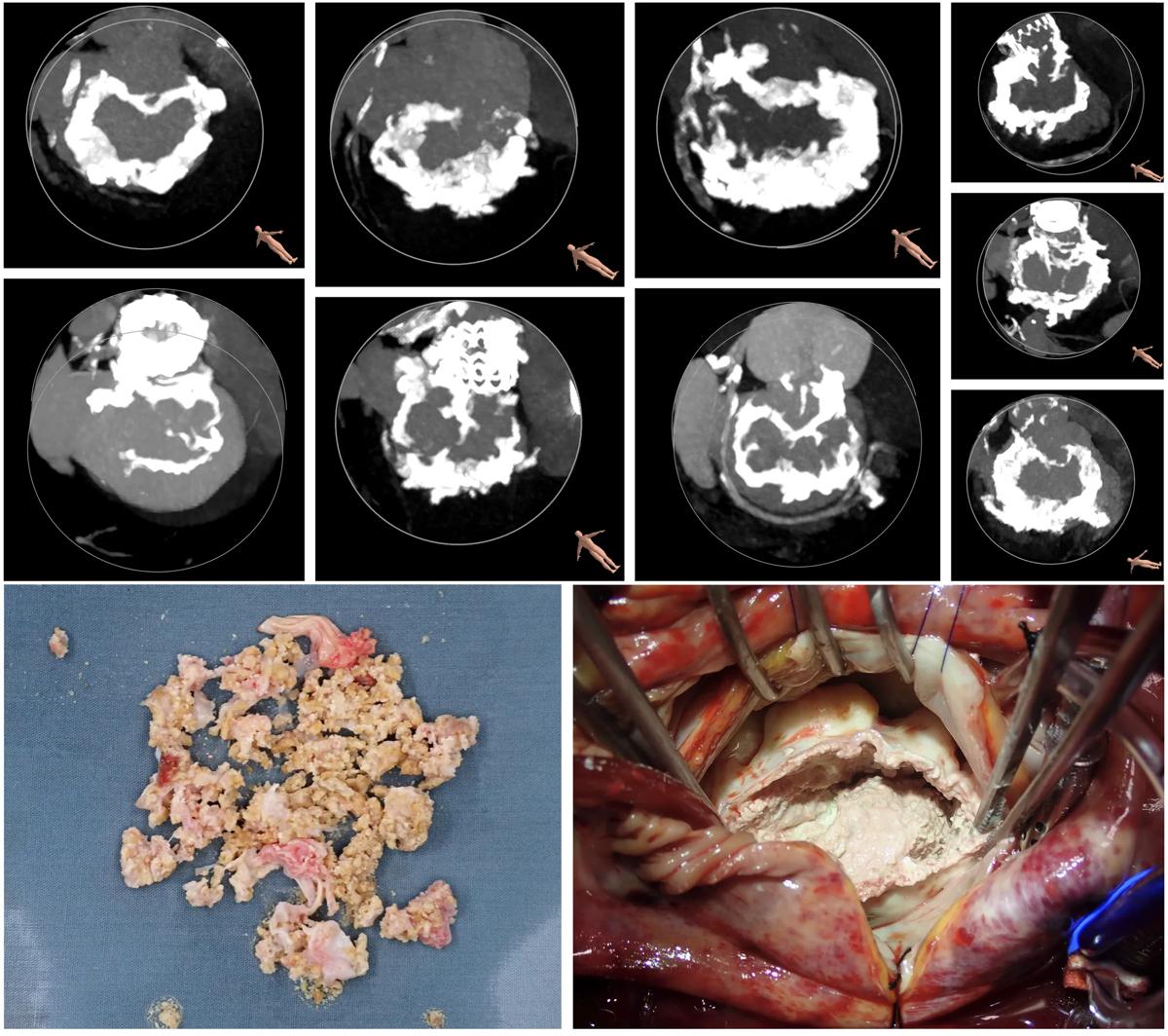
Image content: This image is available to view online.
View image online (https://assets.clevelandclinic.org/transform/2140230b-a844-4592-af77-fc13ea463dfb/mitral-annular-calcification-cqd-inset1)
Figure 1. Top rows depict the wide range of potential MAC distribution patterns on CT imaging. Bottom row shows the variation in potential MAC consistencies, from solid (left photo) to caseous (right photo).
Bo Xu, MD, is another cardiologist in the Section of Cardiovascular Imaging conducting pioneering research related to MAC. He has authored several papers on a novel grading system he and Cleveland Clinic colleagues developed to assess MAC severity.3 They have found that, compared with conservative treatment, mitral valve intervention improves survival in patients with severe MS or severe MR due to severe MAC and that systematic evaluation of MAC using their novel grading score predicts prognosis in patients undergoing mitral valve surgery.4-6
“We have shown that our multiparametric MAC score incorporating novel parameters for MAC quantification with cardiac CT allows systematic evaluation of MAC severity and helps predict outcomes after mitral valve surgery,” Dr. Xu says.
“Thorough preoperative evaluation with advanced imaging techniques often gives us the confidence to safely treat MAC in patients who are deemed by other centers to be too high-risk for intervention,” Dr. Unai adds.
Articles on optimal strategies for treating MAC based on experience gained at large centers have recently been published.
The American Association for Thoracic Surgery issued its 2025 Expert Consensus Document on the surgical management of MAC,7 with Drs. Kapadia and Unai among the authors. The 20-page guidance provides recommendations on diagnosis, imaging and therapeutic strategies.
In addition, an editorial describing Cleveland Clinic’s current surgical approach to moderate to severe MAC — based on 629 mitral valve surgeries over the past five years — was recently published in Annals of Cardiothoracic Surgery.8
Advertisement
For patients with MAC who are deemed poor candidates for surgery, transcatheter mitral valve replacement (i.e., "valve in MAC") can be an option. Key preprocedural considerations include assessing the MAC distribution to determine whether there is an adequate anchor (Figure 2), careful annular sizing of the prosthetic valve and ensuring that the new LVOT will have adequate flow.
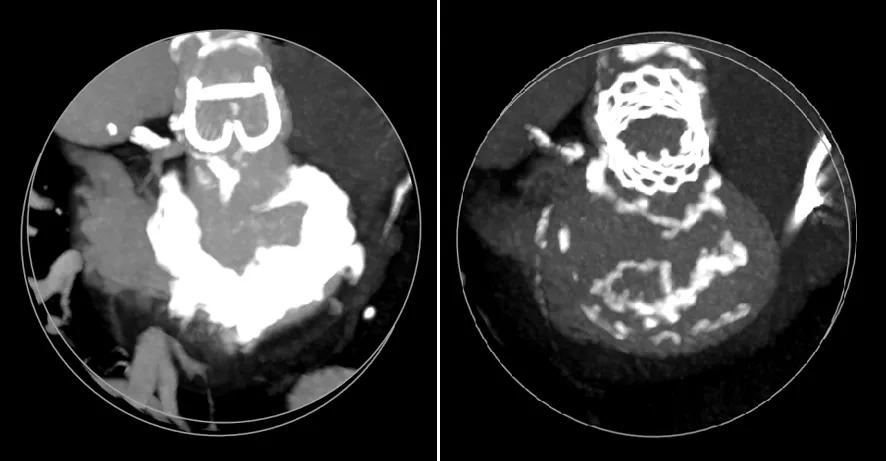
Image content: This image is available to view online.
View image online (https://assets.clevelandclinic.org/transform/29a665ee-cf5f-4331-8513-36e0cf5aeaa2/mitral-annular-calcification-cqd-inset2)
Figure 2. CT imaging from two patients demonstrating differing suitability for transcatheter mitral valve replacement using a valve-in-MAC approach. The patient on the left is a favorable candidate owing to near-circumferential MAC, which provides adequate anchoring for the transcatheter valve. In contrast, the patient on the right lacks sufficient calcification along the medial and lateral aspects of the annulus, limiting secure valve anchorage.
Dr. Kapadia is an active investigator in clinical trials evaluating transcatheter approaches to mitral valve replacement and a pioneer of novel techniques for challenging cases. One such technique is the CLEVE (Cleveland Valve Electrosurgery) procedure for prosthetic leaflet modification, which Dr. Kapadia and colleagues developed to address a mitral valve unsuitable for typical valve-in-valve procedures due to high risk of LVOT obstruction. It involves perforation of the leaflet, dilation of the opening with a small balloon and deployment of the valve through the opening. The technique has resulted in good success in directing flow through the valve, avoiding leaflet blockage of the LVOT.9
“There are a number of new valves and techniques being tested for transcatheter mitral valve replacement in MAC,” Dr. Kapadia says. “Despite the challenges of mitral valve replacement in this setting, we do have many safe and feasible surgical and transcatheter options to improve the lives of individuals with MAC.”
1. Frankel W, Patel V, Harb SC, et al. Mitral valve replacement in patients with severe mitral annular calcification: preoperative evaluation, surgical techniques and outcomes. Abstract presented at: Annual Meeting of the American Association for Thoracic Surgery; April 29, 2024; Toronto. Abstract P133.
Advertisement
2. Besir B, Kapadia SR. The role of vitamin K2 in cardiovascular health. Interv Cardiol. 2024;16(S26):679-686.
3. Xu B, Kocyigit D, Wang TKM, et al. Mitral annular calcification and valvular dysfunction: multimodality imaging evaluation, grading, and management. Eur Heart J Cardiovasc Imaging. 2022;23(3):e111-e122.
4. Saijo Y, Chan N, Brizneda MV, et al. Impact of frailty and mitral valve surgery on outcomes of severe mitral stenosis due to mitral annular calcification. Am J Cardiol. 2021;160:83-90.
5. Zein MA, Okushi Y, Unai S, et al. Impact of mitral valve intervention and frailty on outcomes of severe mitral regurgitation due to severe mitral annular calcification. Circulation. 2025;152(Suppl 3):Abstract 4347641.
6. Okushi Y, Unai S, Pettersson GB, et al. Mitral annular calcification score by computed tomography in patients undergoing mitral valve surgery. Eur Heart J Imaging Methods Pract. 2025;3(2):qyaf093.
7. El-Eshmawi A, Halas M, Bethea BT, et al. The American Association for Thoracic Surgery (AATS) 2025 Expert Consensus Document: surgical management of mitral annular calcification. J Thorac Cardiovasc Surg. 2025;170(2):502-522.
8. Jenkins H, Elgharably H, Unai S, et al. Surgical approach to mitral annular calcification — the Cleveland Clinic experience. Ann Cardiothorac Surg. 2025;14(6):0017.
9. Krishnaswamy A, Meier D, Harb S, et al. Initial experience and bench validation of the CLEVE prosthetic leaflet modification procedure during aortic and mitral valve-in-valve procedures. JACC Cardiovasc Interv. 2025;18(6):767-781.
Advertisement
Scenarios where experience-based management nuance can matter most
Multimodal evaluations reveal more anatomic details to inform treatment
Provides option for patients previously deemed anatomically unsuitable
While mortality was unaffected, later surgery was associated with more reoperations
Surgical tips on debridement of calcification to optimize valve replacement
Superiority continues even after significant crossovers from control group at 2 years
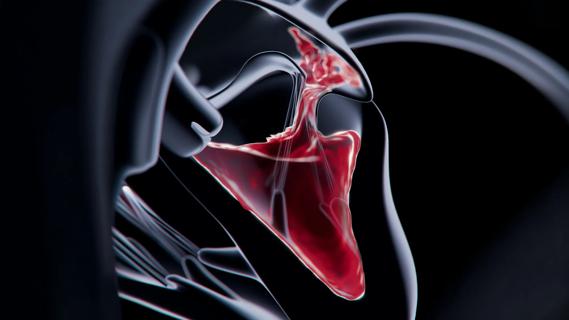
Join us in New York Dec. 4-5 for evidence-based instruction with real-world examples
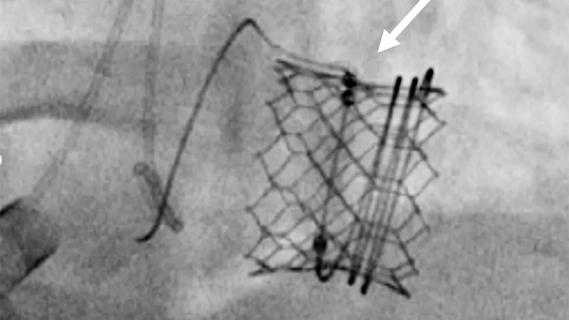
How Cleveland Clinic is using and testing TMVR systems and approaches
 Search