Locations:





Aiming for earlier detection of endometrial cancer in an era of increasing incidence
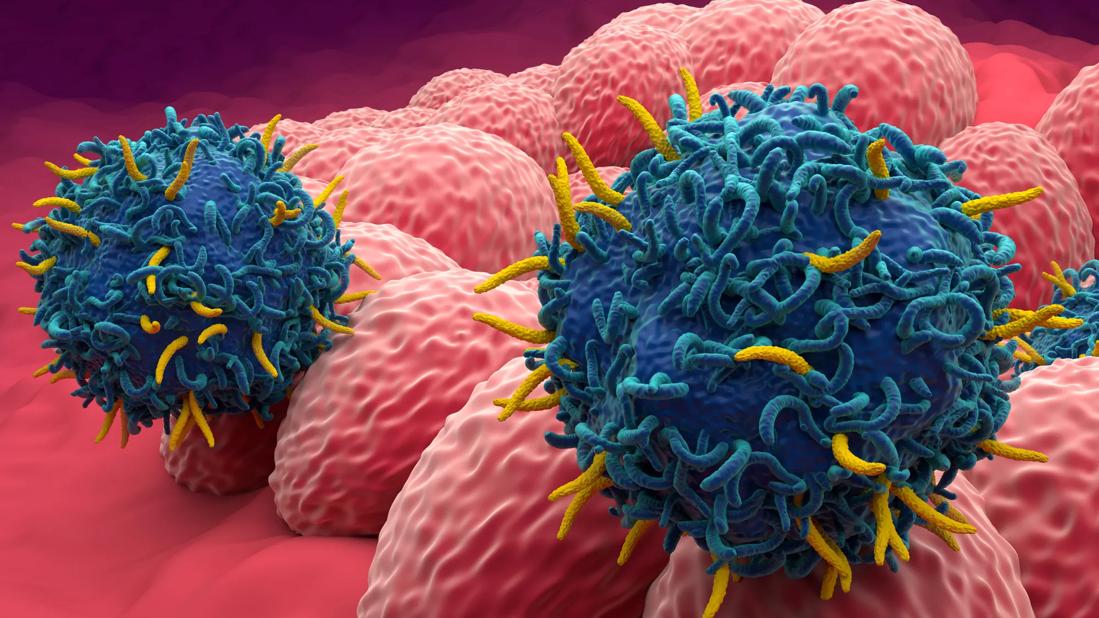
Image content: This image is available to view online.
View image online (https://assets.clevelandclinic.org/transform/6bf13b1b-2991-4bf7-8108-436ecbbb73ea/endometrial-cancer-2160039466)
Medical illustration of endometrial cancer
Recently updated guidance from the American College of Obstetricians & Gynecologists (ACOG) regarding the evaluation of patients with postmenopausal bleeding is expected to help detect endometrial cancers earlier — a welcome result in an era when both the incidence and mortality of uterine cancers are on the rise.
Advertisement
Cleveland Clinic is a non-profit academic medical center. Advertising on our site helps support our mission. We do not endorse non-Cleveland Clinic products or services. Policy
The new guidance, published in April 2026, calls for using both transvaginal ultrasonography and endometrial biopsy for most people being assessed for postmenopausal bleeding. Previous guidelines recommended ultrasound alone on initial evaluation for patients with postmenopausal bleeding who had an endometrial thickness of 4 mm or less.
Amy Park, MD, Section Head of Urogynecology & Reconstructive Pelvic Surgery at Cleveland Clinic, explains that increasing incidence of disease and rising mortality rates motivated the change. ACOG cites American Cancer Society estimates that more than 69,000 cases of uterine cancer were diagnosed in 2025 and that nearly 14,000 individuals died from it. In addition, the higher numbers have disproportionately affected non-Hispanic Black women.
“Endometrial cancer rates are rising by 1% to 2% each year,” says Dr. Park. “The incidence rose almost 3% per year for Black women compared to 0.7% for white women. And the risk of death from endometrial cancer for Black women was twice as high.”
Uterine cancer is among a relatively small number of cancers on the increase. Historically, Dr. Park adds, endometrial cancer was considered a mostly curable disease, but as the incidence and severity have been rising, so have poor outcomes.
“People have asked why we do the transvaginal ultrasound if we are already going to do the biopsy,” says Dr. Park. “The rationale is to evaluate for other pathology. There could be a polyp or fibroids — something else going on that would be good to know.”
Advertisement
The guidelines include a caveat. Endometrial biopsy can be omitted in a patient who has had only a single episode of postmenopausal bleeding, a fully visualized endometrium measuring 4 mm or less, and has no risk factors strongly associated with malignancy, adds Dr. Park.
“Even then, they must have access to prompt gynecologic care and followup. If this is a patient coming in from far away and they haven't had care in 30 years, I don't think that patient is an appropriate patient to omit biopsy,” Dr. Park says. (Risk factors strongly associated with endometrial cancer include a history of hormone therapy with or without progestin; history of tamoxifen use; BMI higher than 30; nulliparity; genetic predisposition to endometrial cancer; race; and diabetes.)
Roberto Vargas, MD, a gynecologic oncologist who specializes in both surgical and medical management of gynecological cancers, cites two factors as the most influential in the rising incidence of endometrial cancer.
Advertisement
In addition, clinicians are seeing higher numbers of endometrial cancers that are not traditionally linked to estrogen. These tend to be high-grade histological subtypes, which disproportionately affect Black women. “There are other factors driving the rare, more aggressive, types of endometrial cancers,” Dr. Vargas says.
In its policy update, ACOG notes that ultrasound-measured endometrial thickness is an “insensitive predictor” for higher grade cancers.
“Ultrasound on 4 mm-thick endometrium has a false negative probability of about 10% in Black women with postmenopausal bleeding,” Dr. Park says. “In this population, if tissue sampling is not performed solely because the ultrasound lining measurement is less than 4 mm, about a quarter of the cases of serous endometrial cancer — one of the rare, more aggressive subtypes — may get missed.”
Increased mortality rates
The absolute number of deaths related to endometrial cancer now surpasses that of ovarian cancer.
“Endometrial cancer is the only cancer for which we have had no improvement in outcomes over the last 30 years,” says Dr. Vargas. “It is the only cancer for which we have failed to move the bar significantly, yet the uterus is the only organ that each every one of us share as a common origin. I have a fundamental problem with these facts, which is part of why I spend so much time devoted to endometrial cancer research.”
Lack of treatment advances plus increased incidence of high-grade cancers make for a grim picture, he adds, and the disease receives disproportionately less funding than other types of gynecologic cancers.
Advertisement
Exciting new treatments in clinical trials include antibody-drug conjugates — smart chemotherapy in a sense — but it will take years before they can make an impact on the population-level trend lines, Dr. Vargas says.
In the meantime, the updated ACOG recommendation is likely to have the fastest effect on outcomes. Earlier intervention will reduce the number of advanced or untreatable cancers, Dr. Vargas says. “So while we catch up with better drugs, the most efficient way to stem the tide is to change how we approach diagnosis, to be able to catch it earlier or before it’s even there.”
Advertisement
Advertisement
A multidisciplinary approach facilitates timely diagnosis and better treatment

Cara King, DO, MS, outlines practices that can make all the difference

Better screening can improve GI outcomes and reduce costs
Counseling and careful surgical considerations are key

A large nodule had strangulated the patient’s ureter and invaded the vagina, bladder and rectum

Case study: Concomitant robot-assisted surgery without repositioning the patient

Low-dose aspirin, more frequent checkups may lower risks
History of laparoscopy with morcellation should inform differential
 Search