Locations:





Nutrition and cooking program supports maternal-infant health
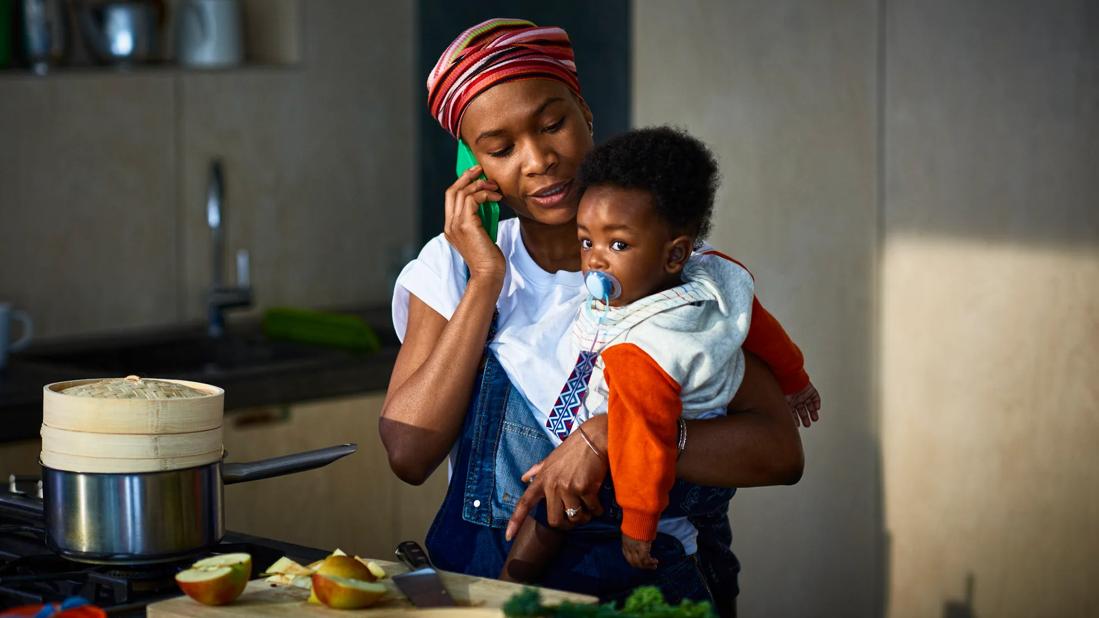
Image content: This image is available to view online.
View image online (https://assets.clevelandclinic.org/transform/2f28b8ce-52b4-4055-803b-ae474c55fcb9/family-968890276)
Mother holding toddler in a kitchen
For peripartum women with hypertension, treatment can do more than manage blood pressure. It can help prevent some of pregnancy’s most serious complications and reduce the risk of long-term chronic disease. But one important tool in that effort — access to nutrient-dense, high-quality food — is often out of reach in low-income neighborhoods.
Advertisement
Cleveland Clinic is a non-profit academic medical center. Advertising on our site helps support our mission. We do not endorse non-Cleveland Clinic products or services. Policy
That gap inspired Oluwatosin Goje, MD, Medical Director of Cleveland Clinic’s Center for Infant and Maternal Health, to launch a Food Is Medicine pilot program for postpartum women living in neighborhoods with higher rates of infant mortality.
“As an obstetrician/gynecologist, I know that chronic diseases such as diabetes and high blood pressure are maternal complications that can lead to preeclampsia and other severe conditions that may result in early delivery,” says Dr. Goje. “Patients with high blood pressure who develop preeclampsia are often delivered preterm as a way of managing the condition. Patients with pregestational diabetes or gestational diabetes may also be delivered early, either because their diabetes is uncontrolled or because they develop a secondary complication like preeclampsia.”
Cultural practices and socioeconomic factors can worsen these conditions, contributing to maternal and infant morbidity and mortality.
“My mantra is always, ‘Everyone wants to do good by themselves; there’s just a lot that mitigates against that,’” she says. “If we can guide people toward what can be helpful for them, then it’s a proof of concept.”
Dr. Goje led the in-person program for 20 participants with community health expert Shannon Walker, PhD, MEd, offering nutrition education, chef-led cooking demonstrations and culturally relevant discussion. The cohort, which included women who had hypertension during pregnancy, met biweekly for eight sessions at Cleveland Clinic’s Stephanie Tubbs Jones Community Health Center.
Advertisement
The program was designed with practical barriers in mind. Participants were encouraged to bring babies and toddlers, helping address childcare challenges while also creating opportunities to discuss healthy eating as children transition from breast milk or formula to solid foods.
A central goal was to introduce healthier meal options and practical ways to prepare familiar foods in support of maternal and child health. Participants also received blood pressure cuffs and learned how to monitor their blood pressure at home.
For Dr. Goje, the group setting was essential. It was inspired in part by the CenteringPregnancy® program, which provides group medical appointments for patients during pregnancy.
“When people are in groups of six or eight, they’re able to develop relationships with each other and understand that their struggles are universal,” she says. “It’s hard to change a person’s way of eating, because culturally they’ve eaten that way, or they’ve always eaten fast food.”
That is also why the culinary component mattered.
“We worked with foods you see in the store,” Dr. Goje says. “You need to expose people to something different, and sometimes it’s easier to expose them to it in a group setting. Now, when they see cauliflower or broccoli florets, they’ve already seen them in a class. I’m not saying we converted all 20 of them to healthy eating, but we exposed them to a different way of eating and tied it to the health condition they experienced during pregnancy or postpartum.”
Advertisement
The pilot was funded by a Cleveland Clinic Catalyst Grant, which supports caregiver-led projects aimed at improving the lives of patients and community members. A request for future support includes funding for mental health resources, which participants in the first cohort identified as important for reducing stress that can interfere with follow-through.
Advertisement
Advertisement
Low-dose aspirin, more frequent checkups may lower risks
History of laparoscopy with morcellation should inform differential
Akron General project highlights the benefits of doula partnerships
Change eliminates waste associated with dual-field approach
Researchers compare two image modes in detecting left ventricular remodeling
New moniker brings clarity to this complex condition
A device implanted at the ankle joins the lineup of third-line treatments
Aiming for earlier detection of endometrial cancer in an era of increasing incidence
 Search