Locations:





New moniker brings clarity to this complex condition
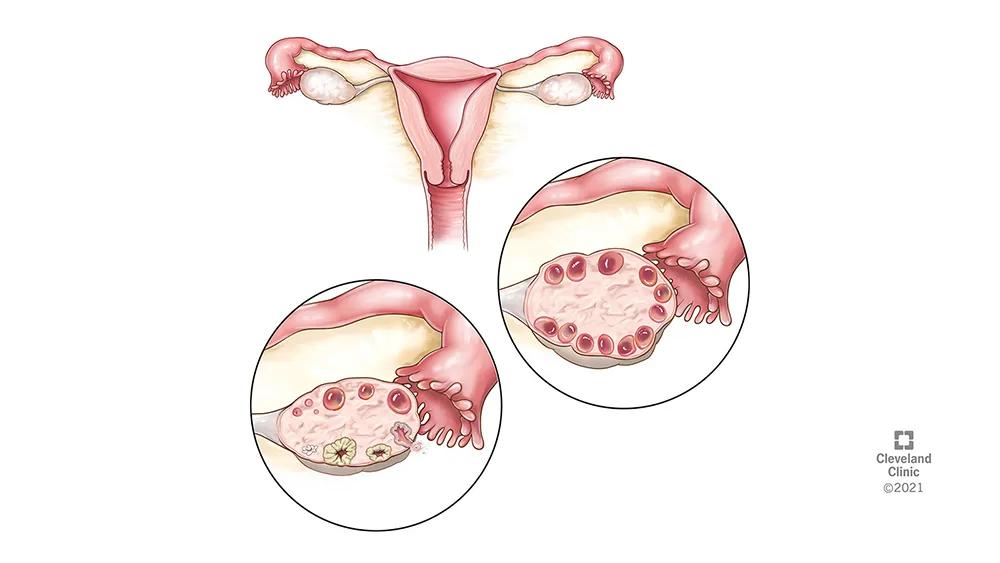
Image content: This image is available to view online.
View image online (https://assets.clevelandclinic.org/transform/dcfaee37-43cb-4007-a33f-178c06f0f1a8/ovary-illustration-8531658)
medical illustration of PCOS / PMOS
A worldwide consortium of medical professionals and patient groups has launched a long-wished-for change of name for the condition formerly known as polycystic ovary syndrome (PCOS) with a recent announcement in The Lancet.
Advertisement
Cleveland Clinic is a non-profit academic medical center. Advertising on our site helps support our mission. We do not endorse non-Cleveland Clinic products or services. Policy
Implementation of the new name — polyendocrine metabolic ovarian syndrome (PMOS) — will unfold over the next several years as clinicians and academic and healthcare organizations incorporate the language in their systems and practices.
PMOS is a chronic, complex and poorly understood condition that can begin in adolescence and affect women throughout their childbearing years. Diagnosis requires the presence of two of these three symptoms: oligo-anovulation, clinical or biochemical hyperandrogenism, and ovaries found to be polycystic upon ultrasound or because of elevated anti-Müllerian hormone levels.
As the name-change consortium authors noted in The Lancet, PMOS features range from mild to serious, and can be metabolic, reproductive, dermatologic and psychological.
“We know about 5% to 10% of females in the U.S. have it,” says Mindy Christianson, MD, MBA, Chief of Reproductive Endocrinology and Infertility Practice Director at Cleveland Clinic’s Fertility Center. “Often people are not diagnosed in a timely manner, and it is really important. The earlier someone is diagnosed, the earlier we can treat it and prevent complications.”
PMOS involves hormone and metabolic dysregulation that often results in irregular ovulation and excess androgen activity. This can cause hirsutism and acne, although not all people have those symptoms. It also is linked to insulin resistance, which can affect blood sugar and weight. Women with PCOS are significantly more likely to develop type 2 diabetes compared with women without PCOS.
Advertisement
Sometimes people are diagnosed when they seek medical help after not having had a period for many months or, in the case of young teens, haven’t developed a period at all.
“I've also seen patients in their thirties who didn’t know they had it and now they’re experiencing infertility,” says Dr. Christianson. “They've just always had very irregular cycles and just thought it was normal. Or they were on birth control pills for years, which masks the symptoms, but then they started to try to conceive and couldn’t.”
Increased awareness of the condition beyond gynecology is important, since patients may initially seek help from primary care providers, dermatologists (for acne and hirsutism), behavioral health professionals (for psychological symptoms), and endocrinologists.
Polyendocrine metabolic ovarian syndrome brings clarity by placing appropriate emphasis on endocrine and metabolic function, says Dr. Christianson.
For years, the Lancet article notes, clinicians, educators and patients have advocated for a name change because of the erroneous focus on the ovaries, which has hampered research funding, slowed diagnosis and caused fertility-related stigma.
“There has been a lot of confusion with ‘PCOS,’” Dr. Christianson says. “The issue is that the name starts with ‘polycystic,’ so people focus on ovarian cysts and not the metabolic issues. We would order ultrasounds and if the result was ‘polycystic ovaries,’ people would think they have polycystic ovary syndrome and things would cascade. But a person can have polycystic ovaries, which means having 20 or more follicles in at least one ovary, and not necessarily have PCOS.”
Advertisement
(Patients are not the only ones who have been confused; the term has been known to confound clinicians as well. Last year, Cleveland Clinic specialists developed a care pathway to guide the next appropriate steps to take when a patient’s ultrasound imaging indicates polycystic ovarian morphology.)
By contrast, PMOS correctly emphasizes the endocrine factor.
“The ‘metabolic’ aspect is so important, since a high percentage of women with PMOS will eventually develop insulin resistance or type 2 diabetes,” says Dr. Christianson. “That's why when someone is diagnosed with this lifelong condition, they have to always be aware that they're at increased risk for developing type 2 diabetes.
“And then it still has ‘ovarian’ in the name because the lack of ovulation or irregular cycles is a very important symptom,” she adds.
The Lancet article outlined an eight-step plan for effecting the change over the next three years, beginning with academic dissemination and culminating with integration into the International PCOS Guideline.
“The academic dissemination began with the Lancet, which has people talking,” says Dr. Christianson. “Resources will be developed for patients and professional resources. I'm mentioning this to patients when I see them, but I can't officially change their diagnosis, but we don’t have a diagnostic code with the new name yet. So I just tell them the name is currently in a transition and will eventually officially be called PMOS.”
Advertisement
Advertisement

Findings reinforce the importance of multidisciplinary care

Low-dose aspirin, more frequent checkups may lower risks
History of laparoscopy with morcellation should inform differential

Akron General project highlights the benefits of doula partnerships

Change eliminates waste associated with dual-field approach
Researchers compare two image modes in detecting left ventricular remodeling

Nutrition and cooking program supports maternal-infant health

A device implanted at the ankle joins the lineup of third-line treatments
 Search