Locations:


Combining supportive prenatal care with group-based education
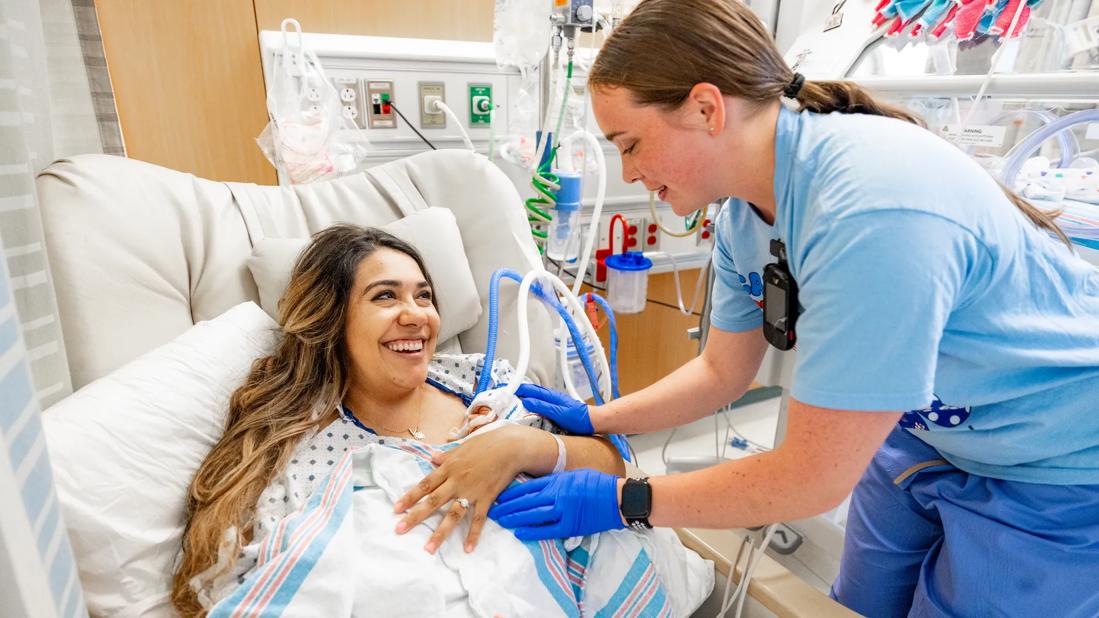
Image content: This image is available to view online.
View image online (https://assets.clevelandclinic.org/transform/b45e6b35-5767-48ea-8cdc-d9d17e013e78/post-op-pain)
infant mortality
While infant mortality rates have continued to decline in the United States, they have not disappeared. The most recent data from Centers for Disease Control and Prevention show the rate was 5.6 deaths per 1,000 live births in 20191 with leading causes attributed to birth defects, preterm birth and low birth weight, injuries, sudden infant death syndrome, and maternal pregnancy complications.1
Advertisement
Cleveland Clinic is a non-profit academic medical center. Advertising on our site helps support our mission. We do not endorse non-Cleveland Clinic products or services. Policy
To combat this, Cleveland Clinic offers CenteringPregnancy™, a national program designed to “center” pregnancy care, an approach that involves a joint focus on supportive prenatal care in conjunction with health education.
The prenatal care visits replace 10 regular well-check visits in a low-risk pregnancy. Each is about 90 minutes to two hours long, allowing patients to spend about 10 times more time with their provider. This is followed by a group discussion with 10 or so other expectant parents and their support people that is facilitated by caregivers.
Says one participant, “They talk about everything, from pregnancy to domestic violence to whatever concerns you may have.”
Additionally, the CenteringPregnancy program includes an OB Navigator, whose focus is “reducing the challenges that people may encounter when they’re seeking prenatal care, things like transportation, food insecurity, housing insecurity, child care, and facilitating getting into specialist,” says Frances Jackson, a certified nurse-midwife, who is involved with the program.
For parents-to-be, the peer-to-peer and resource navigation support have improved their confidence during what can be an uncertain time.
Certified nurse-midwife Susan Hudson adds, “The goal is to make sure that everyone has the information they need to have the safest, healthiest life – not just birth experience – because this is about more than that.”
Video content: This video is available to watch online.
View video online (https://cdnapisec.kaltura.com/p/2207941/sp/220794100/playManifest/entryId/1_mr5timmf/flavorId/1_5f3sgelj/format/url/protocol/https/a.mp4)
Cleveland Clinic's Centering Pregnancy Program
Reference
Advertisement

Image content: This image is available to view online.
View image online (https://assets.clevelandclinic.org/transform/6e301099-158b-4239-8462-8e444efc0246/22-CHP-3431758-Pediatric-2022-Year-in-review-footer-2-6_jpg)
Advertisement
Advertisement

The simple procedure can be done during other abdominopelvic surgeries

Guidelines consider multiple risk factors for post-menopausal women

Focus remains on risk-factor modification and antenatal surveillance

Low-dose aspirin, more frequent checkups may lower risks
History of laparoscopy with morcellation should inform differential
Akron General project highlights the benefits of doula partnerships

Change eliminates waste associated with dual-field approach
Researchers compare two image modes in detecting left ventricular remodeling
 Search