Locations:





Tracks offer nurses an opportunity to focus on quality, leadership, education or research
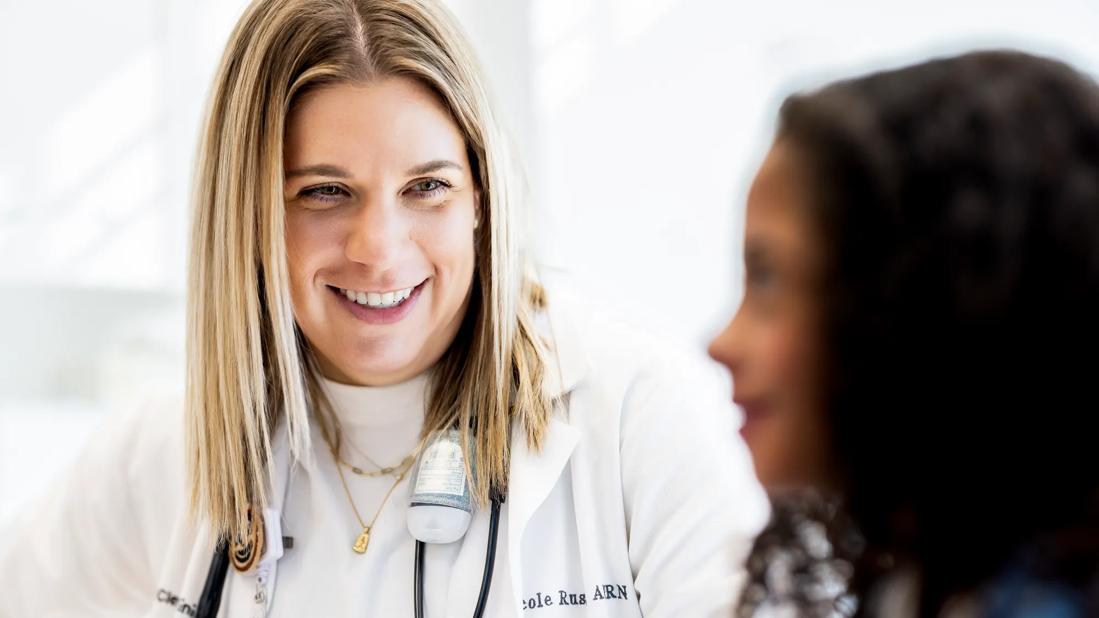
Image content: This image is available to view online.
View image online (https://assets.clevelandclinic.org/transform/26b58470-16ee-4805-a0dc-de80d43496a5/CHP_6976058_10-16-25_034_LDJ)
APRN Career Pathways
In March 2022, Cleveland Clinic initiated a professional development pathway program with a cohort of 47 advanced practice nurses (APRNs). It was developed by the APRN Council, which supports 2,400 APRNs across the health system.
Advertisement
Cleveland Clinic is a non-profit academic medical center. Advertising on our site helps support our mission. We do not endorse non-Cleveland Clinic products or services. Policy
“Cleveland Clinic offers lots of professional development opportunities, but we wanted to design pathways and content specifically for APRNs,” says Summer Buckenmeyer, MSN, FNP-BC, APRN, CNP, Regional Cardiovascular Medicine APP Manager for Cleveland Clinic’s Heart, Vascular and Thoracic Institute and chair of the APRN Council.
A core group of council members worked with content experts for two years to create curriculum for one-year pathway programs in four tracks: quality, leadership, education and research. Each track is taught by representatives from the APRN Council, as well as a content expert with experience in the field who serves as a senior advisor.
The council piloted the pathway program in 2021 with eight participants. Based on feedback, the Professional Development Subcommittee tweaked the program before the first cohort kicked off in March. While content varies based on the track, each group holds an in-person, four-hour quarterly meeting and several online meetings. Nurses in each pathway also complete independent assignments and a culminating project.
“We want the nurses to pick a project topic they can learn about during the program and also take back to their teams wherever they work,” says Buckenmeyer.
More than 120 advanced practice nurses applied to be part of the first cohort. Those selected chose from among the following tracks, which were identified by the APRN Council as areas of interest for advanced practice nurses:
Advertisement
At the end of the program, participants receive a Cleveland Clinic certificate of completion.
Buckenmeyer offers tips for APRNs who would like to create a professional development program at their healthcare institutions.
“Network with other APRNs, whether you are in a small or large institution,” she says. “Have conversations about the opportunities for growth – even if it means starting off small. Find one small project and the resources to make it happen.”
Buckenmeyer adds that it’s crucial to consider your healthcare facility’s culture when devising a program.
“Each facility has a different culture,” she says. “Home in on what that culture is and where the opportunities are that you want to focus on.”
Buckenmeyer is excited at the potential impact of the pathway program not only for the participants, but for those they touch as well.
“The APRN culture is one of continuous learning. This program can provide advanced practice nurses a personal challenge and growth opportunities,” she says. “If we offer APRNs those opportunities, then they can take that back to their teams and help them grow. It’s a domino effect.”
Advertisement
Advertisement

Helping patients recognize respiratory changes, navigate treatment barriers and stay connected to their clinical team
Initiative provides hands-on opportunities to promote early, progressive activity

Continuing to grow by following the right path at the right time

Teaching caregivers to recognize warning signs, de-escalate difficult situations and maintain professional boundaries

Veteran caregivers offer practical wisdom for building confidence and practicing with purpose
Skill, dedication and a passion for women and children inspire this joy-filled specialty

Nurses use flexibility, strong clinical judgment and teamwork to manage increasingly complex patients
Creativity and perseverance help scrub tech transform a simple surgical cup into a patented medical device
 Search