Locations:





Patients deserve timely diagnosis and a multidisciplinary approach
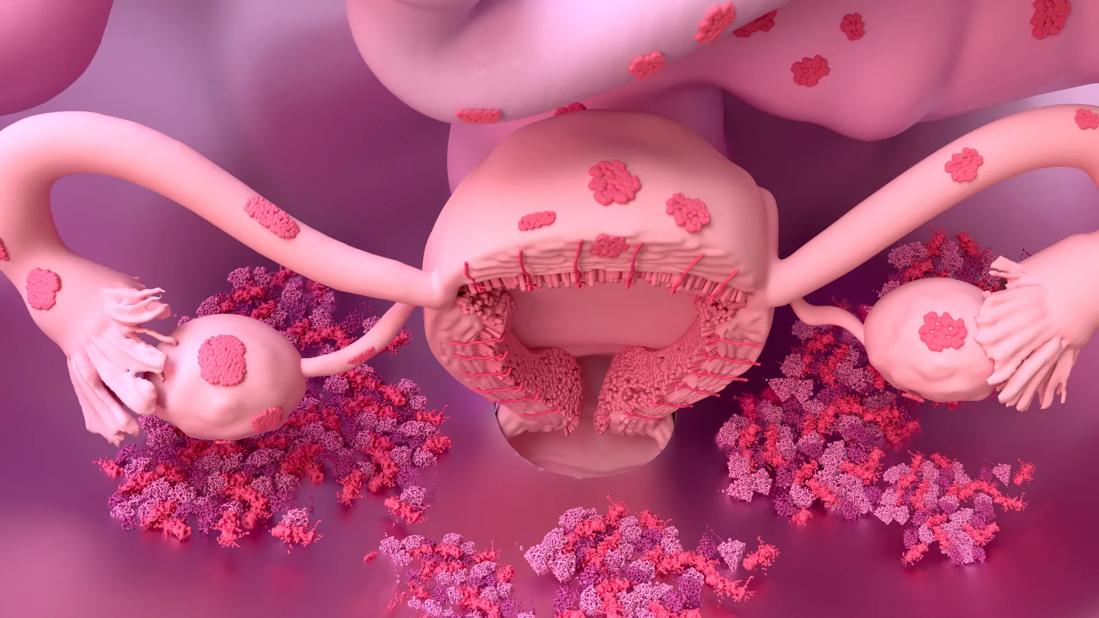
Image content: This image is available to view online.
View image online (https://assets.clevelandclinic.org/transform/f615196d-1611-4dfa-9d6e-7524196a5d0b/endometriosis-2071791770)
Illustration of a woman's head and a glow where the brain would be
The pain associated with endometriosis can be severe, disruptive and even debilitating. It can harm one’s ability to function at school or work and affect sex and intimacy. Unaddressed, chronic endometriosis can hinder fertility as well. So the fact that individuals with endometriosis often wait seven to 10 years from symptom onset for a diagnosis is just one of the reasons a national group of clinicians, the Endometriosis Care Quality Collaborative Taskforce, earlier this year published a call for development of a collaborative body to improve U.S. clinical care standards and patient outcomes and promote research and education.
Advertisement
Cleveland Clinic is a non-profit academic medical center. Advertising on our site helps support our mission. We do not endorse non-Cleveland Clinic products or services. Policy
Optimizing Patient Experiences and Outcomes: Proposal to Develop an Endometriosis Care Quality Collaborative in the United States, a manuscript published in the Journal of Minimally Invasive Gynecology, identifies myriad issues, from insufficient training to billing and more. The authors propose a focus on key aspects of high-quality care: a multidisciplinary approach, high surgical volume and technical expertise.
Cleveland Clinic physicians Mindy Christianson, MD, and Cara King, DO, MS, were among the proposal’s 14 authors. Dr. Christianson is Chief of Reproductive Endocrinology and Infertility. Dr. King, the corresponding author, is Section Head of Minimally Invasive Gynecologic Surgery and Medical Gynecology. In this interview with Consult QD, they address the state of endometriosis care and some of the unmet needs that would be addressed by such a collaborative.
How was the collaborative proposal hatched?
Dr. King: This grew out of a shared frustration among a group of us who care deeply about endometriosis — including surgeons, researchers, patient advocates — who kept running into the same issues. We'd see patients who had waited nearly a decade for a diagnosis, who had been told their pain was normal, who had seen multiple providers without ever getting a coordinated plan. And, critically, we saw patients who had undergone surgery, sometimes multiple surgeries, without ever having their disease fully addressed. This manuscript is the beginning of a formal answer to that question — both an argument and a roadmap.
Where do you see the most acute breakdowns in endometriosis care today?
Advertisement
Dr. King: It happens at every step, but a few stand out. The first is recognition and referral. Primary care physicians, pediatricians, ED docs and even many OB/GYNs often feel uncomfortable with this diagnosis, and yet two-thirds of patients have symptoms before age 20. A 7- to 10 -year diagnostic delay is not acceptable for any disease, let alone one this prevalent and this consequential. [Endometriosis affects about 10% of reproductive-age women.]
But I'd also point to something that gets less attention: the surgical care itself. Once a patient finally reaches a surgeon, there's enormous variation in what happens next. Some surgeons are highly skilled in complex excision surgery. Others are not, and there's currently no way for a patient to know the difference. There's one CPT code for endometriosis surgery regardless of the complexity of the disease or the technique used. Ablation and excision are billed identically, even though these surgeries require vastly different skills.
In addition, evidence favors excision of deep disease for durable pain relief. That single billing code creates zero accountability for what happens in the operating room. A patient has no way to know whether her surgeon plans to address her disease comprehensively or superficially. That has to change.
And then there's imaging. High-quality preoperative imaging, interpreted by a radiologist who is specifically trained in endometriosis, is foundational to surgical planning. It tells you where the disease is, how extensive it is, whether the bowel or bladder or ureter are involved. It guides patient counseling and allows the surgeon and patient to have an honest, informed conversation about what surgery will realistically involve. When that imaging expertise isn't there, patients go into surgery underprepared, and surgeons go in without a map.
Advertisement
There are still major unanswered questions around surgery, ovarian reserve, fertility preservation and the timing of treatment. Where do you see the biggest knowledge gaps?
Dr. Christianson: What we know is that endometriosis can be harmful to fertility, in terms of preventing conception when it causes scar tissue of the fallopian tubes as well as lower the number of eggs a female has. We also know that surgery for endometriosis can decrease the egg supply, especially when endometriosis is removed from the ovary. The biggest known gaps in terms of fertility lie in knowing which patients benefit from surgery versus which patients are harmed. We also cannot answer this question with certainty: How much ovarian reserve is lost from endometrioma surgery? We need high quality prospective research data linking surgical approach to ovarian reserve to live birth outcomes. We need a way to calculate risk to direct patients to fertility preservation prior to surgery or not.
Why is better guidance needed around fertility-preserving and -promoting care?
Dr. Christianson: Patients are often left to make important, time-sensitive decisions that can ultimately impact their fertility without being fully informed. Guidance is not standardized and patients often have competing priorities in terms of symptom management versus fertility. Patient counseling will rely greatly on which specialist the patient sees first.
Many patients are simultaneously trying to manage pain, preserve fertility and make treatment decisions. What could high-quality care look like for them?
Advertisement
Dr. Christianson: For these patients, truly coordinated care would look less like a series of disconnected referrals and more like a shared, multidisciplinary journey. Patients would enter through one coordinated access point and not bounce between general gynecology, REI, pain management and surgery. Care would involve a multidisciplinary team that communicates in real time. There would be a routinely scheduled case review for complex patients. The patient would undergo both short-term and long-term goal-based counseling, whether it be pain management or fertility.
What distinguishes a center of expertise from a practice that simply offers endometriosis treatment?
Dr. King: The right place, the right time and the right surgeon. And all three must come together.
The right place means a multidisciplinary infrastructure: not just the surgeon, but the radiologist, a pelvic floor physical therapist, a pain psychologist and a reproductive endocrinologist, all functioning as a coordinated team rather than a loose collection of referrals.
The right time means that the sequencing of care — when to operate, when to pursue fertility treatment first, when imaging findings should trigger a change in surgical plan — is guided by evidence and by a team that communicates.
The right surgeon means someone with high volume in complex endometriosis excision, with the technical skill and with the judgment to know when to bring in a colorectal surgeon, urologist or CT surgeon.
Endometriosis, particularly advanced disease, is one of the most technically demanding operations in gynecologic surgery, and it is routinely underestimated. We are often dissecting in the retroperitoneal space, freeing the ureter, addressing disease on the bowel serosa or full thickness, normalizing anatomy in the posterior cul-de-sac. These are not operations that should be learned on the fly, and the stakes of incomplete surgery are high: persistent pain, repeat operations, potential for injury and infertility.
Advertisement
It's not just about volume. It's about skill, and skill can be measured. Studies in bariatric and colorectal surgery have shown that surgical technique assessed through video review correlates directly with patient outcomes. That means we can define what good endometriosis surgery looks like — what steps must be included, what the dissection should achieve — and hold surgeons accountable to that standard.
That's exactly where our next work is headed. We are developing a Delphi consensus process to define the critical steps of complete endometriosis excision surgery — to create, for the first time, a standard for what this operation should include. Because right now, without that standard and without accurate CPT coding, there is no mechanism to distinguish comprehensive surgical care from incomplete treatment. Patients deserve better than that.
How would a national patient registry help?
Dr. Christianson: A patient registry will allow us to move from opinion-based to evidence-based treatment decisions. We can then use this data to provide personalized counseling based on data.
What would do you hope to see as the next steps to bring about the vision it describes?
Dr. Christianson: What matters most now is operationalizing it in a way that provides value quickly and credibly. It’s important to identify high-volume centers that can add patients to a registry, already have a multidisciplinary structure, have both surgical and fertility expertise, and be willing to standardize work flows and share data.
Advertisement

Akron General project highlights the benefits of doula partnerships

Change eliminates waste associated with dual-field approach
Researchers compare two image modes in detecting left ventricular remodeling

Nutrition and cooking program supports maternal-infant health
New moniker brings clarity to this complex condition

A device implanted at the ankle joins the lineup of third-line treatments

Aiming for earlier detection of endometrial cancer in an era of increasing incidence
Minimally invasive surgery is the preferred approach in many cases, but not all
 Search