Locations:





How to use? Consider starting during the acute attack and seek patient preferences for chronic use
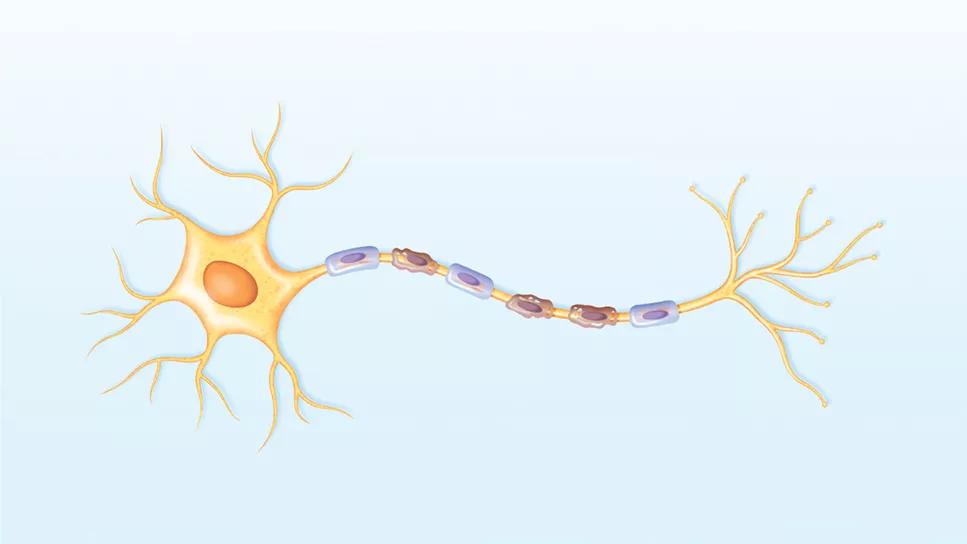
Image content: This image is available to view online.
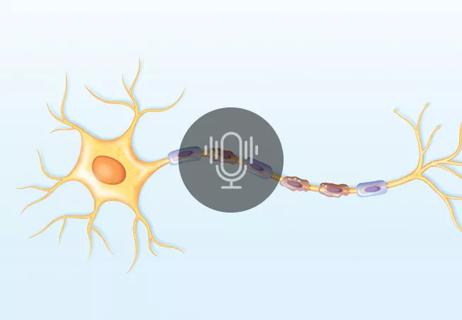
View image online (https://assets.clevelandclinic.org/transform/b657aedc-d590-431c-a70f-ffef71a66258/neuron-affected-by-neuromyelitis-optica)
neuron-affected-by-neuromyelitis-optica
The standard of care for treating an acute attack of neuromyelitis optica spectrum disorder (NMOSD) remains high-dose intravenous (IV) steroids, followed by multiple cycles of plasma exchange if needed. But since new immunotherapies have arrived on the scene, including highly effective complement inhibitors, consideration is being given to applying complement inhibition to acute attacks, a strategy being investigated prospectively in the EASE-NMO study (NCT07184840).
Advertisement
Cleveland Clinic is a non-profit academic medical center. Advertising on our site helps support our mission. We do not endorse non-Cleveland Clinic products or services. Policy
Since 2019, the FDA has approved four monoclonal antibody therapies that are well tolerated and highly effective against relapses. Issues still being explored include personalizing the treatment choice and when to initiate therapy.
“The new options have changed the landscape for treating NMOSD, offering the potential to dramatically reduce relapses, which can leave patients with permanent blindness, loss of bladder control and wheelchair dependency,” says Devon Conway, MD, staff neurologist with the Mellen Center for Multiple Sclerosis Treatment and Research at Cleveland Clinic. “Now we need to refine strategies for these agents’ optimal use.”
NMOSD, previously known as Devic’s disease, is a rare autoimmune condition that shares some features with multiple sclerosis (MS). Both are characterized by relapsing attacks of inflammation, and both commonly present with optic neuritis. However, optic neuritis in NMOSD tends to be more severe, sometimes affecting both eyes at once and sometimes involving the optic chiasm (seen on MRI). Another feature characteristic of NMOSD is area postrema syndrome, in which brainstem involvement can lead to intractable vomiting and hiccups. NMOSD is likelier than MS to occur at any age and in people of Caribbean, East Asian or African ethnicity.
Quickly differentiating NMOSD from MS is critical, as some MS therapies are known to exacerbate NMOSD. NMOSD has a highly specific blood biomarker, aquaporin-4 immunoglobulin G (AQP4-IgG), but a firm diagnosis can be delayed while patients and providers await results of testing for this biomarker. To avoid treatment delays, it is often necessary to rely on clinical suspicion while confirmatory results are pending. Cell-based assay testing is preferred over ELISA due to better sensitivity and specificity.
Advertisement
“Immediate suppression of the immune system is essential to minimize an attack, so we start treating patients empirically with IV methylprednisone, and sometimes plasma exchange, as soon as the disease is strongly suspected,” Dr. Conway explains.
The four monoclonal antibody drugs — from three different classes (described below) — are approved for use in AQP4-IgG-positive NMOSD. All are effective in preventing relapses and regarded as safer than chronic steroid use.
These compounds block formation of the membrane attack complex, which is implicated in astrocyte destruction. Among the new therapies, these are the most effective but carry a boxed warning for increased risk of meningococcal infections that can be life-threatening. Vaccination against meningococcal infections is required at least two weeks before the start of therapy, but if treatment must be started urgently, it should be done with antibiotic prophylaxis. The two drugs of this class are:
Inebilizumab (approved 2020) is a monoclonal antibody targeting CD-19 receptors on B cells, which are involved in the production of AQP4-IgG antibodies. Maintenance is by IV infusion every six months.
Rituximab works similarly by targeting CD-20 B-cell receptors. Traditionally used to prevent NMOSD relapses, it is still turned to frequently due to greater familiarity and significantly lower cost than the new immunotherapies. Notably, rituximab is not FDA approved for NMOSD.
Advertisement
Satralizumab (approved 2020) blocks IL-6, which is involved in multiple steps of B and T cell production of AQP4-IgG antibodies. It is considered to have a favorable safety profile but is associated with transient liver enzyme elevation and requires monitoring. It is the only immunotherapy available as a subcutaneous injection, allowing patients to self-administer it monthly.
“All the NMOSD monoclonal antibody therapies are considered to have a high benefit-to-risk ratio,” Dr. Conway says. “But as therapy will be lifelong, taking a personalized approach and seeking patient input is especially relevant.”
Dr. Conway and his Mellen Center colleague Justin Abbatemarco, MD, recently collaborated with other researchers on a study examining patient preferences for using NMOSD medications, presented as a poster at the 2026 annual meeting of the American Academy of Neurology. The 255 patient respondents to the online survey generally fell into three categories:
“For patients who are busy or live far from their medical center, being able to get infusions every six months or self-administer their medication can make a real difference in acceptance of a therapy,” says Dr. Conway, who was first author of the abstract.
For patients with inadequate disease control or poor tolerance of therapy, Dr. Conway recommends considering a drug from a different class.
Advertisement
He also notes the importance of early initiation of disease-modifying therapy for NMOSD, adding that consideration can even be given to initiating immunotherapy at the time of the first attack.
“While it’s not yet standard of care, evidence is accumulating that immunotherapy at the time of initial relapse may offer better outcomes,” Dr. Conway explains. “We need more research on this strategy before it can be considered a best practice.
“NMOSD management is rapidly evolving and can sometimes be complex,” he continues. “Specialty centers like ours are available and happy to consult with patients and neurologists to optimize care.”
Advertisement
Advertisement
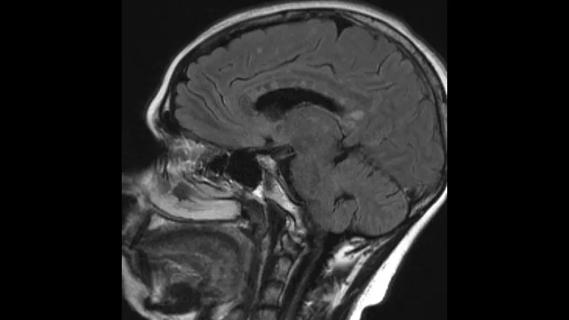
Distinct MRI signature includes lesions beyond the corpus callosum, features predictive of vision and hearing loss
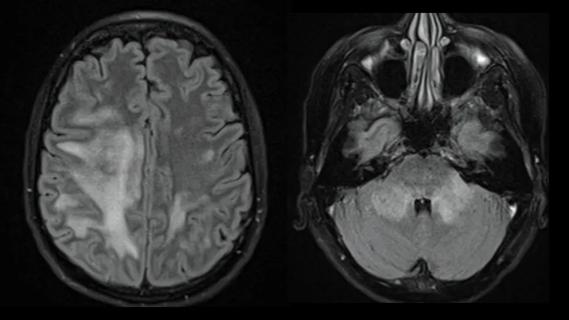
Despite less overall volume loss than in MS and NMOSD, volumetric changes correlate with functional decline

It’s time to get familiar with this emerging demyelinating disorder
Early experience with the agents confirms findings from clinical trials
Despite advancements, care for this rare autoimmune disease is too complex to go it alone
Treatment for scleroderma can sometimes cause esophageal symptoms
Patient’s symptoms included periorbital edema, fevers, weight loss
Could the virus have caused the condition or triggered previously undiagnosed disease?
 Search