Locations:





How and why we're offering robot-assisted options for a full array of cardiac operations
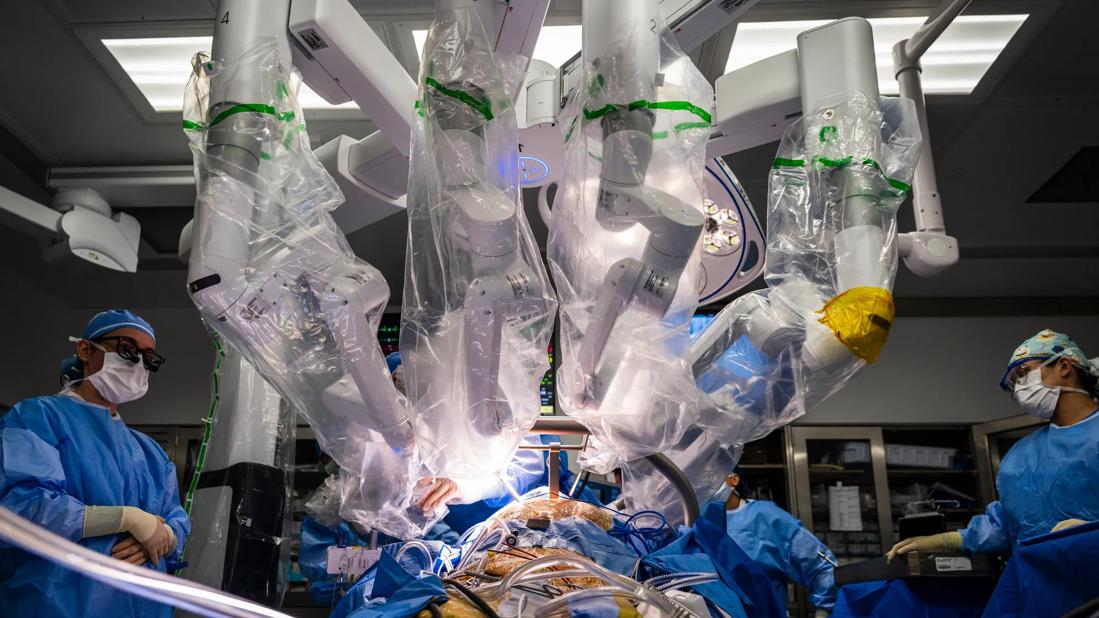
Image content: This image is available to view online.
View image online (https://assets.clevelandclinic.org/transform/9d1f0e07-d71c-49f0-886e-9bd38f8fd6ca/cqd-robotic-heart-surgery)
operating room during robotic surgery
Of all the anatomic locations where robotically assisted surgery has been used, the chest wall is where it is most welcome. For evolutionary reasons, the chest wall developed to be nearly unbreakable, thereby protecting the most vital of organs — the heart, lungs and aorta. When the chest wall is broken to enable open cardiothoracic surgery, patients may feel the consequences by way of long and sometimes painful recovery. What’s more, full inactivity is not an option for recovery, as the only way to not move the chest wall is to not breathe.
Advertisement
Cleveland Clinic is a non-profit academic medical center. Advertising on our site helps support our mission. We do not endorse non-Cleveland Clinic products or services. Policy
While less-invasive methods of cardiothoracic surgery have proliferated over several decades now, the least-invasive form — robotically assisted surgery — has particularly flourished in the past few years, perhaps nowhere more than at Cleveland Clinic.
“We now offer the full range of robotic cardiac operations — mitral valve repair and replacement, aortic valve replacement and coronary artery bypass grafting [CABG] — along with a host of others, including tricuspid valve repair and replacement, surgical treatment of atrial fibrillation, atrial septal defect and patent foramen ovale closure, removal of cardiac tumors and masses, occasional myectomies and certain reoperations,” says Marc Gillinov, MD, Chair of Thoracic and Cardiovascular Surgery at Cleveland Clinic. “We’ve also begun performing robotically assisted lung transplantation. In all these procedures, we can do exactly the same thing we do in an open operation without the standard larger incisions.”
Cleveland Clinic’s Heart, Vascular & Thoracic Institute now has three state-of-the-art robotic surgical systems — two dedicated solely to cardiac operations plus one devoted to thoracic procedures. The two cardiac robots are the very latest generation of the da Vinci platform, the da Vinci 5™.
Seven Cleveland Clinic staff cardiac surgeons now perform robotically assisted operations, in addition to several thoracic surgeons performing robotically assisted thoracic procedures and one performing robotic lung transplantation.
Advertisement
“We believe this is the largest robotic cardiothoracic surgery team in the world,” Dr. Gillinov says. In the first half of 2026 the team increased its number of robotically assisted cardiothoracic operations by 50% over the prior-year period. Cleveland Clinic’s cumulative robot-assisted cardiothoracic surgeries to date approached 3,000 by mid-2026.
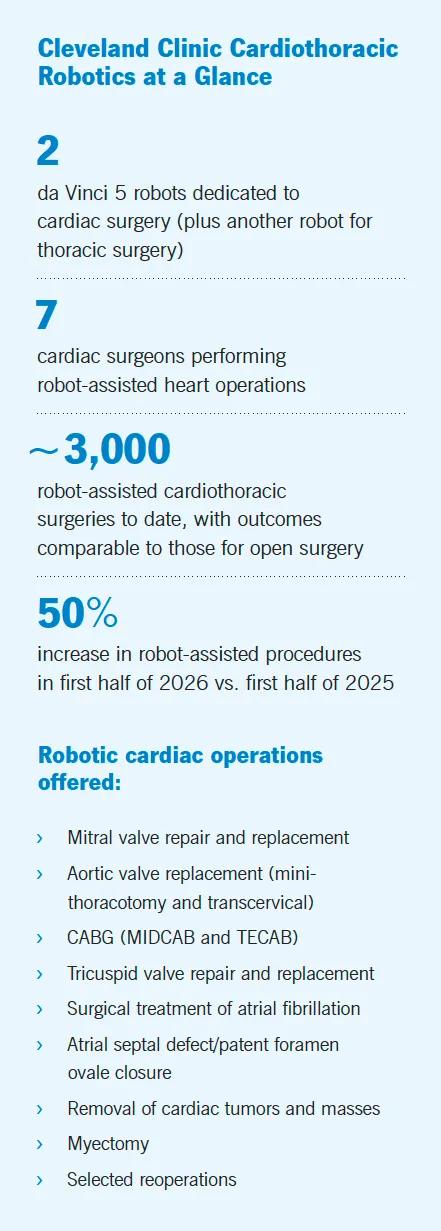
Image content: This image is available to view online.
View image online (https://assets.clevelandclinic.org/transform/c38af2a8-9257-45b7-a57f-5e2ab5cbffa7/cardiothoracic-robotics-at-glance)
In cases where robotic assistance is feasible and safe, the team is embracing it for the benefits that accrue from the resulting smaller incisions:
Surgeons appreciate the often-dramatic improvements in visualization (10× magnification and 360-degree orientation) and the greater maneuverability enabled by the robot’s articulated instruments. “These capabilities are further enhanced by the haptic feedback that was introduced with the da Vinci 5 platforms we acquired,” Dr. Gillinov notes. “This tactile feedback allows the surgeon to ‘feel’ what they are doing in addition to seeing what they’re doing. That’s particularly valuable when surgeons are first training in robotics.”
There’s additional value in providing patients with yet another procedural option. “Regardless of their heart condition, patients like to have options, especially minimally invasive and robotic options,” says Samir Kapadia, MD, Chair of Cardiovascular Medicine at Cleveland Clinic. “Many patients welcome a transcatheter option, but not all are good candidates for it. There are also patients for whom surgery is the best option but who don’t want an open operation and say they’re willing to compromise a bit to avoid it. When it’s feasible, robotic surgery makes compromise unnecessary because it delivers the same surgical treatment without opening the chest. Although robotic surgery is not appropriate for everybody, adding it to the mix of options is really welcome. Our heart teams are committed to identifying for patients the least invasive option that will be safe and effective for them.”
Advertisement
“A robotic approach provides important value for patients because it allows faster recovery from surgery,” adds his cardiologist colleague Brian Griffin, MD, Section Head of Cardiovascular Imaging. “What I really appreciate about our robotic program is that we have been able to offer this to more patients without compromising outstanding outcomes.”
This article outlines recent developments in key areas of Cleveland Clinic’s robotic cardiothoracic surgery program, along with some glimpses of what may be next in this evolving realm.
2026 marks 20 years since Cleveland Clinic’s first robotically assisted mitral valve repair. More than 2,700 robot-assisted repairs later, Cleveland Clinic has achieved a mitral valve repair rate with the robot that exceeds 99% and a mortality rate of less than 1 in 1,000. Outcomes with robot-assisted mitral valve repair are equivalent to those with open repair, notes Dr. Gillinov, who leads a team of three surgeons who regularly perform robotic mitral valve repairs.
Robot-assisted cases now make up 70% to 80% of isolated mitral valve repairs at Cleveland Clinic. That share has risen in recent years as the team has shortened operative times and taken on more complex cases using principles detailed in a recent review paper (Curr Opin Cardiol. 2026;41[2]:61-66).
“We consider all mitral valve repair patients to be potential candidates for robotic repair,” says surgeon Per Wierup, MD, PhD. “Contraindications tend to involve factors outside the valve itself. We are consistently using the robot for very advanced repairs, such as in patients with significant mitral annular calcification or Barlow’s valve. We also use the robot in more and more patients over age 75, who really stand to benefit from the reduced surgical trauma.”
Advertisement
Dr. Wierup says this application of the robot to challenging cases is made possible by the team’s extremely short cross-clamp times, which are typically between 30 and 40 minutes for repair of standard posterior prolapse and around 50 minutes for a complex bileaflet repair. “This efficiency, which comes from our long experience with the robot, allows us to do robotic repairs even in patients with substantially depressed heart function,” he notes.
That deep experience also helped the team recently expand use of the robot to mitral valve replacement, making Cleveland Clinic one of very few centers to offer the robot in this setting. “We can use the robot for most mitral valve replacements,” says Dr. Gillinov, “although it’s more technically challenging than robotic mitral valve repair.”
That’s because suture management is particularly challenging in robot-assisted replacement, according to surgeon Tarek Malas, MD. “With experience, however, we have learned ways to manage the sutures effectively and developed a streamlined, standardized approach to robotic mitral valve replacement,” he says. “Our cross-clamp times are just slightly longer than for an open case.”
Because robot-assisted mitral valve replacement is more complex, it is always jointly performed by two staff surgeons with deep experience in robotic mitral valve surgery. It can be offered to most valve replacement candidates so long as they have adequate vasculature, reasonably good cardiac function and not too much valvular calcification, Dr. Malas says. “It’s a good option for younger patients with mitral stenosis,” he notes.
Advertisement
In early 2024 Cleveland Clinic began regularly offering robotically assisted CABG to appropriate candidates, focusing on the minimally invasive direct coronary artery bypass (MIDCAB) approach.
MIDCAB involves takedown of the internal mammary artery (IMA) — usually the left IMA (LIMA), very occasionally both IMAs — with the robot through a small incision between the ribs on the left side of the chest. This is followed by a mini-thoracotomy through which the IMA is reattached to the blocked coronary artery (typically the left anterior descending artery [LAD]) below the obstruction, with the anastomosis performed manually by a surgeon at the table.
MIDCAB’s greatest utility is for patients needing only a single LIMA-LAD bypass. For those with blockages in other arteries amenable to stenting, a hybrid procedure combining MIDCAB with stent placement is available. “We take a heart team approach where a surgeon and a cardiologist review cases together so we can identify patients for whom this hybrid approach effectively meets all their needs without requiring a sternotomy,” says surgeon Donna Kimmaliardjuk, MD, who has performed the most MIDCABs at Cleveland Clinic to date. “It’s an excellent revascularization option with great outcomes so far for well-matched patients. It’s often useful in cases where the referring physician isn’t sure whether a patient is a good candidate for robotic surgery.”
Starting in June 2026, Cleveland Clinic further expanded its robotic revascularization options with the introduction of totally endoscopic coronary artery bypass (TECAB). TECAB differs from MIDCAB by eliminating the thoracotomy and performing the anastomosis with the robot rather than manually. “The entire TECAB procedure is performed via three small incisions of less than a centimeter in the left side of the chest,” says surgeon Gianluca Torregrossa, MD, who joined Cleveland Clinic in June to expand its robotic CABG program.
“Dr. Torregrossa is one of very few surgeons in the world who can perform TECAB, and he’s one of the very best at it,” says Dr. Gillinov. “TECAB is a complex, super-specialized operation, which is why it’s still rare. Dr. Torregrossa’s skill set is the final piece that completes our robotic program. He will introduce TECAB to our other CABG surgeons who have been performing MIDCAB.”
TECAB is considered the holy grail of coronary revascularization because it incorporates all the benefits of open CABG in a completely closed chest, with only three keyhole incisions. This translates to minimal pain and reduced postoperative recovery time, “but the benefits of TECAB go beyond recovery and cosmesis,” Dr. Torregrossa says.
He explains that MIDCAB, while useful, is limited by the thoracotomy involved, which is larger and more invasive than keyhole incisions yet still restricts visibility inside the chest. In most cases, this ends up limiting the surgeon to one bypass to the LAD. “Yet we know that many patients stand to benefit most from bilateral IMA bypass, which offers the best long-term outcomes,” Dr. Torregrossa notes.
“With TECAB,” he continues, “because you aren’t limited by the thoracotomy, you can move the camera inside the chest and visualize all the targets of the anterior wall, the lateral wall and the rest of the anatomy, and that lets you offer more conduit configurations and more bypasses. This means we can increase the number of patients who receive the very best conduits for long-term survival — that is, bilateral IMA grafting — without opening the chest. TECAB allows us to do this while keeping the sternum intact, the IMAs intact and the right IMA close to its final target.”
Despite these strengths of TECAB, Dr. Torregrossa says MIDCAB still has a role. “The choice between MIDCAB and TECAB depends highly on the target, which varies by patient,” he explains. “For instance, if the LAD is highly calcific or at risk of dissection or need for endarterectomy, I generally still prefer MIDCAB, to allow more direct control. But in the past couple of years my robotic practice has shifted from about 50% TECAB/50% MIDCAB to about 70% or 80% TECAB with the rest being MIDCAB.”
“It comes down to the ability to offer every single option for revascularization, to enable the best possible tailoring to patients’ needs,” adds Dr. Kimmaliardjuk, who is excited to train in TECAB, starting with single-vessel cases to best manage the learning curve. “Since many aspects of bypass surgery historically have been pioneered at Cleveland Clinic, early adoption of TECAB as the next frontier is a natural progression for us.”
CABG is not the only operation where Cleveland Clinic surgeons can choose among robotic approaches. In aortic valve replacement (AVR), appropriate patients may be offered either transcervical robotic AVR or robotic AVR via mini-thoracotomy.
The transcervical approach was developed at Cleveland Clinic by Marijan Koprivanac, MD, who performed the world’s first cases in early 2025, as recapped in a prior Consult QD article. It involves a small incision at the crease of the neck, similar to a thyroidectomy approach, to allow robot access, as well as three keyhole incisions in the chest for ports. “The transcervical approach is well suited to AVR, as it offers an excellent view of the aorta and aortic valve from above,” Dr. Koprivanac explains.
Most notable is that transcervical robotic AVR leaves the chest wall essentially intact, with no significant incisions or manipulation involved and minimal to no chest wall restrictions postoperatively. Outcomes in the first seven cases, as reported in a recent research paper (Ann Thorac Surg. 2026;122[1]:100-107), revealed no opioid requirements for patients not needing reoperation and a mean hospital stay of 3.2 days. Patients resumed their usual activities sooner than typically seen with other minimally invasive heart operations.
The transcervical approach, which has not been performed beyond Cleveland Clinic, is still undergoing standardization to increase efficiency, Dr. Koprivanac notes.
Meanwhile, Cleveland Clinic’s robotic AVR program, which Dr. Koprivanac jointly runs with Dr. Malas from the mitral valve team, has also incorporated mini-thoracotomy into its offerings. The mini-thoracotomy approach to robotic AVR, similar to the approach used in robotic mitral valve repair, has been performed at only a handful of other centers. “Robotic AVR is more challenging than robotic mitral valve procedures because it involves the aorta, which is a high-pressure zone, so it demands expertise in dealing with the aorta along with the valve,” Dr. Koprivanac explains.
The Cleveland Clinic team has standardized this robotic approach rather rapidly, in part because of the similarities to robotic mitral valve procedures. “We recently did a robotic mini-thoracotomy AVR with a cross-clamp time of just one hour, so it’s becoming pretty efficient,” Dr. Koprivanac says.
Choice between the two robotic AVR methods depends in part on the anatomy of the aorta, aortic arch and aortic root. “For patients with a fairly straight aorta, transcervical is generally easier; for patients with a more curved aorta, mini-thoracotomy is easier,” Dr. Koprivanac observes. “But either approach is possible regardless of anatomy type — it’s mainly a matter of choosing what will minimize the bypass time.”
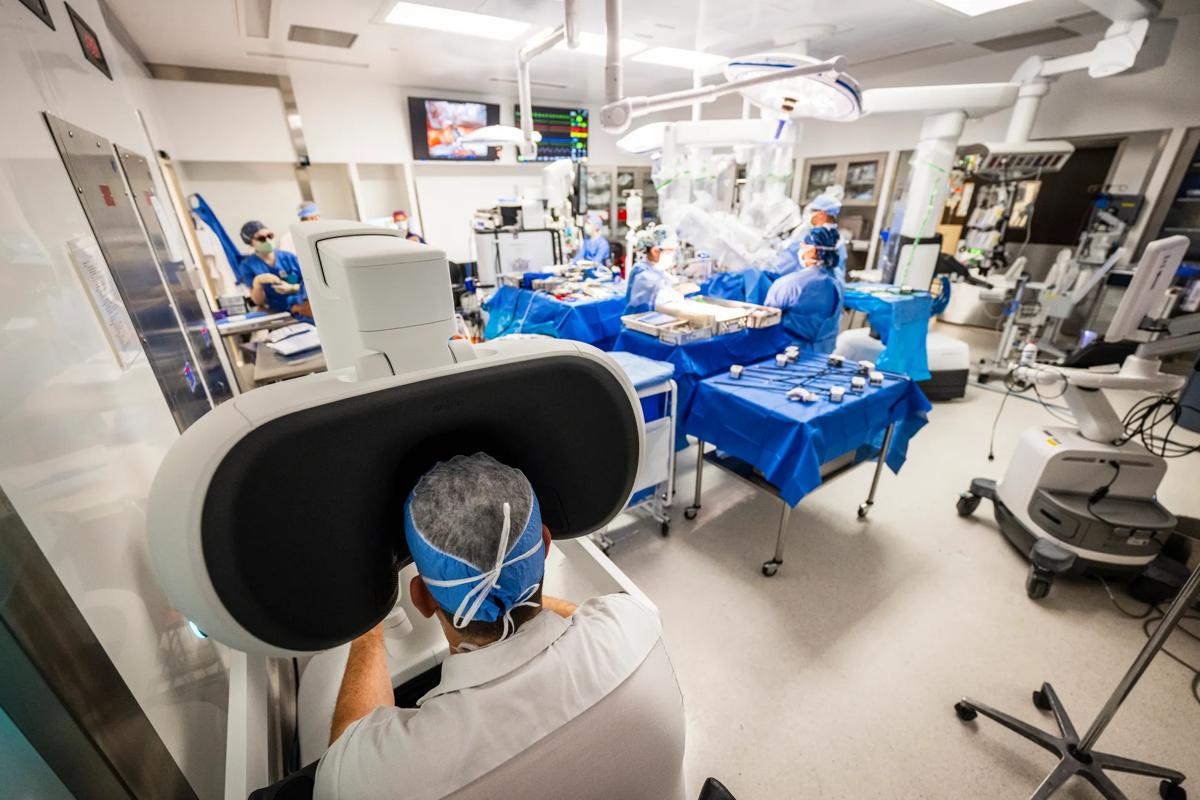
Image content: This image is available to view online.
View image online (https://assets.clevelandclinic.org/transform/43684703-9618-4c85-a66c-765662adceae/HVI_8974458_07-29-26_020_SCG)
Cardiac surgeon Marijan Koprivanac, MD, at the primary robot console during a recent robotically assisted aortic valve replacement operation. From the console he controls the robot arms at the operating table, with the surgical field shown on the monitor at the far side of the operating room.
The most important distinction between the two robotic AVR approaches may be that the transcervical method is essentially limited to isolated AVR, whereas the mini-thoracotomy approach is well suited to combination with concomitant robotic procedures done in the same way.
“The mini-thoracotomy platform is important because it will allow us to use the robot to fix multiple valve diseases — aortic, mitral and/or tricuspid — in a single operation without adding too much operative time, once our teams have standardized and streamlined the individual components,” Dr. Koprivanac says.
“We expect this will make the prospect of offering double- or triple-valve procedures with the robot a reality for the first time ever,” adds Dr. Malas. “That can bring the benefits of robotic surgery to larger numbers of patients.”
It also opens the door to combining valve operations with coronary bypass using TECAB without the need to open the chest. “I believe Cleveland Clinic is right now the only center that can offer the entire portfolio of robotic heart operations, including combined procedures,” says Dr. Torregrossa, who also has extensive experience in robotic mitral valve surgery. “That is a key reason I came here. I look forward to working with this team to offer combination robotic procedures in a comprehensive way.”
Such combinations of major robotic heart operations would join Cleveland Clinic’s established practice of using the robot to surgically treat atrial fibrillation or close a patent foramen ovale or atrial septal defect when indicated in a patient undergoing another robotic procedure, such as mitral valve repair.
Concurrent with these expansions of robotic heart operations is the launch of Cleveland Clinic’s robotically assisted lung transplantation program, which successfully completed its first case in May 2026. The single-lung transplant was led by thoracic surgeon Gregory Jones, MD, using the da Vinci Xi robot with assistance from cardiothoracic surgeon Kenneth McCurry, MD, Surgical Director of Lung Transplantation.
The case puts Cleveland Clinic among a small number of centers worldwide that perform robotic lung transplantation. One of those other centers is Cleveland Clinic Abu Dhabi, which completed two robotically assisted lung transplants in 2025.
Dr. Jones notes that robotic single-lung transplant involves five port incisions of about 1 cm and a mini-thoracotomy of about 5.5 cm through which the resected and donor lungs are passed, avoiding rib fractures or extensive retraction. While the robotic approach currently takes longer than traditional open surgery, ongoing refinements in technique and workflow are expected to streamline the procedure and bring operative times closer to those of conventional lung transplant.
Postoperatively, the first patient experienced remarkably low pain, reporting zero pain from his incisions by postoperative day 1. He was ambulatory and off oxygen within 24 hours after surgery. His two-week hospital stay before discharge home was shorter than the typical stay after a traditional open lung transplant and an encouraging early indicator of the potential benefits of the minimally invasive approach.
Dr. Jones’ experience with open lung transplants and with various robot-assisted thoracic surgery procedures prepared him for this case, along with discussion and collaboration with other centers, cadaver lab simulations and extensive review of videos of prior robot-assisted lung transplants. “A key challenge unique to robotic lung transplant is the lack of standardized protocols for port placement, instrument usage and similar considerations, just because it’s a novel approach,” he says.
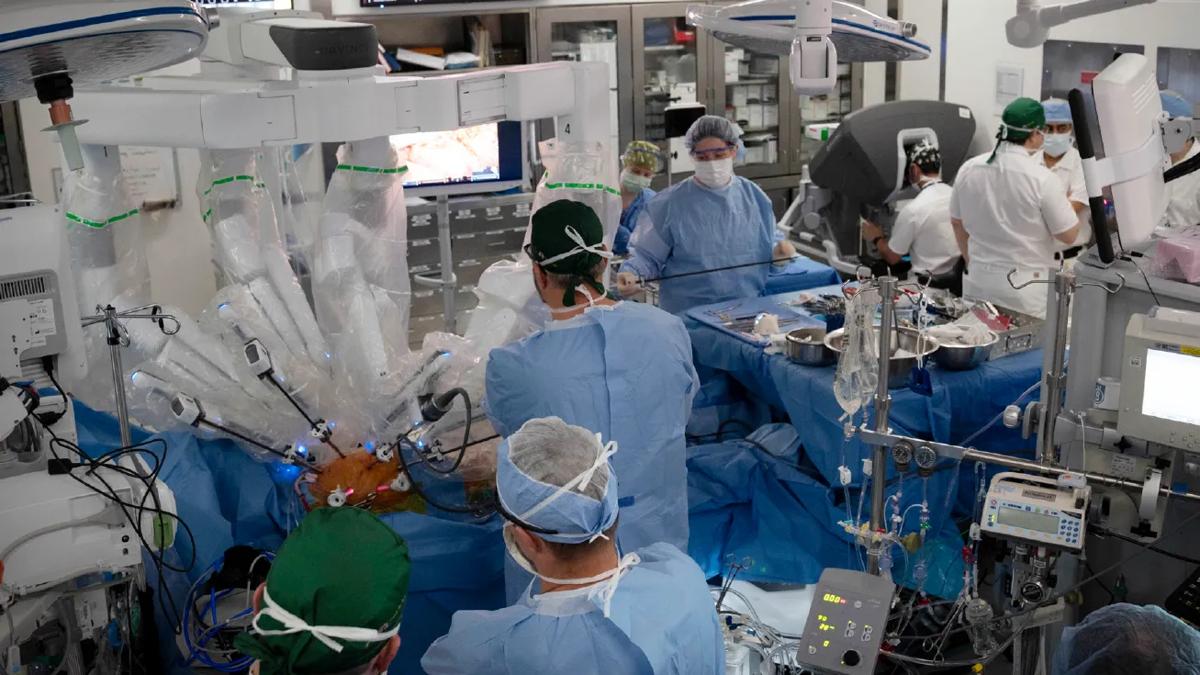
Image content: This image is available to view online.
View image online (https://assets.clevelandclinic.org/transform/54be0bec-aba7-4937-9846-15c05cfaf071/robotic-lung-transplant-cqd)
The operating room during Cleveland Clinic's first robot-assisted lung transplant case, with Dr. Jones at the console at top right.
Although awareness of robotic lung transplantation is still relatively low, patients are often enthusiastic when they learn it may be an option, Dr. Jones says. “Not every transplant candidate is eligible — for example, ideal candidates typically have a larger chest cavity, no prior chest surgery, normal cardiac function and suitable vascular anatomy for peripheral venoarterial ECMO support — but we expect selection criteria to expand as experience with the technique grows,” he notes.
The lung transplant team plans to perform several more single-lung robotic transplants — ideally of both right and left lungs — before proceeding to bilateral procedures. Future investigations will explore alternative donor lung extraction and insertion approaches, including transdiaphragmatic incisions that may facilitate implantation of larger donor lungs while preserving the procedure’s minimally invasive nature.
Meanwhile, additional lung transplant surgeons will be trained to gain proficiency in the robotic approach as experience grows.
Indeed, training is an ongoing process as Cleveland Clinic expands its robotic cardiothoracic surgery capabilities. “We always work as a team,” Dr. Gillinov notes. “Each of our robots has two consoles. The way we bring other surgeons into the robotic realm is to have the surgeon who’s learning sit at the second console, where they can watch and mimic the movements of the more experienced surgeon. We have a fairly formal way of doing it that always involves two surgeons.”
The program also welcomes two or three robotic surgery fellows per year. “Fully trained heart surgeons come from all over the world to spend a year learning robotic surgery in our specially designed robotic fellowship, which includes a lot of simulation training as well,” Dr. Gillinov explains.
The surgeons’ colleagues on the cardiology side are continually keeping pace with the advancements as well. “The small incisions in robotic procedures mean that we need to know the anatomy very well up front,” says Dr. Kapadia. “Advances in imaging have made this possible, and our imaging experts are ready to apply multimodality capabilities as needed to inform optimal patient selection for these minimally invasive procedures and to guide the operations as well. Across the full spectrum of care in these cases, tailoring and personalization are central to excellence.”
Advertisement
Collaborative citywide initiative reshapes protocols to boost cardiac arrest survival
For severe cases, complete unroofing of the bridge is imperative
Lower threshold expanded revascularization candidacy without raising early complication rates

Elevated levels of the gut microbial metabolite predict prevalence and adverse outcomes in community-based study
They generally depend on the mutated gene, clone size and clinical setting
Large analysis adds to evidence that absolute diameter alone may miss vulnerable patients
Procedure places the center among only a handful worldwide to offer the minimally invasive approach

Phase 1 trial shows up to 97% decrease through 48 weeks with good tolerability
 Search